
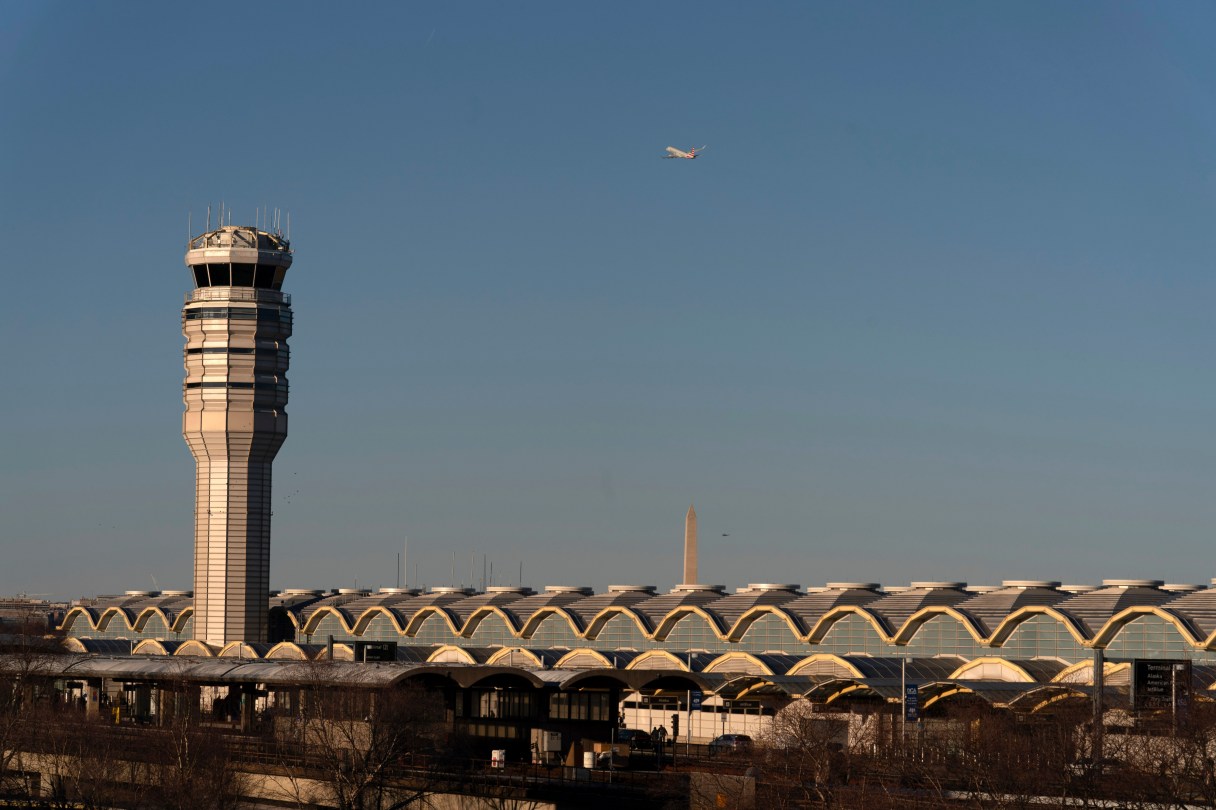
Air traffic controllers will use radar, not just visual checks, to ensure that helicopters maintain a safe distance from arriving and departing airplanes in the wake of last year’s fatal midair collision near Washington, D.C., federal officials announced Wednesday.
The Federal Aviation Administration said recent near-misses show that previous guidelines for pilots to maintain visual separation between helicopters and airplanes have failed to provide adequate protection around busy airports.
Under the new guidelines, air traffic controllers must use radar to keep helicopters and airplanes apart by specific lateral or vertical distances. The new requirement applies to more than 150 of the nation’s busiest airports, extending a restriction already put in place at Ronald Reagan Washington National Airport.
“Today, we are proactively mitigating risks before they affect the traveling public,” FAA Administrator Bryan Bedford said in a news release. “Following the mid-air collision near Ronald Reagan Washington National Airport (DCA), we looked at similar operations across the national airspace. We identified an overreliance on pilot ‘see and avoid’ operations that contribute to safety events involving helicopters and airplanes.”