
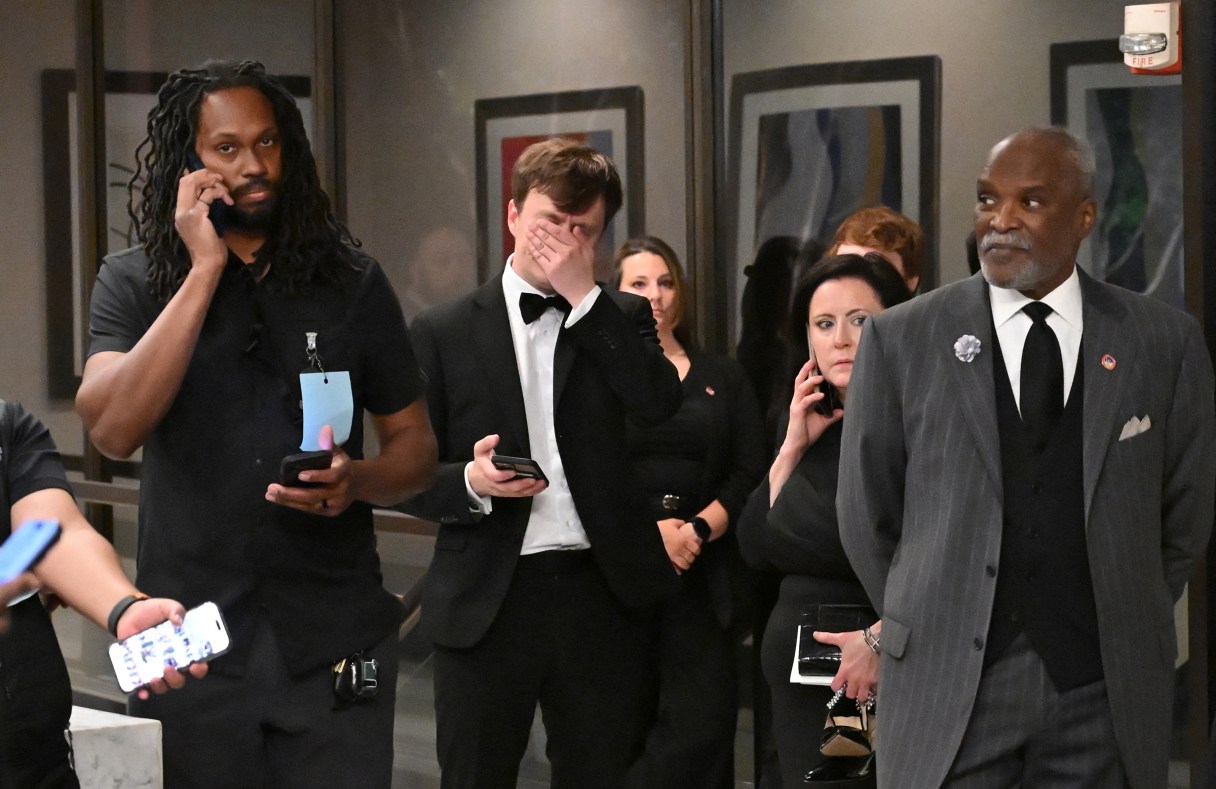
The violence at the White House Correspondents’ Association dinner last Saturday underscores how dangerous this political moment is in the United States. For the past several years — certainly since Jan. 6, 2021 — the U.S. has been experiencing a period of increased political violence.
Researchers at the Polarization & Extremism Research & Innovation Lab have documented an increase in the U.S. in recent years of political violence, generally defined as violence motivated by politics or intended to communicate a political message or achieve a political objective. Several recent examples come to mind: the Jan. 6, 2021, insurrection at the U.S. Capitol; multiple assassination attempts on President Donald Trump; the deadly attacks on Minnesota lawmakers Melissa Hortman and John Hoffman that left Hortman and her husband dead; the attempted murder of Paul Pelosi; the killing of Charlie Kirk. In my home state of Pennsylvania, Gov. Josh Shapiro was targeted in an attack on the governor’s mansion.
There are several important drivers of political violence at work in the U.S. today, according to my own research and research by other scholars. The United States is currently very politically polarized, meaning that Americans are sharply divided against one another along partisan lines. They are suspicious and hostile toward one another, and this produces a tense and volatile environment for politics and public life. This has produced a “zero-sum” environment in which every election and political contest is perceived as a “do or die” moment.
There is also a moral dimension to polarization in the U.S. Each side views members of the other party not as merely having a different view on politics but rather as evil or immoral. The polarized environment has made political violence more normalized. It has also dampened public backlash against political violence when it occurs. This makes political violence more likely.
Political rhetoric has become much more divisive and violent in nature. This works hand in hand with polarization and helps to further normalize political violence. In particular, when politicians use demonizing or dehumanizing rhetoric to attack their opponents — for example, using words that depict their opponents as subhuman — this fosters extremism and helps motivate extremists to hurt their opponents physically.