
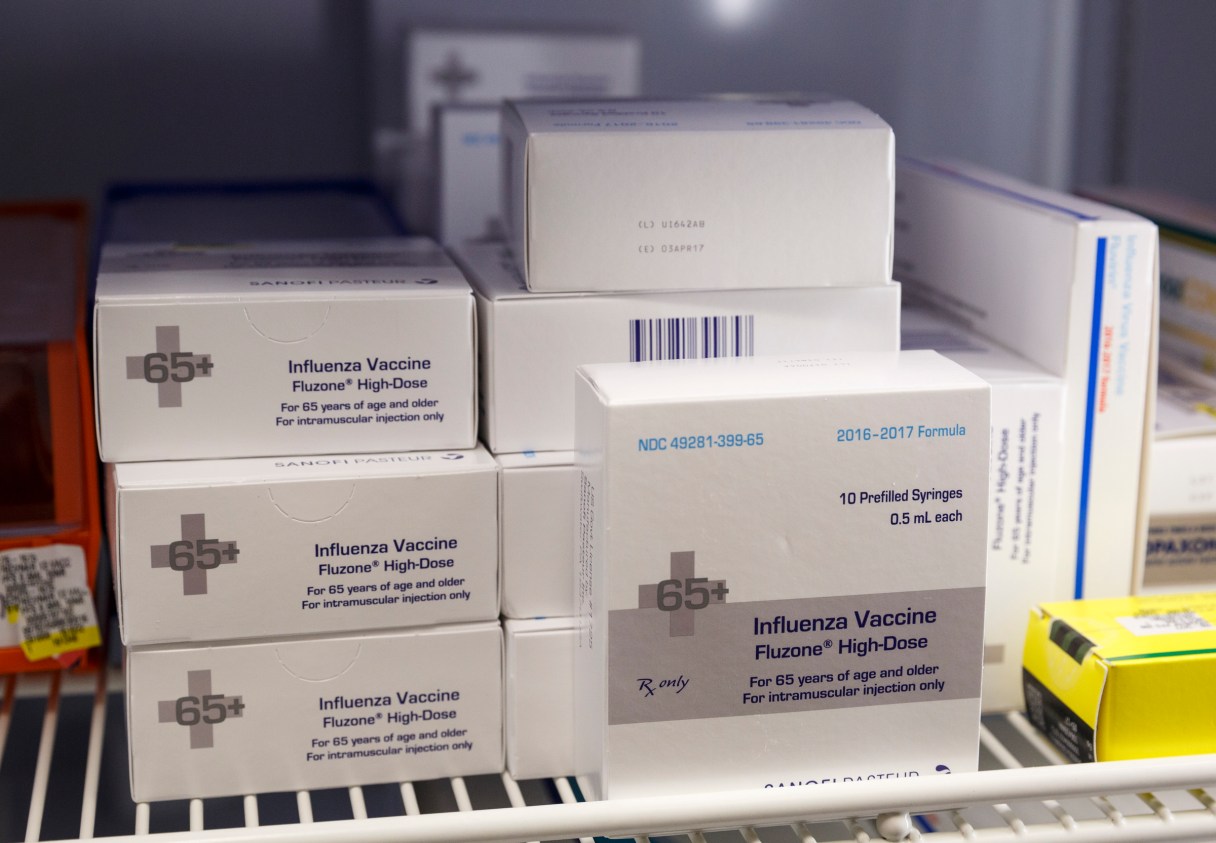
 Dr. Norman Desbiens talks about how all the staff and patients at the Alexian Brothers PACE facility are vaccinated for the flu on Thursday, Sept. 22, 2016, in Chattanooga, Tenn. Annual flu vaccines are particularly important for seniors to whom the flu can be life-threatening.
FLU F.A.Q.
*When and how often should I get vaccinated?*Everyone 6 months and older should get a flu vaccine every year by the end of October, if possible. However, getting vaccinated later is OK. Vaccination should continue throughout the flu season, even in January or later. Some children who have received flu vaccine previously and children who have only received one dose in their lifetime, may need two doses of flu vaccine. A health care provider can advise on how many doses a child should get.Can I get a flu vaccine if I am allergic to eggs?*The recommendations for people with egg allergies have been updated for this season.People who have experienced only hives after exposure to egg can get any licensed flu vaccine that is otherwise appropriate for their age and health.People who have symptoms other than hives after exposure to eggs, such as angioedema, respiratory distress, lightheadedness, or recurrent emesis; or who have needed epinephrine or another emergency medical intervention, also can get any licensed flu vaccine that is otherwise appropriate for their age and health, but the vaccine should be given in a medical setting and be supervised by a health care provider who is able to recognize and manage severe allergic conditions. (Settings include hospitals, clinics, health departments, and physician offices). People with egg allergies no longer have to wait 30 minutes after receiving their vaccine.How much flu vaccine will be available this season?*Flu vaccine is produced by private manufacturers, so supply depends on manufacturers. For the 2016-2017 season, manufacturers projected they would provide between 157 million and 168 million doses of injectable vaccine for the U.S. market. (Projections may change as the season progresses.)When should I get vaccinated?*Getting vaccinated before flu activity begins helps protect you once the flu season starts in your community. It takes about two weeks after vaccination for the body’s immune response to fully respond and for you to be protected so make plans to get vaccinated. CDC recommends that people get a flu vaccine by the end of October, if possible. However, getting vaccinated later can still be beneficial. CDC recommends ongoing flu vaccination as long as influenza viruses are circulating, even into January or later. Children aged 6 months through 8 years who need two doses of vaccine should get the first dose as soon as possible to allow time to get the second dose before the start of flu season. The two doses should be given at least 28 days apart.*Source: Centers for Disease Control and Prevention
Dr. Norman Desbiens is eager to show off his latest weapon in the never-ending battle against the influenza virus.
In a back office at the Program of All-inclusive Care for the Elderly [PACE], he points to a small white plastic box, about the size of a loaf of bread.
“This little machine is a molecular laboratory in a box,” he said, shaking his head in amazement during a visit Thursday to the Alexian Brothers comprehensive day care service for seniors. Within 15 minutes after taking a swab from a patient’s mouth, the Molecular Rapid Flu Test can tell him whether they have a common cold or influenza, which is far more deadly.
“When you are doing real-time care with a patient who is frail and elderly, you have to decide whether to treat them now,” he said. “If you are waiting for test results to come back a week later, the patient is dead by then.”