
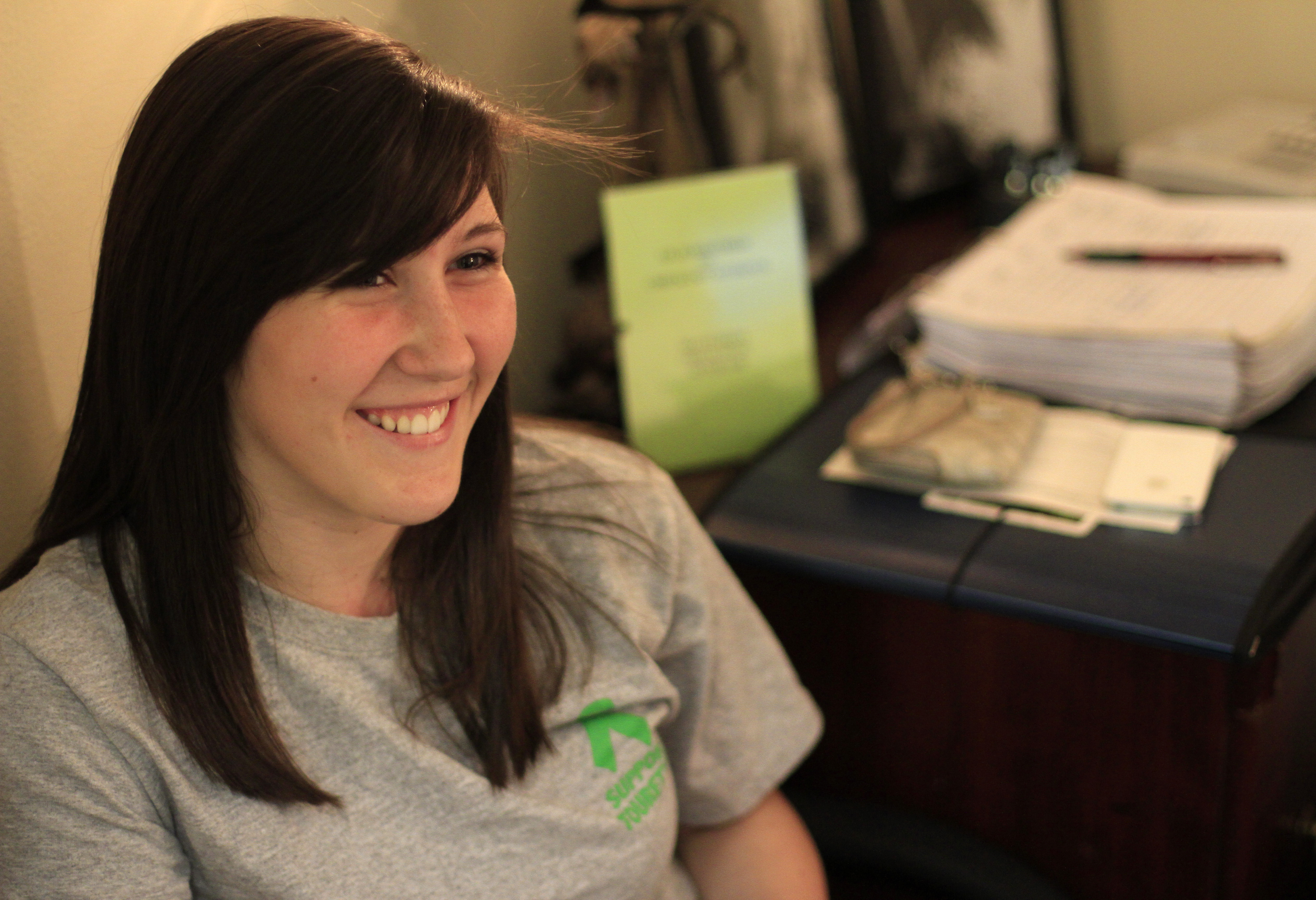
 Ringgold High School freshman Moriah Silvers speaks about what it means to have Tourette’s syndrome and how it affects her daily life. Silvers recently participated in the Tourette Syndrome Association’s Youth Ambassador training in Washington, D.C.
SYNDROME FACTS• Tourette’s is a genetic neuro-biological disorder.• People with TS have a chemical imbalance in the brain that causes involuntary tics.• Tics release tension for people with TS.• Motor tics include shrugging, blinking, stomping, twitching and nodding.• Vocal tics include sniffing, humming, repeating words and making sounds.• Mental tics include thoughts, phrases, songs and scenes that abruptly and repeatedly intrude into consciousness.• Most children begin tics between ages 5 and 8, and tics sometimes lessen with age.• Tics can be exacerbated by stress, anger, anxiety and fatigue.Source: Tourette Syndrome Association, Moriah Silvers
Start writing the Pledge of Allegiance by hand. Now tap your pinkie on the desk. Cross out and rewrite every third word (tap, tap); they don’t look right. Tap while an authority figure browbeats you for the poor handwriting that’s resulted from tapping. Tap. Time’s almost up. Tap, tap.
Ringgold High School student Moriah Silvers, who lives with Tourette’s syndrome, can write almost the entire pledge in 90 seconds. When she encourages her classmates to complete the tapping exercise, which simulates a tic and a teacher who doesn’t understand TS, most struggle to get a dozen words down in a minute and a half.
Last month Moriah traveled to Washington, D.C., to complete youth ambassador training with the national Tourette Syndrome Association. Since then, she’s held lectures for schools, church groups, police officers and medical students to spread awareness of and acceptance for people with TS. On Wednesday she’ll meet with Georgia Gov. Nathan Deal to declare June the state’s Tourette’s Awareness Month.
People with TS have involuntary compulsions, or tics, to move, vocalize and even think certain things. Moriah’s most prevalent tic looks like a wink, though she has others including a kicking tic, and less often she’ll repeat what others say.