
Tuesday, November 10, 2026Nov 10

Defense secretary favors strong encryption, not ‘back doors’

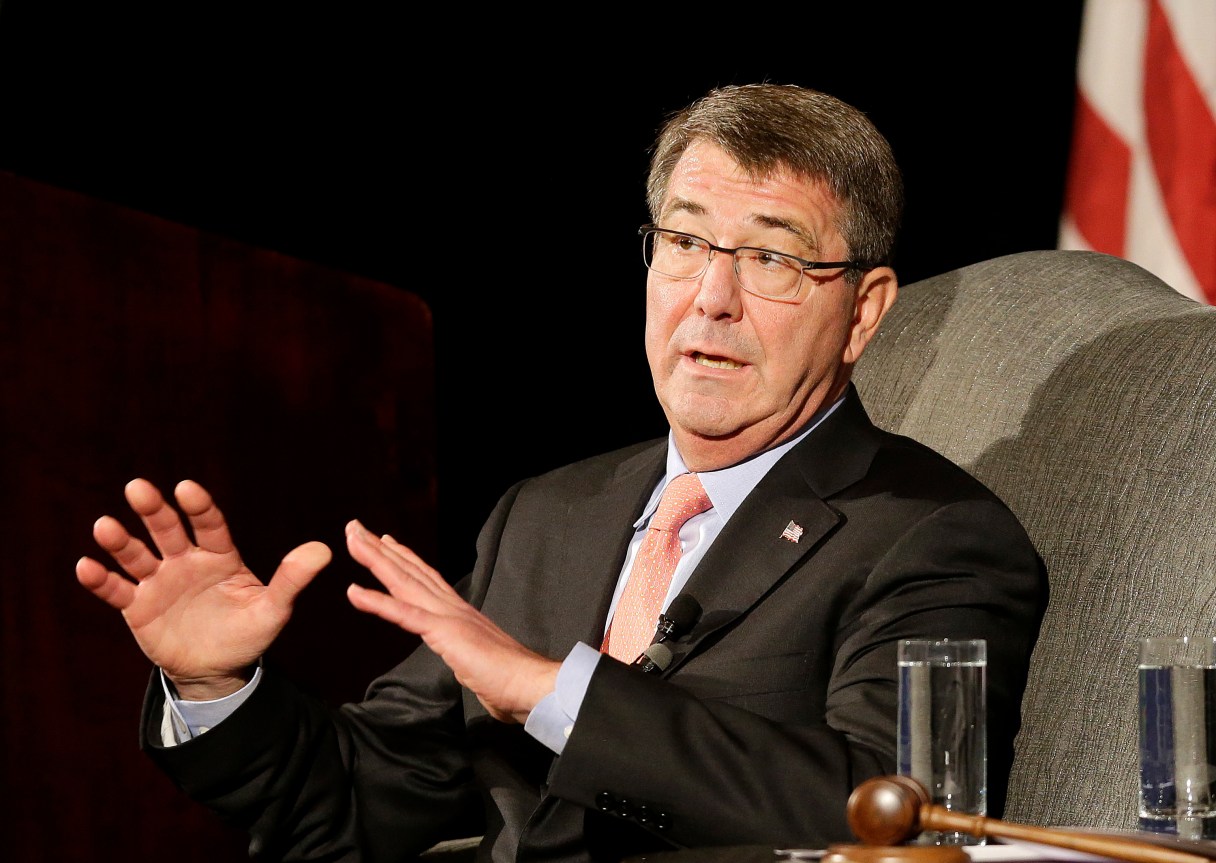
U.S. Defense Secretary Ash Carter speaks at the Commonwealth Club in San Francisco, Tuesday, March 1, 2016. Carter discussed encryption at a speech before the Commonwealth Club and referenced Apple's court fight with the government, warning against future policy being determined by any one case and said a law hastily written in "anger or grief" would be the wrong approach. (AP Photo/Jeff Chiu)
U.S. Defense Secretary Ash Carter speaks at the Commonwealth Club in San Francisco, Tuesday, March 1, 2016. Carter discussed encryption at a speech before the Commonwealth Club and referenced Apple's court fight with the government, warning against future policy being determined by any one case and said a law hastily written in "anger or grief" would be the wrong approach. (AP Photo/Jeff Chiu) U.S. Defense Secretary Ash Carter speaks at the Commonwealth Club in San Francisco, Tuesday, March 1, 2016. Carter discussed encryption at a speech before the Commonwealth Club and referenced Apple's court fight with the government, warning against future policy being determined by any one case and said a law hastily written in "anger or grief" would be the wrong approach. (AP Photo/Jeff Chiu)

SAN FRANCISCO (AP) – Defense Secretary Ash Carter has told a tech industry audience that strong encryption is essential to the nation’s security, adding that he’s “not a believer in back doors” or encryption programs that leave openings for outsiders to read coded files.

Carter said Wednesday he wasn’t commenting on the FBI’s legal battle with Apple over an encrypted iPhone used by a San Bernardino, California, gunman. But his views showed the complexity of the encryption debate at a time when law enforcement officials are feuding with tech companies over encryption in consumer products.

The defense secretary said the military needs strong encryption. While he didn’t elaborate, Carter’s remarks echoed tech experts who say that building “back doors,” or keys to unlock encryption programs, will create vulnerabilities that can be abused by others.