
Wednesday, November 11, 2026Nov 11

‘Gigantic’ corporate tax hike likely headed to Oregon voters

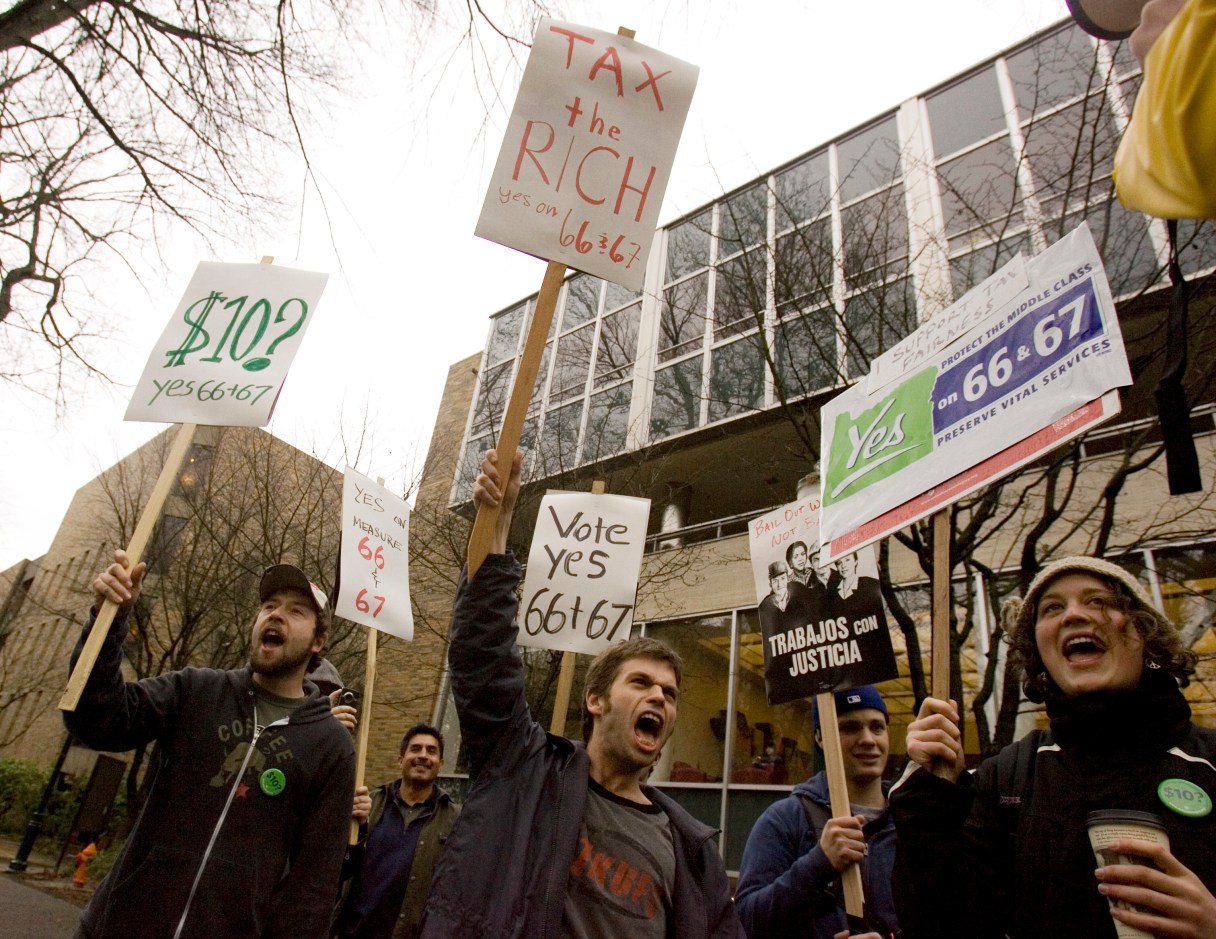
FILE -- In this Jan. 22, 2010 file photo, supporters of Oregon's Measures 66 and 67, designed to raise taxes on high-income earners and corporations, hold a rally in Portland, Ore. A proposal for the largest tax hike on big corporations in Oregon history is just weeks away from being inked on the November ballot and could spark one of the ugliest political battles between the measure's labor-union backers and the business community at large. (AP Photo/Don Ryan, file)
FILE -- In this Jan. 22, 2010 file photo, supporters of Oregon's Measures 66 and 67, designed to raise taxes on high-income earners and corporations, hold a rally in Portland, Ore. A proposal for the largest tax hike on big corporations in Oregon history is just weeks away from being inked on the November ballot and could spark one of the ugliest political battles between the measure's labor-union backers and the business community at large. (AP Photo/Don Ryan, file) FILE -- In this Jan. 22, 2010 file photo, supporters of Oregon's Measures 66 and 67, designed to raise taxes on high-income earners and corporations, hold a rally in Portland, Ore. A proposal for the largest tax hike on big corporations in Oregon history is just weeks away from being inked on the November ballot and could spark one of the ugliest political battles between the measure's labor-union backers and the business community at large. (AP Photo/Don Ryan, file)

SALEM, Ore. (AP) – This November, Oregon voters could decide on a $2.8 billion annual tax hike on large corporations as a way to boost funding for public services such as education and health care.

The ballot proposal could give Oregon the most aggressive tax structure for big business in the nation. It comes amid a national debate on ways to close economic disparities between the rich and poor in a post-Recession era.

Labor unions behind the proposal are just one step from getting it on the ballot after submitting 130,000 signatures to state elections officials last week. They say it’s a progressive strategy to force large companies to pay their fair share for the greater good.

But a new state analysis shows much broader implications, with job losses, rising consumer costs and population declines.