
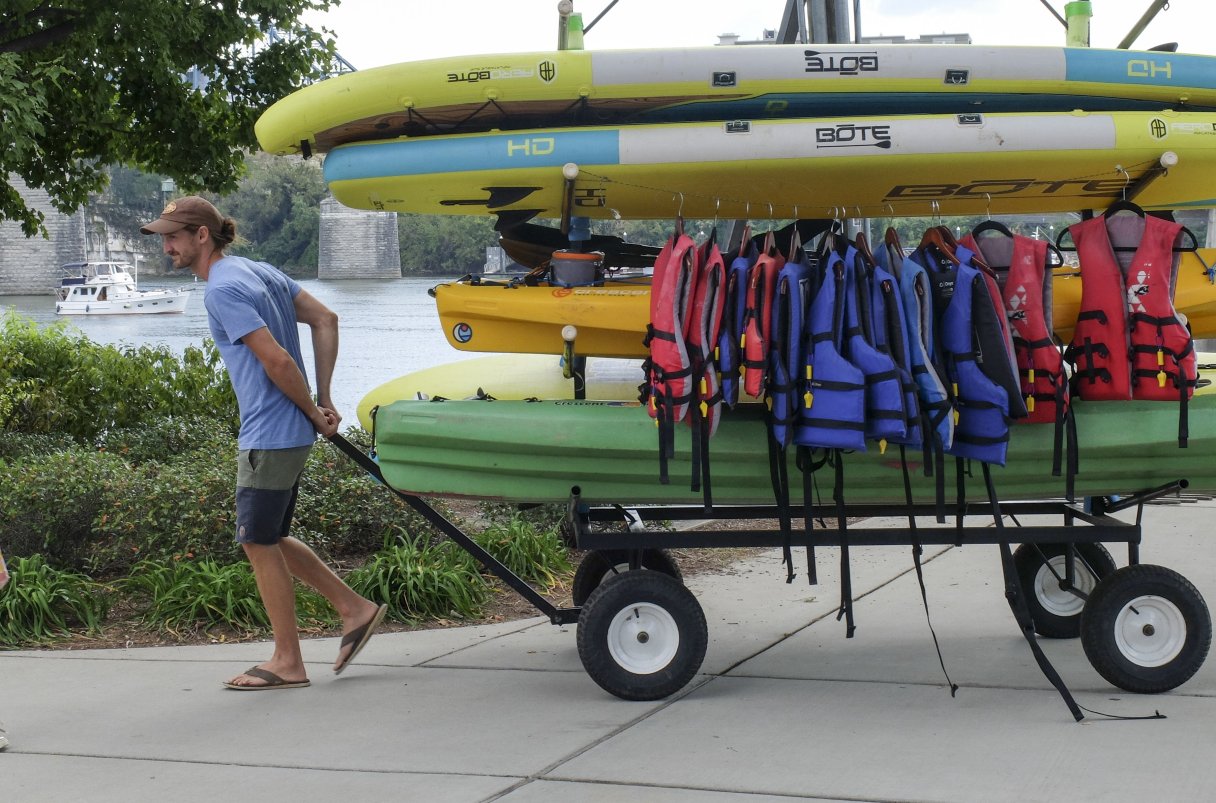
Kayak and canoe rentals in Tennessee will be regulated as state officials look to track water traffic amid growing concerns of access issues.
Tennessee Wildlife Resources Agency will require commercial operators that lease or rent non-motorized vessels to receive a free state-issued permit to continue operations.
“We have no idea how many outfitters are in the state, and how much impact they’re having,” TWRA assistant director Chris Richardson said. “To set up minimum standards, we’re now requiring a permit.”
The permits will be free, for now, as the agency tries to get a better idea of where the majority of the traffic is going and get a general sense how much traffic is on the water. That will help TWRA determine where to dedicate its resources and whether certain areas are being over or under patrolled. Problems are seen statewide when operators rents kayaks and canoes to large groups, preventing fishing opportunities along certain stretches and clogging boat ramps, according to the Tennessee Wildlife Federation – which helps develop legislation for TWRA.
The bill’s critics worry about future permit costs that could be implemented and additional government oversight while supporters argue it’s needed as the state’s population increases and there’s a growing strain on water access.