
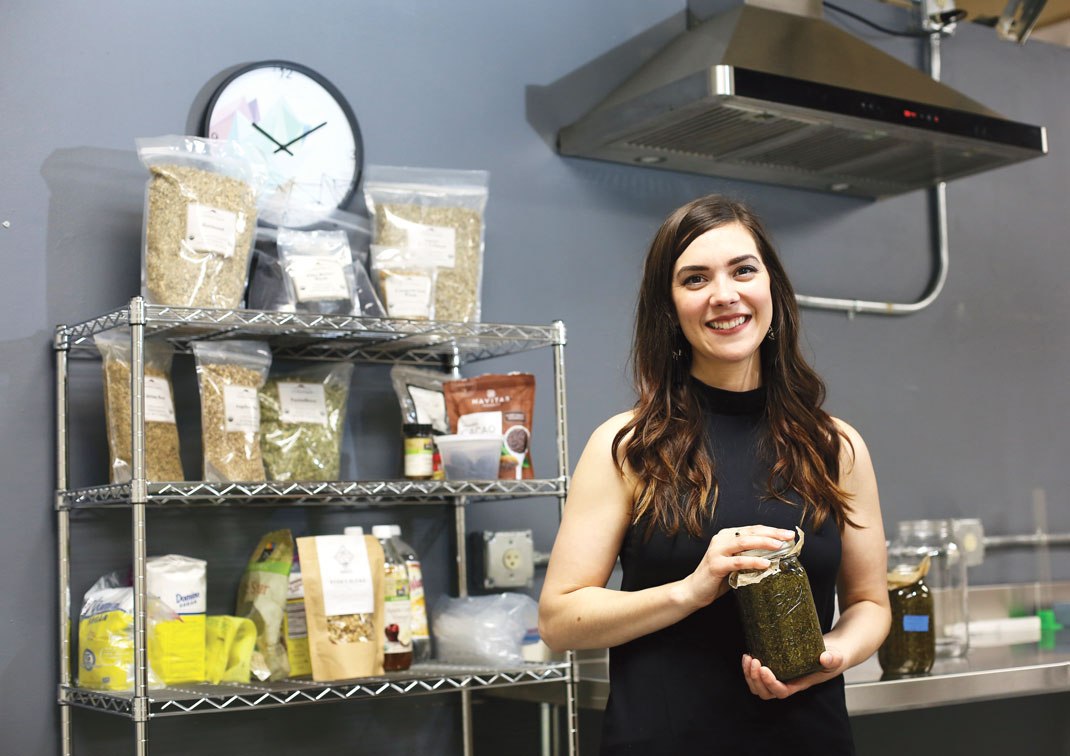
When Kaleena Goldsworthy set out to start her own business, The Bitter Bottle, three years ago, she had two significant obstacles in front of her.
First, she would have to become the first alcohol-based, legal bitters company in Tennessee – a state that had Prohibition-era laws in place in the not-too-distant past, and she would have to explain what exactly her product is to regulatory officials who are supposed to be a resource to her and not the other way around.
“Bitters” is a foreign term to a lot of people, said Goldsworthy, a former bartender and manager at the Flying Squirrel in the Southside.
“I like to think of herbal bitters and cocktail bitters as basically like the vanilla extract of the beverage industry,” the 33-year-old explains. “So, you are working with alcohol and you are making a super concentrated extract that you only add by the drop or the dash to whatever it is that you are making. It’s kind of hard for some people to understand that.”
Based on Mark Bitterman’s definition in his book, “Bitterman’s Field Guide to Bitters and Amari,” bitters are not intended for consumption on their own but can be added to food and drink conservatively to create more depth of flavor.