
Wednesday, November 11, 2026Nov 11

Criminal records keep some small-business owners from coronavirus aid program

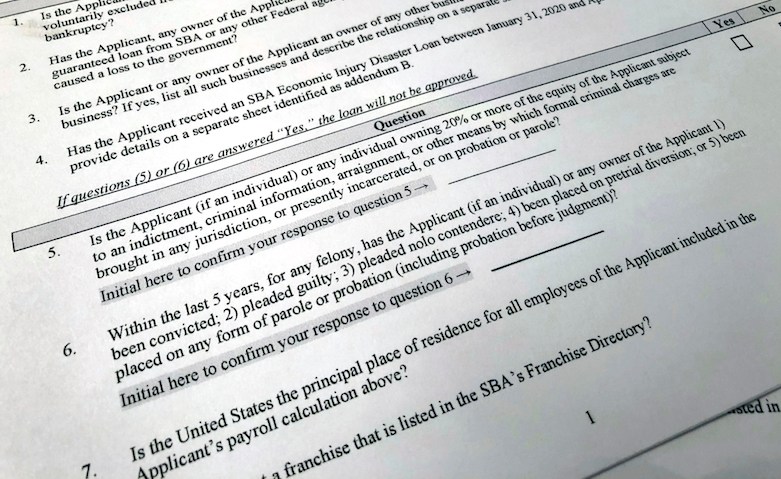
Shown is a portion of a Small Business Administration Paycheck Protection Program Borrower Application Form, Tuesday, April 21, 2020 in Washington. The Paycheck Protection was supposed to be a lifeline for small businesses, helping them stay afloat and keep their employees on the payroll during the coronavirus pandemic. But guidelines from the Small Business Administration say that businesses are ineligible if someone who owns at least 20 percent of the company is incarcerated, under indictment, on probation or parole or had been convicted of a felony within the last five years. Ineligible would-be applicants and advocates say the restrictions are a slap in the face for those who have served their time, especially from an administration that has trumpeted second chances. (AP Photo/Wayne Partlow)
Shown is a portion of a Small Business Administration Paycheck Protection Program Borrower Application Form, Tuesday, April 21, 2020 in Washington. The Paycheck Protection was supposed to be a lifeline for small businesses, helping them stay afloat and keep their employees on the payroll during the coronavirus pandemic. But guidelines from the Small Business Administration say that businesses are ineligible if someone who owns at least 20 percent of the company is incarcerated, under indictment, on probation or parole or had been convicted of a felony within the last five years. Ineligible would-be applicants and advocates say the restrictions are a slap in the face for those who have served their time, especially from an administration that has trumpeted second chances. (AP Photo/Wayne Partlow) Shown is a portion of a Small Business Administration Paycheck Protection Program Borrower Application Form, Tuesday, April 21, 2020 in Washington. The Paycheck Protection was supposed to be a lifeline for small businesses, helping them stay afloat and keep their employees on the payroll during the coronavirus pandemic. But guidelines from the Small Business Administration say that businesses are ineligible if someone who owns at least 20 percent of the company is incarcerated, under indictment, on probation or parole or had been convicted of a felony within the last five years. Ineligible would-be applicants and advocates say the restrictions are a slap in the face for those who have served their time, especially from an administration that has trumpeted second chances. (AP Photo/Wayne Partlow)

WASHINGTON (AP) – Damon West was hoping the government’s coronavirus rescue package for small-business owners would help replace the income he’s lost now that he can’t travel the country as a keynote speaker.

But then he got a call from his accountant. A question on the application form asked whether, within the last five years, he had been convicted of or pleaded guilty or no contest to a felony or “been placed on any form of parole or probation.” Another asked whether anyone who owns at least 20% of the company was incarcerated, under indictment or on probation or parole. If so, they are ineligible.

It was a gut punch for West. In 2009, he was sentenced to life in prison but made parole in 2015 and now works as an author, teacher and speaker, visiting schools and correctional facilities to talk about how he turned his life around.

“You go and you pay your debt, and you’re still paying your bill,” he said.

The Paycheck Protection Program, which already doled out $350 billion and is now awaiting another cash infusion, is supposed to be a lifeline for businesses teetering on the edge, helping them stay afloat and keep their employees on the payroll during the pandemic. Independent contractors and the self-employed also qualify. But not, it turns out, if they have had certain run-ins with the law.