
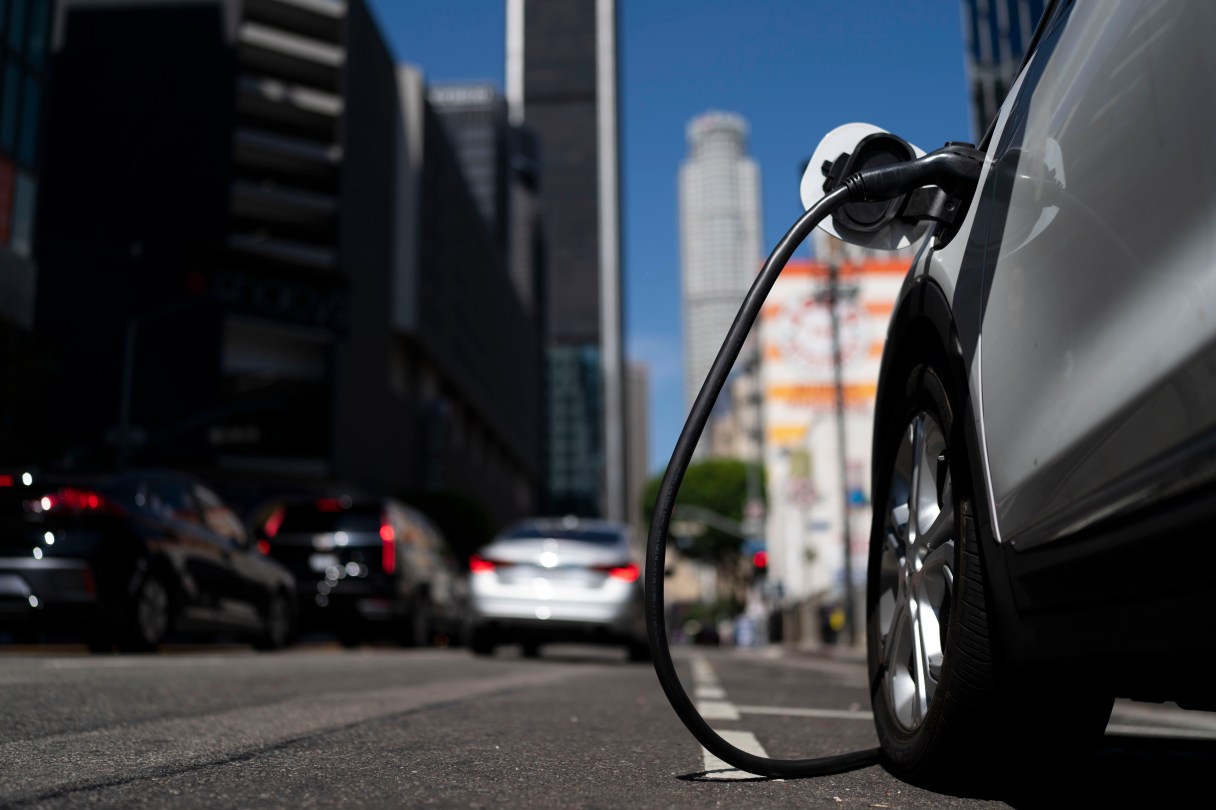
Ten electric or plug-in hybrid vehicles will be eligible for a $7,500 U.S. tax credit, while another seven could get $3,750 under new federal rules that go into effect on Tuesday.
But under the Treasury Department rules and other provisions of last year’s Inflation Reduction Act, most of the more than 60 electric or plug-in hybrids on sale in the U.S. won’t get any tax credits, including the Chattanooga-made Volkswagen ID.4 or the Tennessee-made Nissan Leaf.
That could slow acceptance of electric vehicles and could delay reaching President Joe Biden’s ambitious goal that half of new passenger vehicles sold in the U.S. run on electricity by 2030.
The new rules, which govern how much battery minerals and parts can come from countries that don’t have free trade agreements with the U.S., bumped nine vehicles off the tax credit eligibility list that went into effect Jan. 1.
Overall, General Motors and other U.S. auto makers stand to benefit the most from the revamped rules. Several of the most popular models — like the Tesla Model Y and Chevy Bolt — will still get the full $7,500.