
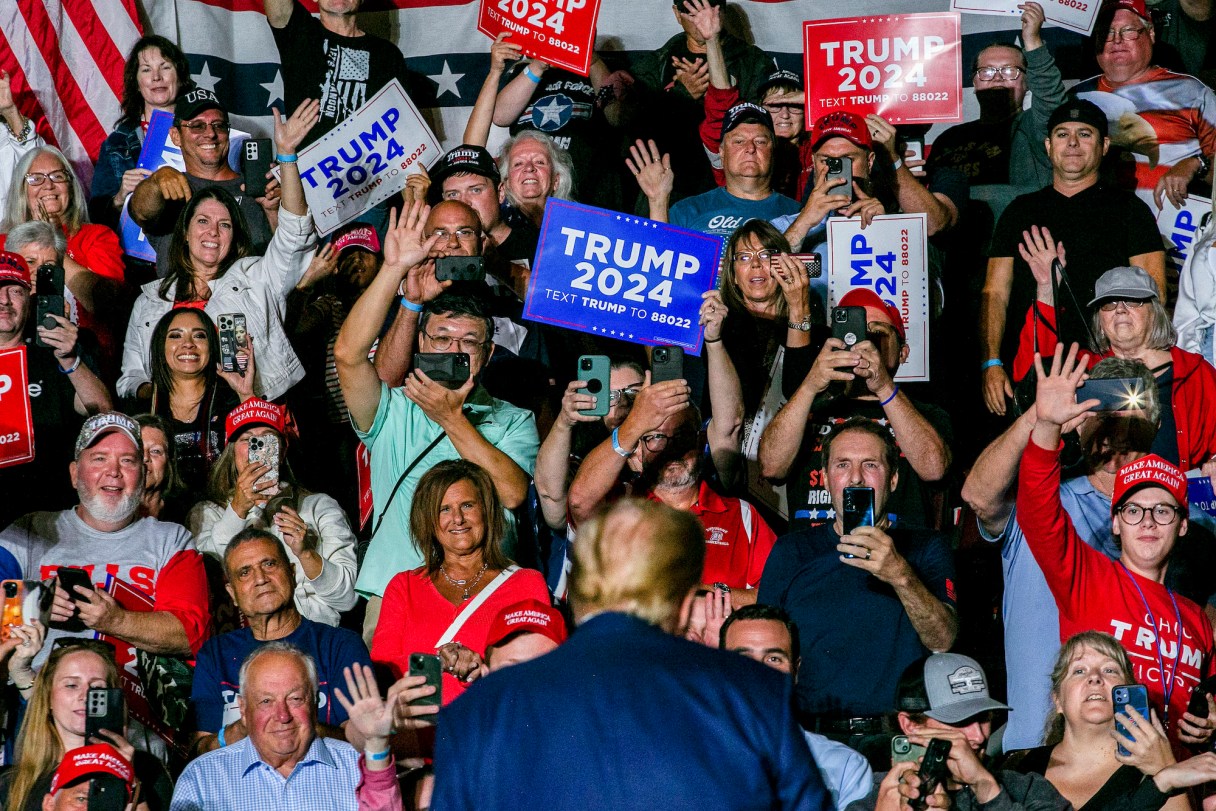
Even as more indictments of former President Donald Trump loom, 2024 voters may be leaning his way. Many recent polls have the former president running even with President Joe Biden or taking the lead. Trump’s ability to weather his legal storms have led to comparisons with other politicians who have run for office, often successfully, in the midst of legal troubles. The comparisons matter — but what’s most important for understanding the current moment is the dynamic that links the many examples: us-versus-them.
Let’s start at the top. Many people know the story of Boston Mayor James Curley, so popular among the voters that in the 1940s he ran the city for five months from a federal penitentiary. Trump had barely taken office when the comparisons to Curley began. As the former president’s legal difficulties have mounted, they’ve come creeping back. Small wonder. Curley, an ardent New Dealer, was thoroughly corrupt, but whenever another investigation loomed, he appealed to his supporters’ sense of grievance, insisting that the Republican establishment was only going after him because he gave voice to the city’s despised Irish Catholics.
Then there’s Vincent “Buddy” Cianci, who resigned as mayor of Providence in 1984 after he kidnapped his ex-wife’s boyfriend and burned him with a cigarette and a hot log from a fire (in front of a police officer and a judge, no less). A decade later, Cianci stood for election again. By that time, nearly two dozen of his associates had been convicted of corruption. No matter. Cianci successfully styled himself the anti-establishment candidate and won.
In Gore Vidal’s splendid novel 1876, a character is asked to explain the affection voters often lavish upon politicians they know to be corrupt. He replies: “Because they’d do the same thing if they dared but they don’t dare because they know they’d be caught and they know he’ll never be caught!”
In other words, the miscreant is seen by supporters as more scamp than scoundrel. Perhaps that’s why, as Curley’s biographer Jack Beatty suggests, the four-term mayor (and one-term governor) was so popular in part because of his talent for making corruption cute. He would say things like “I never took a quarter from anyone who couldn’t afford it.” The masses adored him.