
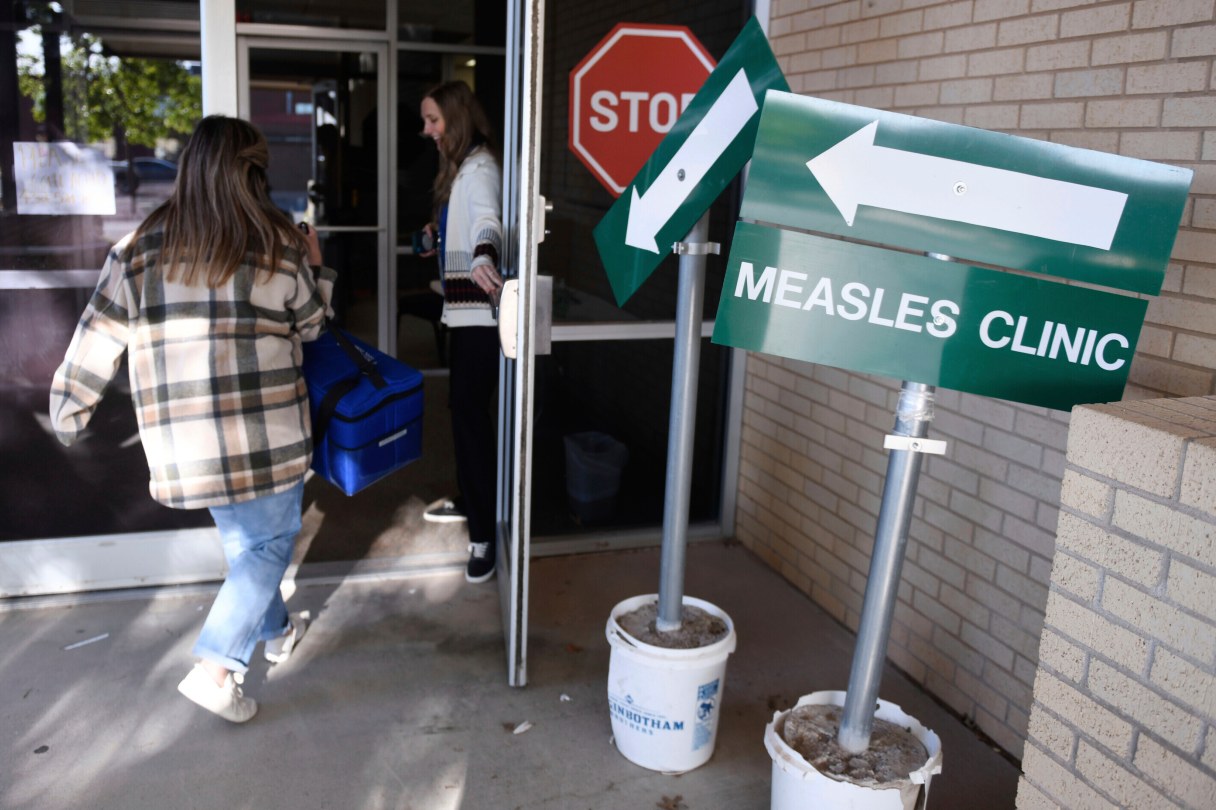
It’s been a year since a measles outbreak began in West Texas, and international health authorities say they will meet in April to determine if the U.S. has lost its measles-free designation.
Experts fear the vaccine-preventable virus has regained a foothold and that the U.S. may soon follow Canada in losing the achievement of having eliminated it.
The reevaluation is largely symbolic and hinges on whether a single measles chain has spread uninterrupted within the U.S. for at least 12 months.
Public health scientists around the country are investigating whether the now-ended Texas outbreak is linked to active ones in Utah, Arizona and South Carolina. But doctors and scientists say the U.S. — and North America overall — has a measles problem, regardless of the decision.
“It is really a question of semantics,” said Dr. Jonathan Temte, a Wisconsin family physician who helped certify the U.S. was measles-free in 2000. “The bottom line is the conditions are sufficient to allow this many cases to occur. And that gets back to de-emphasizing a safe and effective vaccine.”