
Wednesday, November 11, 2026Nov 11

APNewsBreak: EU is poised to restrict passport-free travel

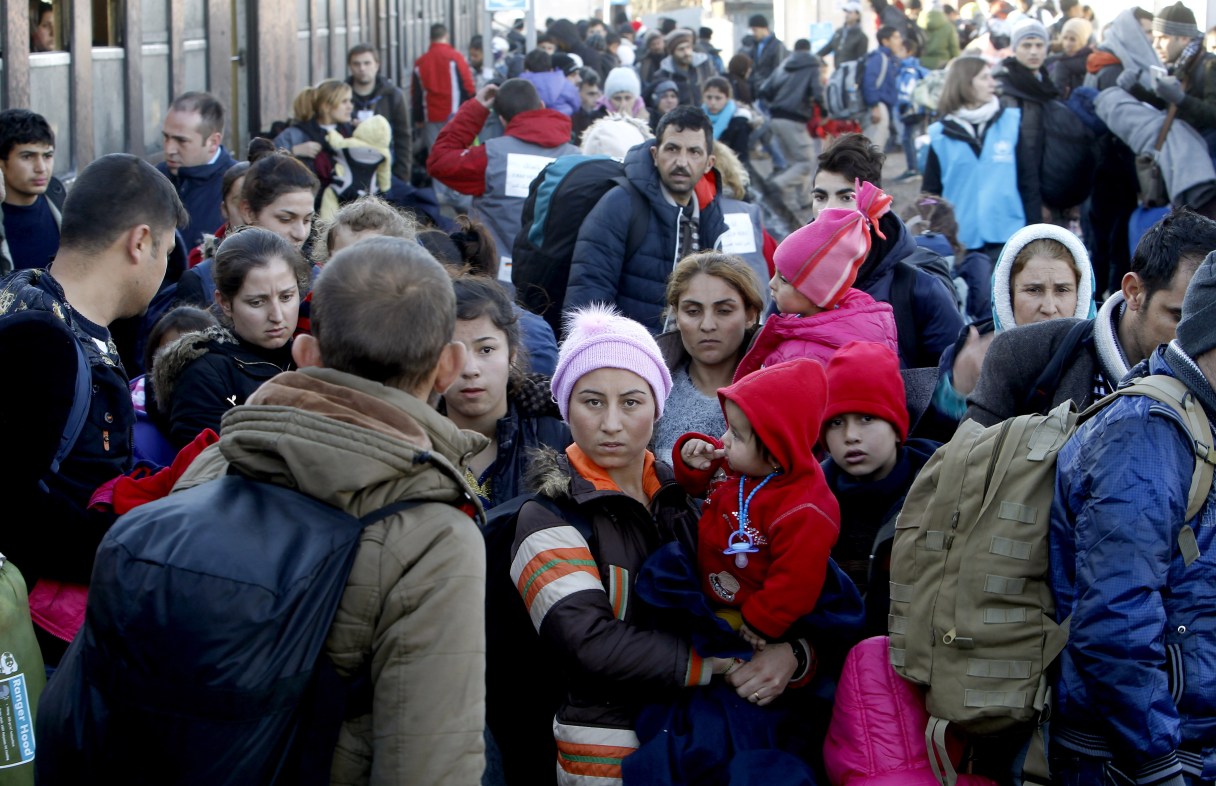
Refugees arrive by train at the transit center for refugees near northern Macedonian village of Tabanovce, before continuing their journey to Serbia, Friday, Feb. 12, 2016. In a dramatic response to Europe's gravest refugee crisis since World War II, NATO ordered three warships to sail immediately Thursday to the Aegean Sea to help end the deadly smuggling of asylum-seekers across the waters from Turkey to Greece. (AP Photo/Boris Grdanoski)
Refugees arrive by train at the transit center for refugees near northern Macedonian village of Tabanovce, before continuing their journey to Serbia, Friday, Feb. 12, 2016. In a dramatic response to Europe's gravest refugee crisis since World War II, NATO ordered three warships to sail immediately Thursday to the Aegean Sea to help end the deadly smuggling of asylum-seekers across the waters from Turkey to Greece. (AP Photo/Boris Grdanoski) Refugees arrive by train at the transit center for refugees near northern Macedonian village of Tabanovce, before continuing their journey to Serbia, Friday, Feb. 12, 2016. In a dramatic response to Europe's gravest refugee crisis since World War II, NATO ordered three warships to sail immediately Thursday to the Aegean Sea to help end the deadly smuggling of asylum-seekers across the waters from Turkey to Greece. (AP Photo/Boris Grdanoski)

BRUSSELS (AP) – Documents seen by The Associated Press show that European Union countries are poised to restrict passport-free travel by invoking an emergency rule for two years due to the migration crisis.

Each of the 26 countries in the open-travel Schengen Area is allowed to unilaterally put up border controls for a maximum of six months. That limit can be extended for up to two years if a member nation is found to be failing to protect its borders.

The documents show that EU policymakers are poised to declare that Greece is failing to sufficiently protect its border. Some 2,000 people are still arriving daily on Greek islands in smugglers’ boats from Turkey.

A European official showed the documents to the AP on condition of anonymity because the documents are confidential.