
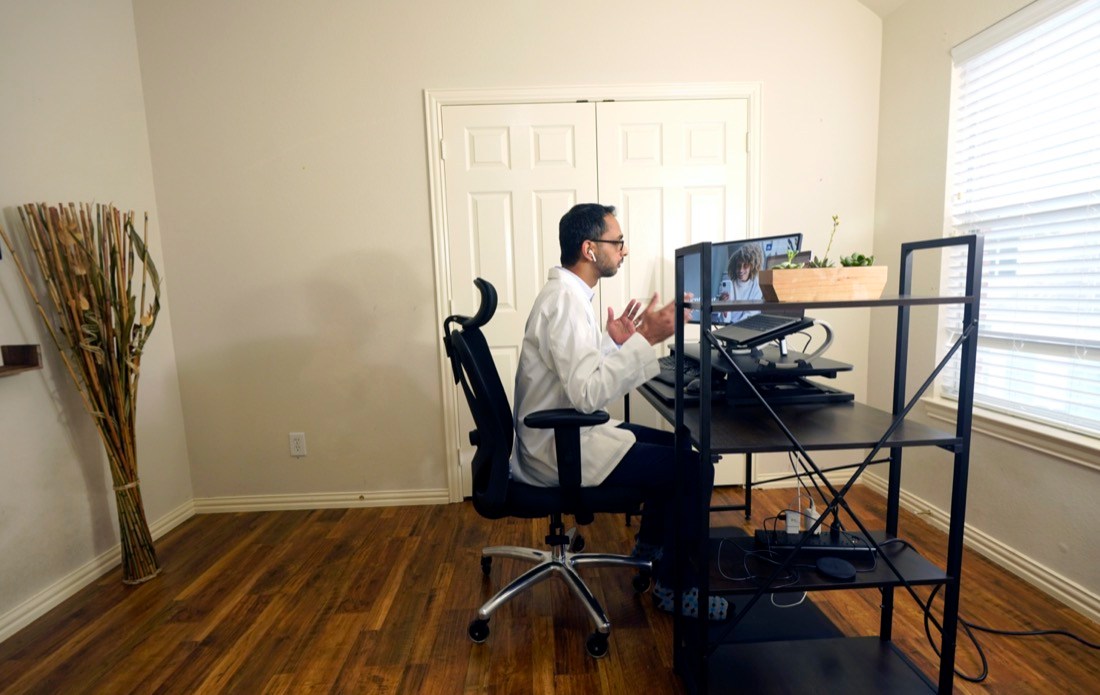
WASHINGTON (AP) – Many Americans don’t expect to rely on the digital services that became commonplace during the pandemic after COVID-19 subsides, according to a new poll, even as many think it’s a good thing if those options remain available in the future.
Close to half or more of U.S. adults say they are not likely to attend virtual activities, receive virtual health care, have groceries delivered or use curbside pickup after the coronavirus pandemic is over, according to a poll from The Associated Press-NORC Center for Public Affairs Research. Less than 3 in 10 say they’re very likely to use any of those options at least some of the time.
Still, close to half also say it would be a good thing if virtual options for health care, for community events and for activities like fitness classes or religious services continue after the pandemic.
“Rather than this either-or, I think we’re more likely to be facing a hybrid future,” said Donna Hoffman, director of the Center for the Connected Consumer at the George Washington School of Business. “People have found convenience in some of these virtual options that just makes sense, and they don’t necessarily have anything to do with like keeping you safe or the pandemic even though they came of age during the pandemic.”
Digital daily routines became the default in 2020 as the nation reacted to the rapidly spreading virus, which prompted lockdowns, closed schools and shuttered businesses. Some substitutions, like online shopping and video conference calling, already existed. Others were reimagined or popularized during the pandemic.