
Wednesday, November 11, 2026Nov 11

EPA plans temporary pesticide restrictions while bees feed

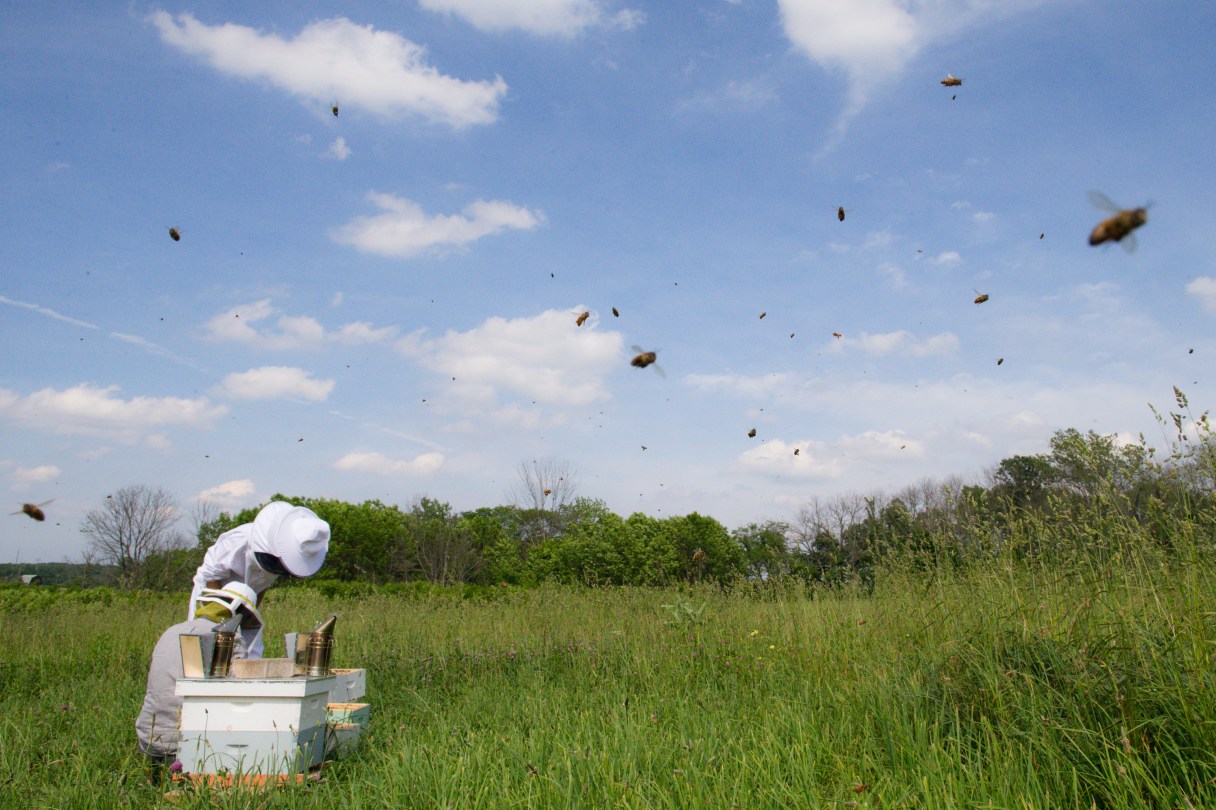
Volunteers check honey bee hives for queen activity and perform routine maintenance as part of a collaboration between the Cincinnati Zoo and TwoHoneys Bee Co., Wednesday, May 27, 2015, at EcOhio Farm in Mason, Ohio. A federal rule to be proposed Thursday, May 28, would create temporary pesticide-free zones when certain plants are in bloom around bees that are trucked from farm to farm by professional beekeepers, which are the majority of honeybees in the U.S. (AP Photo/John Minchillo)
Volunteers check honey bee hives for queen activity and perform routine maintenance as part of a collaboration between the Cincinnati Zoo and TwoHoneys Bee Co., Wednesday, May 27, 2015, at EcOhio Farm in Mason, Ohio. A federal rule to be proposed Thursday, May 28, would create temporary pesticide-free zones when certain plants are in bloom around bees that are trucked from farm to farm by professional beekeepers, which are the majority of honeybees in the U.S. (AP Photo/John Minchillo) Volunteers check honey bee hives for queen activity and perform routine maintenance as part of a collaboration between the Cincinnati Zoo and TwoHoneys Bee Co., Wednesday, May 27, 2015, at EcOhio Farm in Mason, Ohio. A federal rule to be proposed Thursday, May 28, would create temporary pesticide-free zones when certain plants are in bloom around bees that are trucked from farm to farm by professional beekeepers, which are the majority of honeybees in the U.S. (AP Photo/John Minchillo)

WASHINGTON (AP) – If honeybees are busy pollinating large, blooming croplands, farmers wanting to spray toxic pesticides will soon have to buzz off, the Environmental Protection Agency is proposing.

A federal rule to be proposed Thursday would create temporary pesticide-free zones when certain plants are in bloom around bees that are trucked from farm to farm by professional beekeepers, which are the majority of honeybees in the U.S. The pesticide halt would only happen during the time the flower is in bloom and the bees are there, and only on the property where the bees are working, not neighboring land.

The rule applies to virtually all insecticides, more than 1,000 products involving 76 different chemical compounds, said Jim Jones, EPA’s assistant administrator for chemical safety and pollution prevention. It involves nearly all pesticides, including the much-debated class of pesticides called neonicotinoids, he said.

The idea is “to create greater space between chemicals that are toxic to bees and the bees,” Jones told The Associated Press.

This is part of a new multi-part push by the Obama administration to try to reverse dramatic declines in bee populations. A new federal survey found beekeepers lost more than 40 percent of their colonies last year, although they later recovered by dividing surviving hives.