
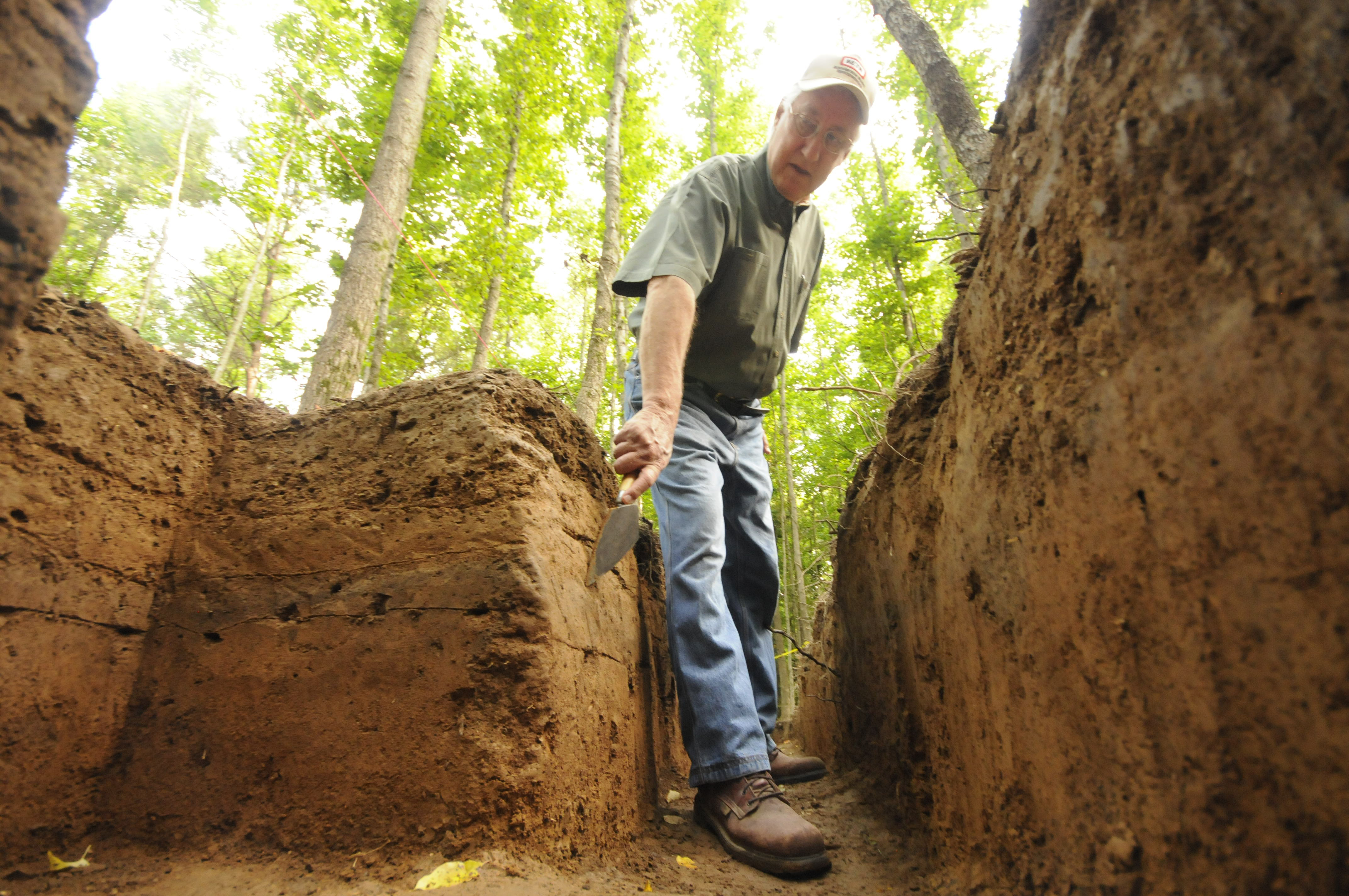
 Lawrence Alexander, principle investigator for Alexander Archeological Consultants, shows a segment of the Old Federal roadbed to board members from the Friends of Moccasin Bend National Park Wednesday.
VIDEO
This story is featured in today’s TimesFreePress newscast.
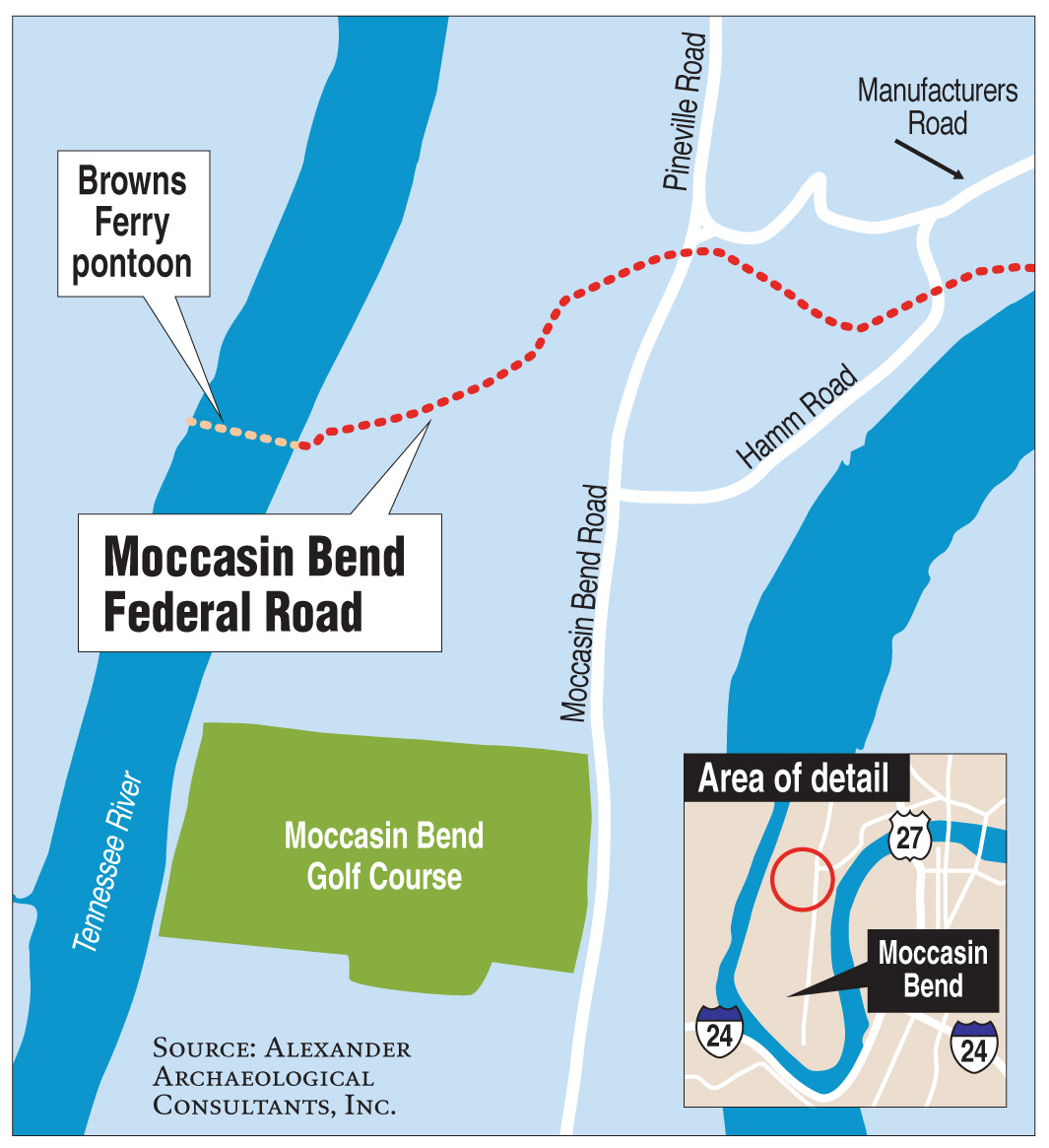
In 1803, it was a well-used Cherokee trail. Sixty years later, it was a major supply line for Union forces. Now, it is a road rediscovered. Archaeologist Lawrence Alexander stood knee-deep in a trench, spade in hand, gesturing to a thin layer of dark soil on Moccasin Bend.
“You can’t see the road anymore, but you can hear it,” Alexander said as he lightly scraped his spade over the 2-foot-tall cross-section of soil. There was only a smooth sound of soft clay until he hit the thin layer of 150-year-old gravel.
“That’s it, you hear it?” Alexander asked, scraping his trowel over the coarse rock.
This 40-foot-wide gravel bypass was a key to allowing Union forces to hold the city after being defeated at the Battle of Chickamauga, according to James Ogden, historian at Chicka-mauga and Chattanooga National Military Park.