
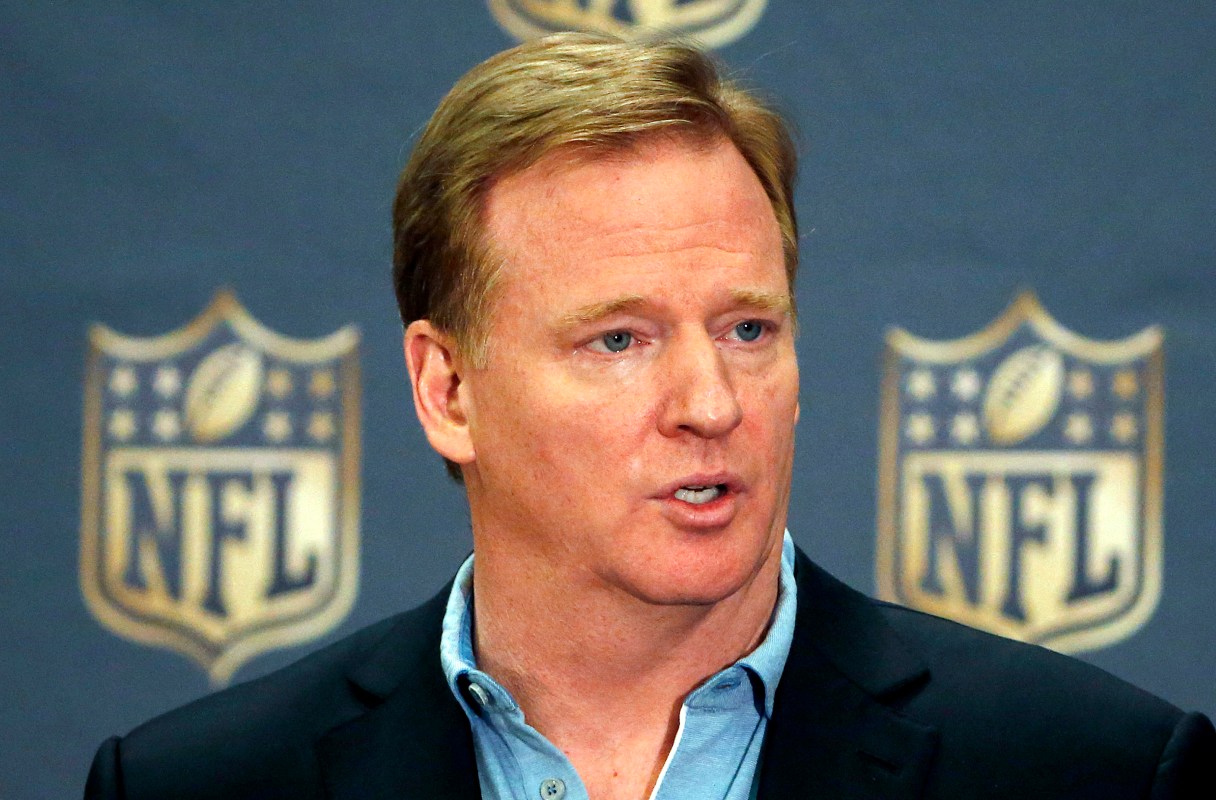
WASHINGTON — Every so often, in a bid to sound threatening, a member of Congress has vowed to revoke the NFL’s tax-exempt status. Now Commissioner Roger Goodell says the league will give it up voluntarily to “eliminate this distraction.”
One result is that Goodell’s compensation — about $35 million 2013, and approximately $44 million in 2012 — will no longer need to be made public.
In a memo to all 32 teams Tuesday, he wrote that “a change in the tax status will not alter the function or operation of the league office or Management Council in any way.”
A business of about $10 billion in annual revenues, the NFL has held tax-exempt status since the 1940s, and so was required to file a publicly available IRS form listing compensation for the highest-paid employees. Individual NFL teams do not have tax-exempt status.
It isn’t known exactly how, if at all, the league’s switch from tax-exempt to taxable would affect the total amount paid in taxes by the NFL, its teams and all their affiliated entities. What is clear is that Tuesday’s change does not affect the NFL’s antitrust exemption, created in the Sports Broadcasting Act of 1961. That allows clubs to negotiate radio and TV broadcast rights together.