
Wednesday, November 11, 2026Nov 11

AP: Global supermarkets selling shrimp peeled by slaves

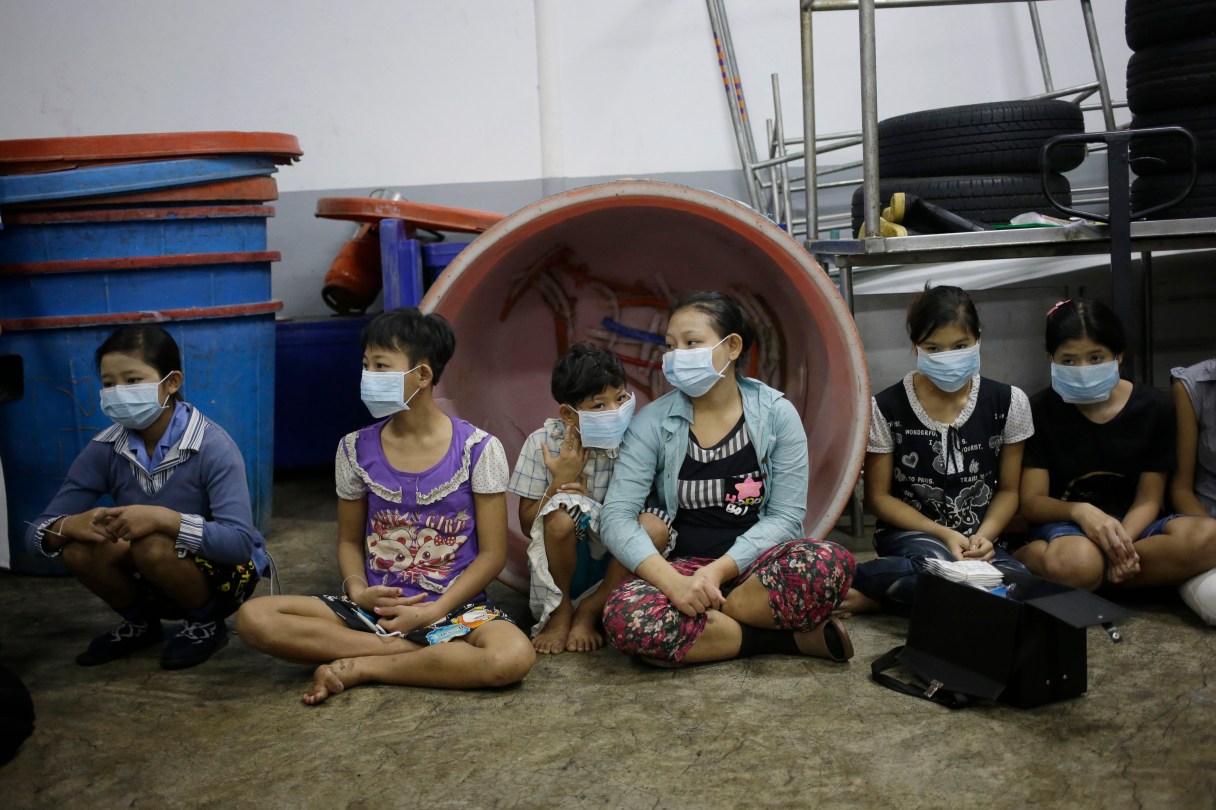
In this Monday, Nov. 9, 2015 photo, children and teenagers sit together to be registered by officials during a raid on a shrimp shed in Samut Sakhon, Thailand. Abuse is common in Samut Sakhon, which attracts workers from some of the world’s poorest countries, mostly from Myanmar. An International Labor Organization report estimated 10,000 migrant children aged 13 to 15 work in the city. Another U.N. agency study found nearly 60 percent of Burmese laborers toiling in its seafood processing industry were victims of forced labor. (AP Photo/Dita Alangkara)
In this Monday, Nov. 9, 2015 photo, children and teenagers sit together to be registered by officials during a raid on a shrimp shed in Samut Sakhon, Thailand. Abuse is common in Samut Sakhon, which attracts workers from some of the world’s poorest countries, mostly from Myanmar. An International Labor Organization report estimated 10,000 migrant children aged 13 to 15 work in the city. Another U.N. agency study found nearly 60 percent of Burmese laborers toiling in its seafood processing industry were victims of forced labor. (AP Photo/Dita Alangkara) In this Monday, Nov. 9, 2015 photo, children and teenagers sit together to be registered by officials during a raid on a shrimp shed in Samut Sakhon, Thailand. Abuse is common in Samut Sakhon, which attracts workers from some of the world’s poorest countries, mostly from Myanmar. An International Labor Organization report estimated 10,000 migrant children aged 13 to 15 work in the city. Another U.N. agency study found nearly 60 percent of Burmese laborers toiling in its seafood processing industry were victims of forced labor. (AP Photo/Dita Alangkara)

SAMUT SAKHON, Thailand (AP) – Every morning at 2 a.m., they heard a kick on the door and a threat: Get up or get beaten. For the next 16 hours, No. 31 and his wife stood in the factory that owned them with their aching hands in ice water. They ripped the guts, heads, tails and shells off shrimp bound for overseas markets, including grocery stores and all-you-can-eat buffets across the United States.

After being sold to the Gig Peeling Factory, they were at the mercy of their Thai bosses, trapped with nearly 100 other Burmese migrants. Children worked alongside them, including a girl so tiny she had to stand on a stool to reach the peeling table. Some had been there for months, even years, getting little or no pay. Always, someone was watching.

No names were ever used, only numbers given by their boss – Tin Nyo Win was No. 31.

Pervasive human trafficking has helped turn Thailand into one of the world’s biggest shrimp providers. Despite repeated promises by businesses and government to clean up the country’s $7 billion seafood export industry, an Associated Press investigation has found shrimp peeled by modern-day slaves is reaching the U.S., Europe and Asia.

The problem is fueled by corruption and complicity among police and authorities. Arrests and prosecutions are rare. Raids can end up sending migrants without proper paperwork to jail, while owners go unpunished.