
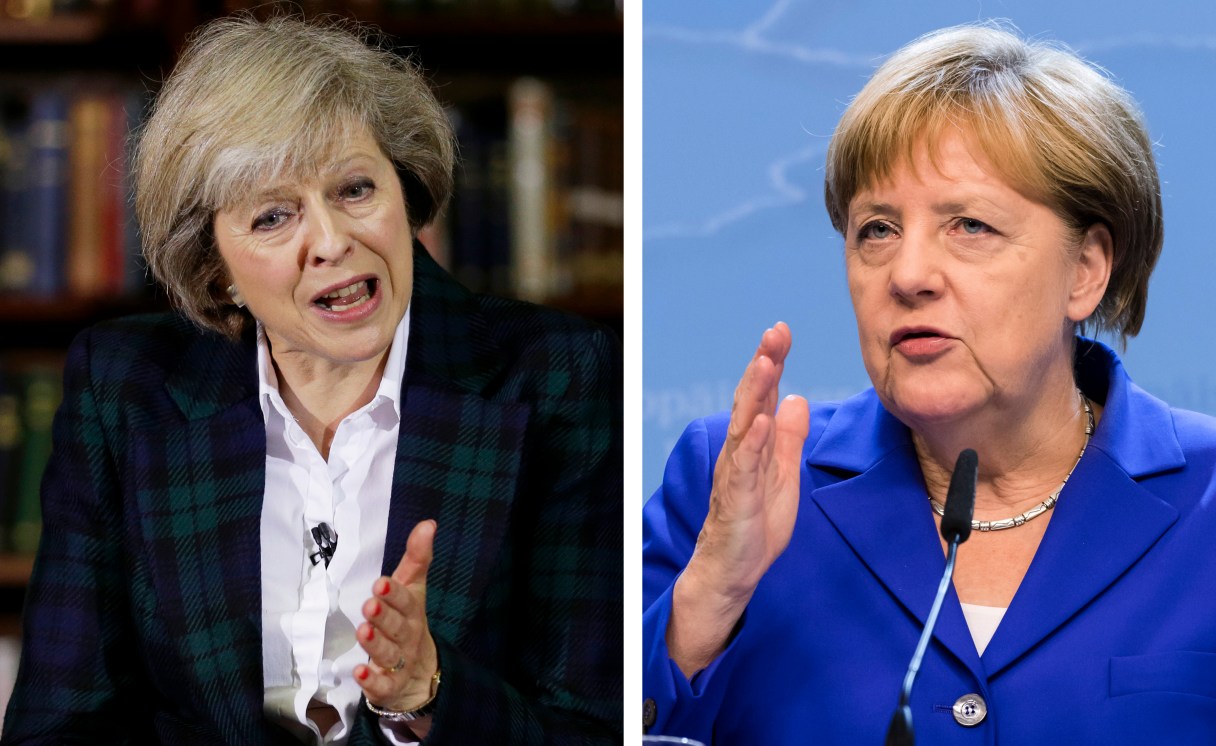
Within moments of Theresa May’s confirmation as the next prime minister of Britain, London tabloids and wags were comparing her to Britain’s “iron lady” of the 1980s, Margaret Thatcher. But those taking a closer look see more in common with Europe’s most powerful woman today: Germany’s “iron chancellor,” Angela Merkel.
Both women have a track record of cautious pragmatism. Merkel famously will sit on the fence on many issues waiting for consensus to build before she commits herself to whichever side is more likely to work. May demonstrated her own grasp of patient tactics, opting to stay on the policy sidelines during Britain’s bruising referendum on European Union membership – positioned in the middle, seemingly the best spot from which to take charge of a divided Conservative Party in the wake of David Cameron’s resignation.
“It’s often said that you cannot tell what Merkel thinks about an issue until the last moment, if even then. May seems to be similarly inscrutable. She waits for her moment,” said Hans Kundnani, a London-based foreign policy analyst at the German Marshall Fund think tank.
“Everyone seems to want to compare women leaders to Thatcher. Even when Merkel first emerged, she was compared with Thatcher as well. But actually, Merkel is the anti-Thatcher,” Kundnani said.
“Thatcher was very passionate with strong beliefs and fought for them. She was a divisive politician, whereas Merkel is the opposite. So far, based on what we know of May, there seems to be more Merkel in her than Maggie.”