

Wednesday, November 11, 2026Nov 11

National averages show a recovering economy, but that isn’t the reality for many Americans

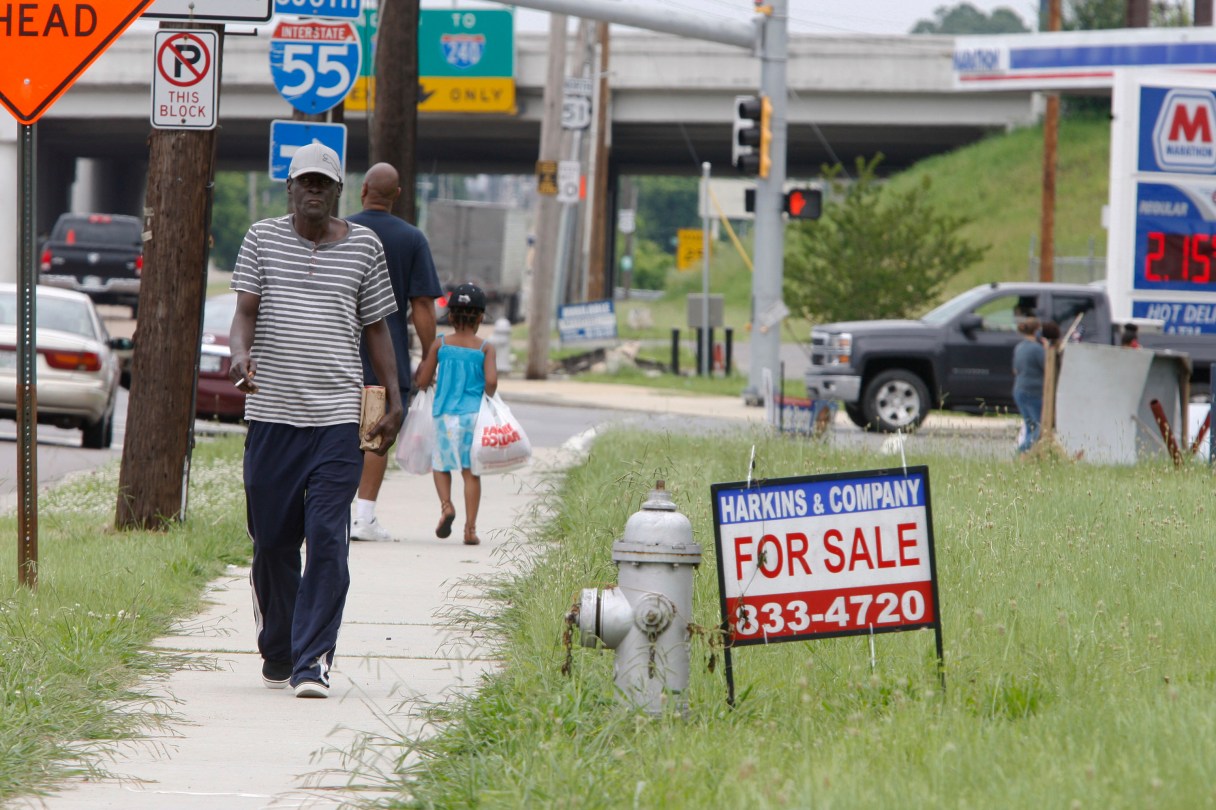
In this May 31, 2016 photo, pedestrians walk past a "for sale" sign on Elvis Presley Boulevard in Memphis, Tenn. The U.S. economy has added a healthy average of roughly 200,000 jobs a month since 2011. Yet most have been either high-paying or low-paying positions. That reflects what economists call the hollowing out of the workforce, as traditional mid-level positions such as office administrators, bookkeepers, and factory assembly-line workers are cut in recessions and never fully recover their previous levels of employment. (AP Photo/Karen Pulfer Focht)
In this May 31, 2016 photo, pedestrians walk past a "for sale" sign on Elvis Presley Boulevard in Memphis, Tenn. The U.S. economy has added a healthy average of roughly 200,000 jobs a month since 2011. Yet most have been either high-paying or low-paying positions. That reflects what economists call the hollowing out of the workforce, as traditional mid-level positions such as office administrators, bookkeepers, and factory assembly-line workers are cut in recessions and never fully recover their previous levels of employment. (AP Photo/Karen Pulfer Focht) In this May 31, 2016 photo, pedestrians walk past a "for sale" sign on Elvis Presley Boulevard in Memphis, Tenn. The U.S. economy has added a healthy average of roughly 200,000 jobs a month since 2011. Yet most have been either high-paying or low-paying positions. That reflects what economists call the hollowing out of the workforce, as traditional mid-level positions such as office administrators, bookkeepers, and factory assembly-line workers are cut in recessions and never fully recover their previous levels of employment. (AP Photo/Karen Pulfer Focht)
photo In this June 1, 2016 photo, vacant buildings stand near the Pyramid which houses a Bass Pro Shops megastore that opened in 2015, in Memphis, Tenn. Statistics describe an America that is nearly recovered from the Great Recession, but the national averages don’t give a complete or accurate picture. Wealth is flowing disproportionately to the rich, skewing the data used to measure economic health. (AP Photo/Karen Pulfer Focht)

Job increase

Hamilton County added 18,169 jobs between 2010 and 2014, an 11.2 percent increase in employment.

MEMPHIS – Dozens of FedEx jets queue up for takeoff at the airport here. Beale Street, the heart of the music district, hums with tourists. Yet the empty storefronts in Memphis’ moribund downtown and the cash-advance shops strewn near its highways tell another story.

It’s a tale of two cities, all in one place. And it’s a tale of two Americas: the one that national averages indicate has all but recovered from the Great Recession and the one lost in the statistics.

The pattern is evident in cities and towns across America, from Memphis to Colorado Springs, Colo., from Wichita to Jacksonville: The national numbers aren’t capturing the experience of many typical people in typical communities.

A key reason is that pay and wealth are flowing disproportionately to the rich, skewing the data used to measure economic health – and producing an economy on paper that most Americans don’t recognize in their own lives. That disconnect has fueled much of the frustration and anxiety that have propelled the insurgent presidential campaigns of Donald Trump and Bernie Sanders.