
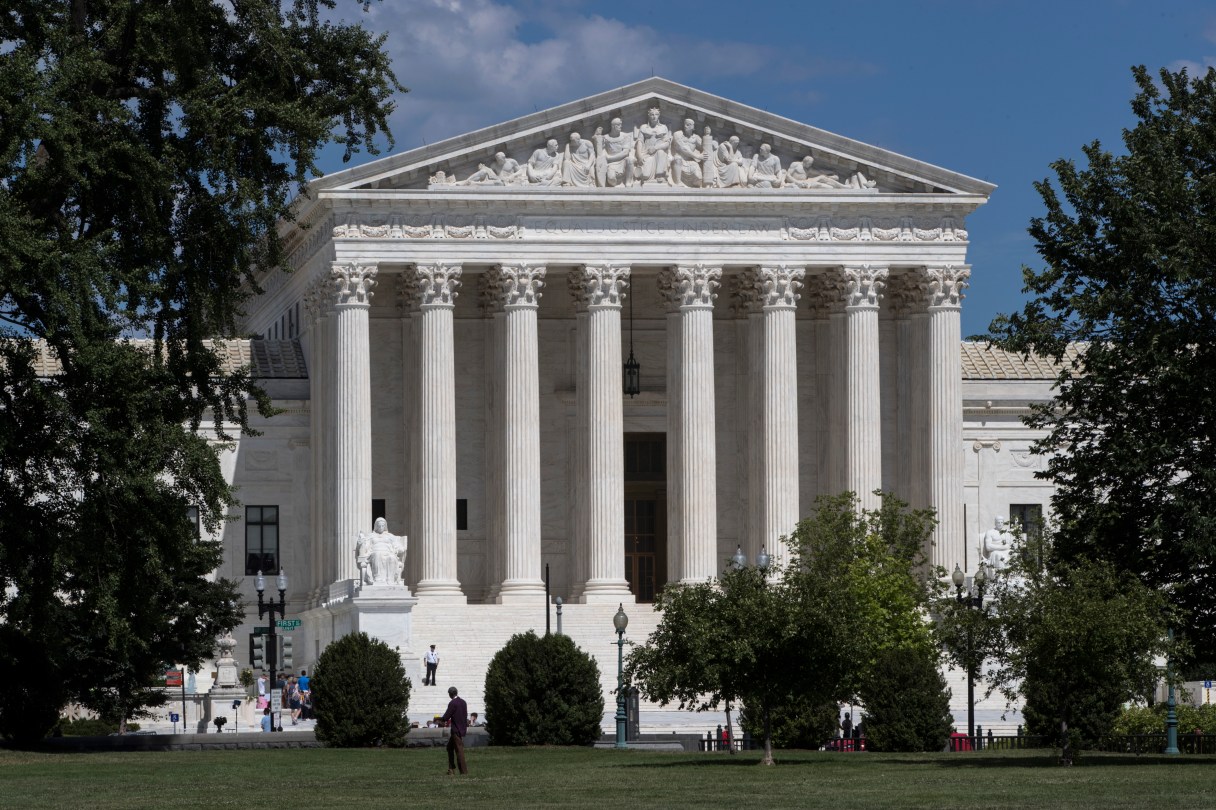
The Supreme Court handed American Express a win Monday in a lawsuit over rules it imposes on merchants who accept its cards.
Under their contracts, merchants who accept American Express generally can’t encourage customers to use other credit cards. That’s even though Visa and MasterCard generally charge merchants lower fees. But American Express prevents merchants who accept its card from offering customers discounts or other incentives to use other cards or expressing a preference for other cards. The federal government and a group of states sued over American Express’ so-called anti-steering provisions, arguing that they violate federal law.
American Express has defended its practices. The Supreme Court noted that the company has traditionally charged higher fees to merchants than competitors because it delivers wealthier cardholders who spend more money. American Express uses its higher merchant fees to offer its cardholders better rewards.
On Monday the high court ruled 5-4 in favor of American Express, allowing it to continue to bar merchants from steering customers to cards with lower fees.
“In this case, we must decide whether Amex’s antisteering provisions violate federal antitrust law. We conclude they do not,” Justice Clarence Thomas wrote in an opinion for himself and his conservative colleagues, Chief Justice John Roberts and Justices Anthony Kennedy, Samuel Alito and Neil Gorsuch. Thomas said “Amex’s business model has spurred robust interbrand competition and increased the quality and quantity of credit-card transactions.”