
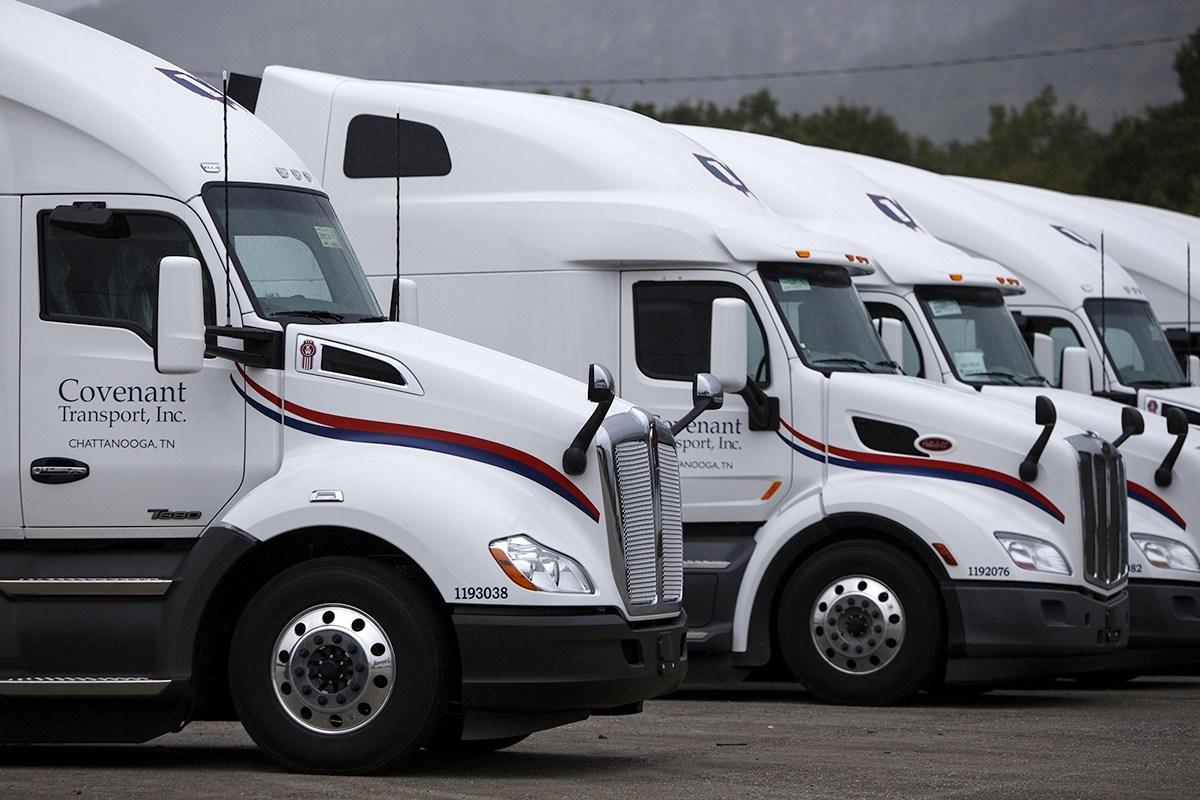
A slowdown in the one-way truckload business this year helped cut net income for Covenant Transportation Group, Inc. in the second quarter despite an overall gain in company revenues.
But the Chattanooga-based trucking company still boosted overall revenues following its acquisition of Landair last July and Covenant outperformed analysts’ expectations for the three-month period, which were revised last week when the company warned about the slowdown in business.
Covenant said today its adjusted net income in the second quarter totaled $6.6 million, or 35 cents per share, on revenues of $219.3 million. In the same period a year ago, Covenant had adjusted income of $10 million, or 54 cents per share, on sales of $196.3 million.
The results this year were a penny per share better than the consensus estimate of analysts who follow Covenant. Wall Street analysts had predicted Covenant would earn net income of 34 cents a share after the company said last week it anticipated lower earnings because of a slower freight market.
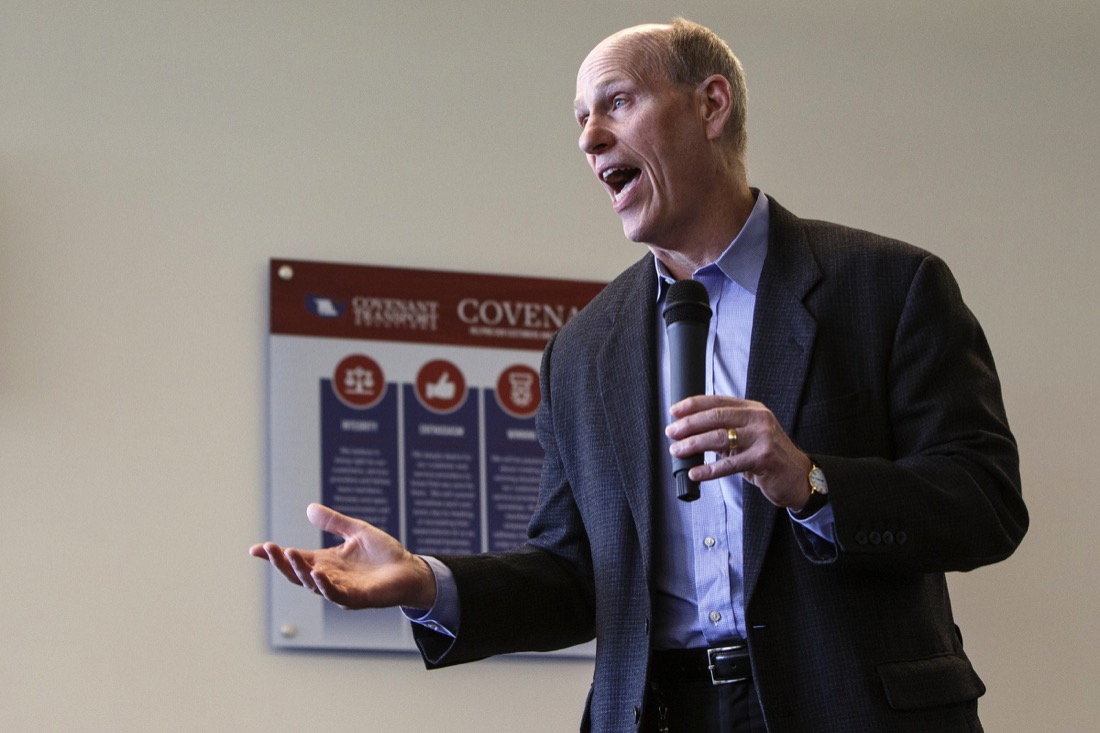 David Parker, the founder and CEO of Covenant Transportation Group Inc., speaks as they celebrate the expansion of Covenant Transport Solutions into a new 16,000-square-foot North Shore location on Wednesday, April 3, 2019, in Chattanooga, Tenn. Covenant Transport Solutions, the freight brokerage business that Covenant began in 2006, relocated March 1 into the second floor of the Signal Mill building.
“Our financial results for the second quarter illustrate the reason for our strategy of becoming more embedded in our customers’ supply chains,”Covenant CEO David Parker said in today’s earnings announcement. “Our dedicated contract operations in our Star and Landair subsidiaries, along with our managed freight and factoring businesses, and our investment in TEL, performed quite well. On the other hand, our less contracted expedited and solo refrigerated operations suffered from over-supply in relation to demand and a late-developing produce season. We intend to continue to pursue a more predictable and consistently profitable business model as we allocate assets across our operations.”