
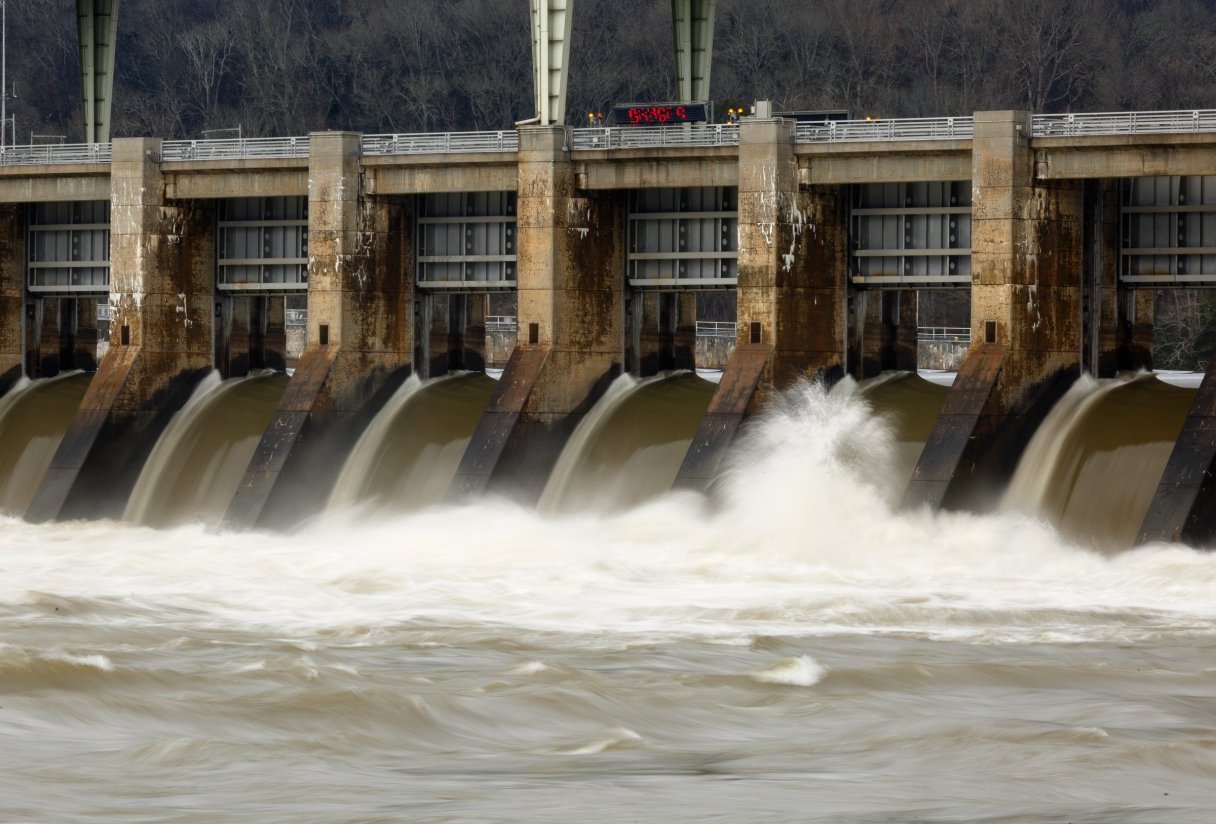
The first three months of this year were the wettest start to any year in history across the Tennessee Valley, surpassing the previous record set in 1891.
A record 24.61 inches of rain drenched the region in the first quarter, raising river and lake levels, flooding some low-lying areas and shutting down some riverfront parks and river shipments through Chattanooga.
But for the most part, Chattanooga has avoided much flooding so far this year even with nearly half of a normal year’s total rainfall coming in just three months.
That’s because through the wet winter, TVA’s network of 49 dams held back 2.2 trillion gallons of water in storage reservoirs upstream of Chattanooga, which is the drainage point in the Tennessee River basin for more than 20,000 square miles of East Tennessee, western Virginia, western North Carolina and North Georgia.
TVA estimates it averted nearly $1 billion of flood damage, including $772 million in damage in Chattanooga, that would have otherwise been caused by the heavy rains if the agency’s dams and water management programs were not in place. Without those dams, TVA engineers estimate the Tennessee River would have risen 15.8 feet above what it reached on Feb. 11, leaving many riverfront, downtown and North Shore properties under water.