
Wednesday, November 11, 2026Nov 11

Federal report warns of financial havoc from climate change

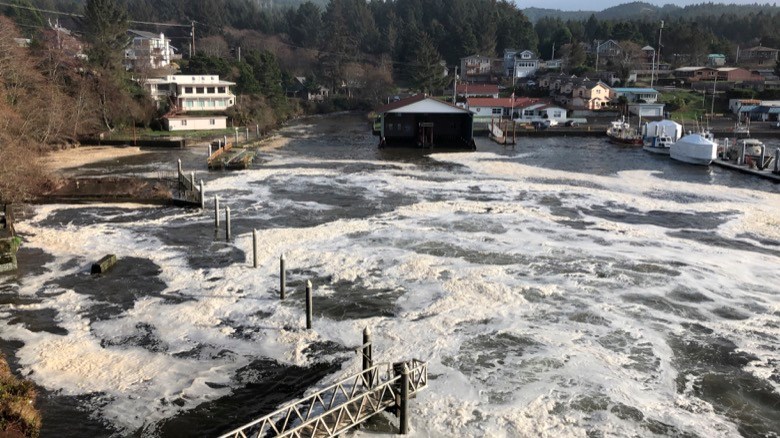
In this Jan. 11, 2020 photo an extreme high tide rolls in and floods parts of the harbor in Depoe Bay, Ore. during a so-called "king tide" that coincided with a big winter storm. Amateur scientists are whipping out their smartphones to document the effects of extreme high tides on shore lines from the United States to New Zealand, and by doing so are helping better predict what rising sea levels due to climate change will mean for coastal communities around the world. (AP Photo/Gillian Flaccus)
In this Jan. 11, 2020 photo an extreme high tide rolls in and floods parts of the harbor in Depoe Bay, Ore. during a so-called "king tide" that coincided with a big winter storm. Amateur scientists are whipping out their smartphones to document the effects of extreme high tides on shore lines from the United States to New Zealand, and by doing so are helping better predict what rising sea levels due to climate change will mean for coastal communities around the world. (AP Photo/Gillian Flaccus) In this Jan. 11, 2020 photo an extreme high tide rolls in and floods parts of the harbor in Depoe Bay, Ore. during a so-called "king tide" that coincided with a big winter storm. Amateur scientists are whipping out their smartphones to document the effects of extreme high tides on shore lines from the United States to New Zealand, and by doing so are helping better predict what rising sea levels due to climate change will mean for coastal communities around the world. (AP Photo/Gillian Flaccus)

WASHINGTON – A report commissioned by federal regulators overseeing the nation’s commodities markets has concluded that climate change threatens U.S. financial markets, as the costs of wildfires, storms, droughts and floods spread through insurance and mortgage markets, pension funds and other financial institutions.

“A world wracked by frequent and devastating shocks from climate change cannot sustain the fundamental conditions supporting our financial system,” concluded the report, “Managing Climate Risk in the Financial System,” which was requested last year by the Commodity Futures Trading Commission.

Those observations are not entirely new, but they carry new weight coming with the imprimatur of the regulator of complex financial instruments like futures, swaps and other derivatives that help fix the price of commodities like corn, oil and wheat. It is the first wide-ranging federal government study focused on the specific impacts of climate change on Wall Street.

Perhaps most notable is that it is being published at all. The Trump administration has suppressed, altered or watered down government science around climate change as it pushes an aggressive agenda of environmental deregulation that it hopes will spur economic growth.

The new report asserts that doing nothing to avert climate change will do the opposite.