
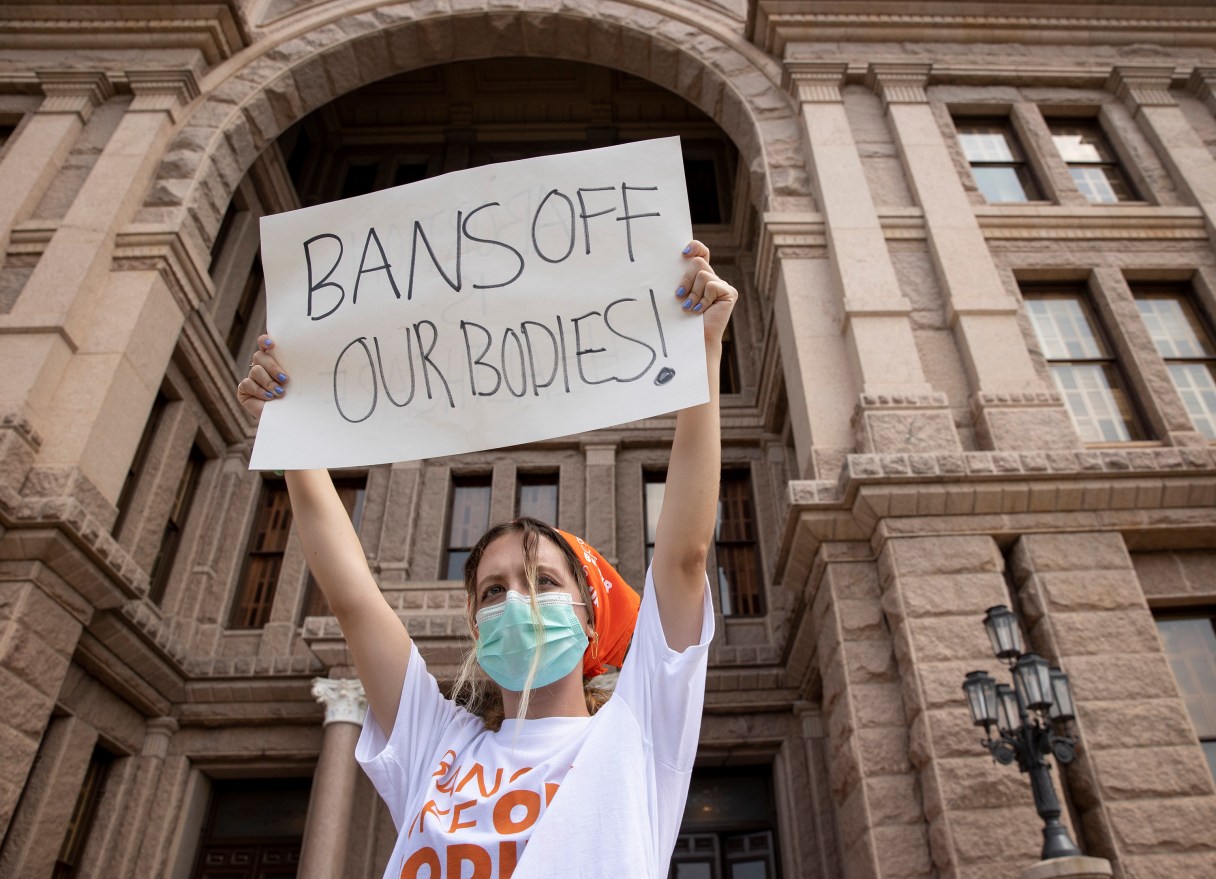
On Saturday, there will be demonstrations across the country to protest Texas’ crowdsourced abortion ban and the Supreme Court’s refusal to enjoin it. It could be a broad mobilization. Rachel O’Leary Carmona, executive director of the Women’s March, part of the coalition organizing the protests, told me there are 650 marches planned nationwide. I’ll be happily surprised, however, if any of the events are very large. Organizers have applied for a permit for 10,000 people in Washington. That’s about 10% of the people who showed up there for the third Women’s March in 2019.
Lara Putnam, a historian at the University of Pittsburgh, told me she was impressed by how many events are being planned in Pennsylvania – more than for the original Women’s March. “But are the numbers of people showing up going to be the same?” she said. “No.”
I’ve always assumed that if the Supreme Court overturns Roe v. Wade, which I suspect it will next year, it would spark a furious backlash. But it turns out the Supreme Court can functionally suspend Roe without making too many waves. Maybe some people are reluctant to protest because of delta. But after four years of Donald Trump and a year and a half of a pandemic, a lot of politically committed Americans are burned out.
Of course, not all of them. Putnam has been tracking people, especially women, who were spurred to get involved in politics by horror and revulsion at Trump’s election. She told me that those who were most active – she estimates about 20% of the total – are still at it and super involved.
But “in the outer ranks of people who became politically engaged, that’s where I see the biggest shift,” Putnam said. “Many people are just worrying about other things. It’s coronavirus. It’s family; it’s work.” They have, she said, “backburnered politics” for now.