
Wednesday, November 11, 2026Nov 11

Key inflation gauge hit 6.1% in January, highest since 1982

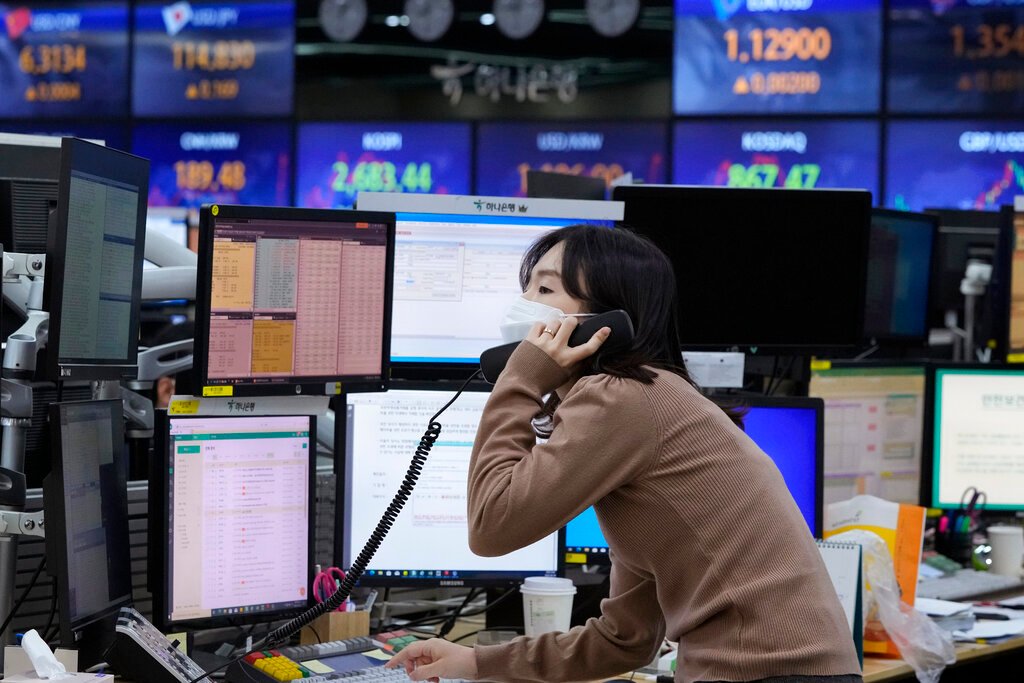
A currency trader talks on the phone at the foreign exchange dealing room of the KEB Hana Bank headquarters in Seoul, South Korea, Thursday, Feb. 24, 2022. Just what a vulnerable world economy didn't need — a conflict that accelerates inflation, rattles markets and portends trouble for everyone from European consumers to indebted Chinese developers and families in Africa that are enduring soaring food prices. Russia's attack on Ukraine and retaliatory sanctions from the West may not portend another global recession. (AP Photo/Ahn Young-joon)
A currency trader talks on the phone at the foreign exchange dealing room of the KEB Hana Bank headquarters in Seoul, South Korea, Thursday, Feb. 24, 2022. Just what a vulnerable world economy didn't need — a conflict that accelerates inflation, rattles markets and portends trouble for everyone from European consumers to indebted Chinese developers and families in Africa that are enduring soaring food prices. Russia's attack on Ukraine and retaliatory sanctions from the West may not portend another global recession. (AP Photo/Ahn Young-joon) A currency trader talks on the phone at the foreign exchange dealing room of the KEB Hana Bank headquarters in Seoul, South Korea, Thursday, Feb. 24, 2022. Just what a vulnerable world economy didn't need — a conflict that accelerates inflation, rattles markets and portends trouble for everyone from European consumers to indebted Chinese developers and families in Africa that are enduring soaring food prices. Russia's attack on Ukraine and retaliatory sanctions from the West may not portend another global recession. (AP Photo/Ahn Young-joon)

WASHINGTON (AP) – An inflation gauge that is closely monitored by the Federal Reserve jumped 6.1% in January compared with a year ago, the latest evidence that Americans are enduring sharp price increases that will likely worsen after Russia’s invasion of Ukraine.

The figure reported Friday by the Commerce Department was the largest year-over-year rise since 1982. Excluding volatile food and energy prices, core inflation increased 5.2% in January from a year earlier.

Robust consumer spending has combined with widespread product and worker shortages to create the highest inflation in four decades – a heavy burden for U.S. households, especially lower-income families faced with elevated costs for food, fuel and rent.

At the same time, consumers as a whole largely shrugged off the higher prices last month and boosted their spending 2.1% from December to January, Friday’s report said, an encouraging sign for the economy and the job market. That was a sharp improvement from December, when spending fell. Americans across the income scale have been receiving pay raises and have amassed more savings than they had before the pandemic struck two years ago. That expanded pool of savings provides fuel for future spending.

Inflation, though, is expected to remain high and perhaps accelerate in the coming months, especially with Russia’s invasion likely disrupting oil and gas exports. The costs of other commodities that are produced in Ukraine, such as wheat and aluminum, have also increased.