
Amid all the attention recently to “Trumpty Dumpty’s” do-over presidential candidacy, the midterm elections and Speaker Nancy Pelosi’s semi-farewell, one bit of Washington news was overshadowed but shouldn’t be. As with Donald Trump, we must not become inured to this other newsmaker’s travesties.
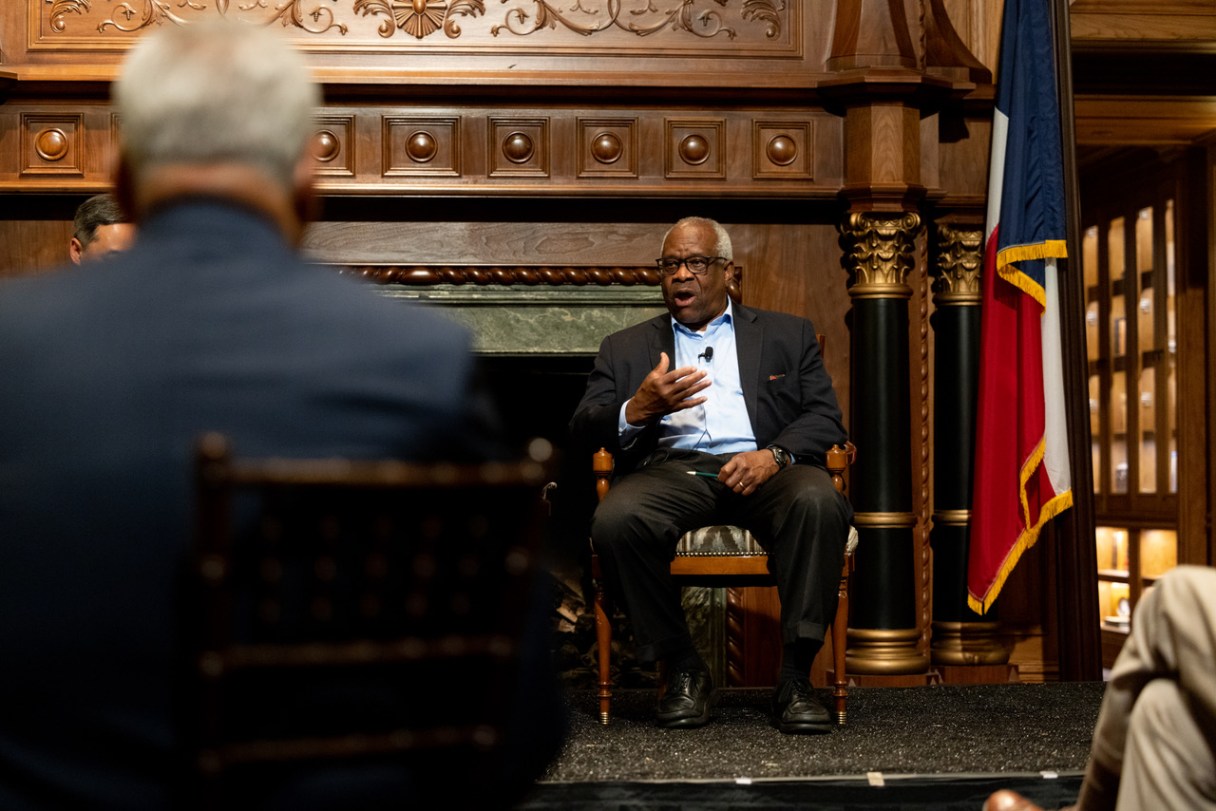
I’m talking about Supreme Court Justice Clarence Thomas.
Thomas has done it again. Last week the longest-serving justice on the nation’s highest court defied widespread calls from legal experts that he recuse himself from cases that have anything to do with the seditious events surrounding Jan. 6, 2021. You know, the failed coup in which Thomas’ wife, far-right political activist Virginia “Ginni” Thomas, was a participant. Worse, this latest case possibly implicates Ginni Thomas directly in what was an unprecedented attempt to thwart a peaceful transfer of power.
You don’t need to be a lawyer to see the justice’s conflict of interest here. More broadly, his behavior reflects the impunity enjoyed by the life-tenured, virtually unaccountable justices on the court.
In the case in question, another election denier, Arizona Republican Party chair Kelli Ward, sought to block a subpoena from the House Jan. 6 committee for her phone and text records. On Nov. 14 the court by a 7-to-2 vote denied Ward’s request. Even for the conservative court, it wasn’t a close call. The two dissenters? Right-wing Justice Samuel Alito and — shockingly — Thomas.