
It’s a red letter day in Chattanooga. Well, actually Aug. 10, 2022, was the red letter day. That was when our city was hit with a 10-year rain event that flooded streets, parking lots and buildings — but — the downpour didn’t cause raw sewage to be dumped into the Tennessee River, a drinking water source for millions of people.
Despite the torrent, “one very important thing did not happen — not one gallon of untreated wastewater overflowed into the Tennessee River, thanks to the city’s new wet weather equalization station,” said Mark Heinzer, interim director of the Moccasin Bend wastewater treatment plant.
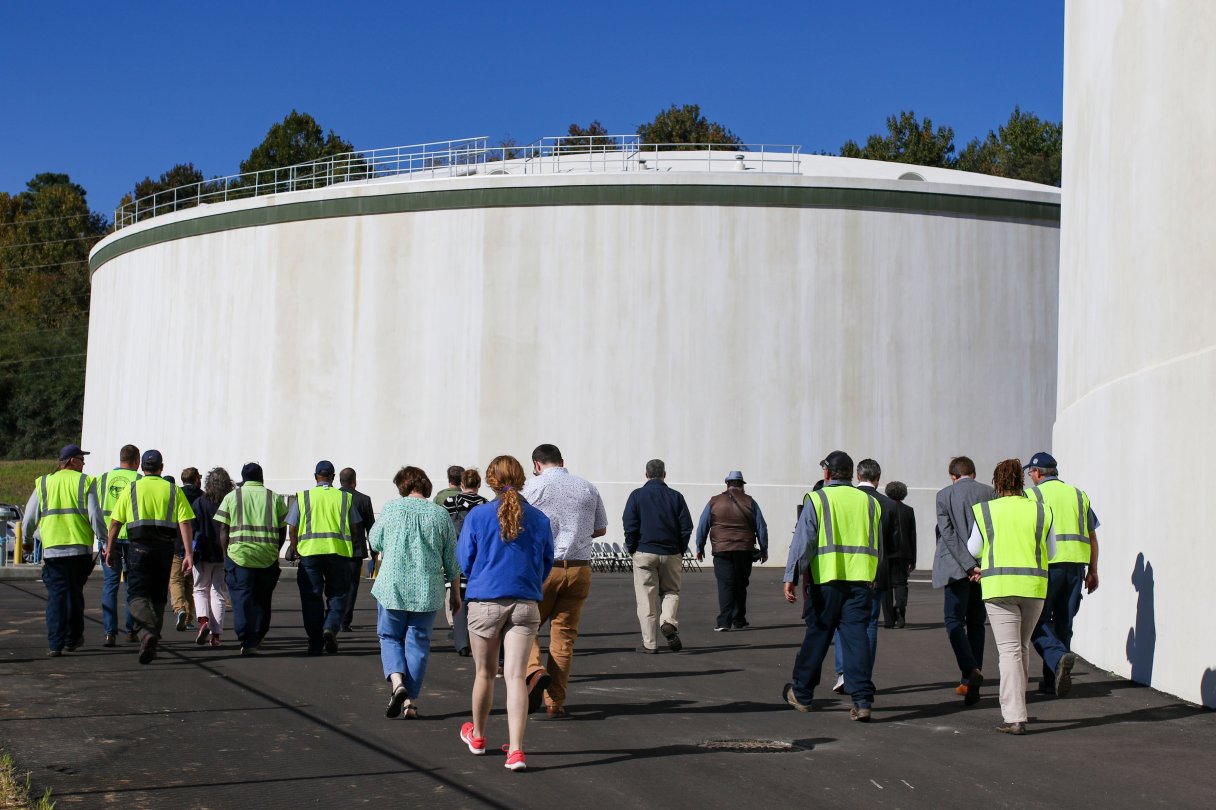
That wet weather equalization station is three enormous storage tanks that collectively can hold up to 30 million gallons of wastewater from such storm events. That temporary storage effectively prevents untreated wastewater from overflowing into the river, a federal water quality violation, until the sewage treatment plant — now prettily called the “Moccasin Bend Environmental Campus” — can take in and treat the increased flow.
The tanks, costing about $60 million, are the newest in the city’s arsenal of nine other, older and cavernous underground storage tanks to serve the same purpose. It’s a system that has been added and improved on over the past two decades as part of Chattanooga’s effort to become compliant with water pollution laws. This most recent expenditure is part of the $430 million the city has spent since it signed an agreement with the U.S. Environmental Protection Agency in 2013 to clean up.
Under the gun from EPA at least since the 1990s, Chattanooga began in 2000 to stop the sewage-tainted overflows. To accomplish this, the city began building the tanks, a common fix in rainy areas where a treatment plant (like ours) runs at about half of its capacity on most days — until another Southeastern monsoon frog-strangler comes along.