
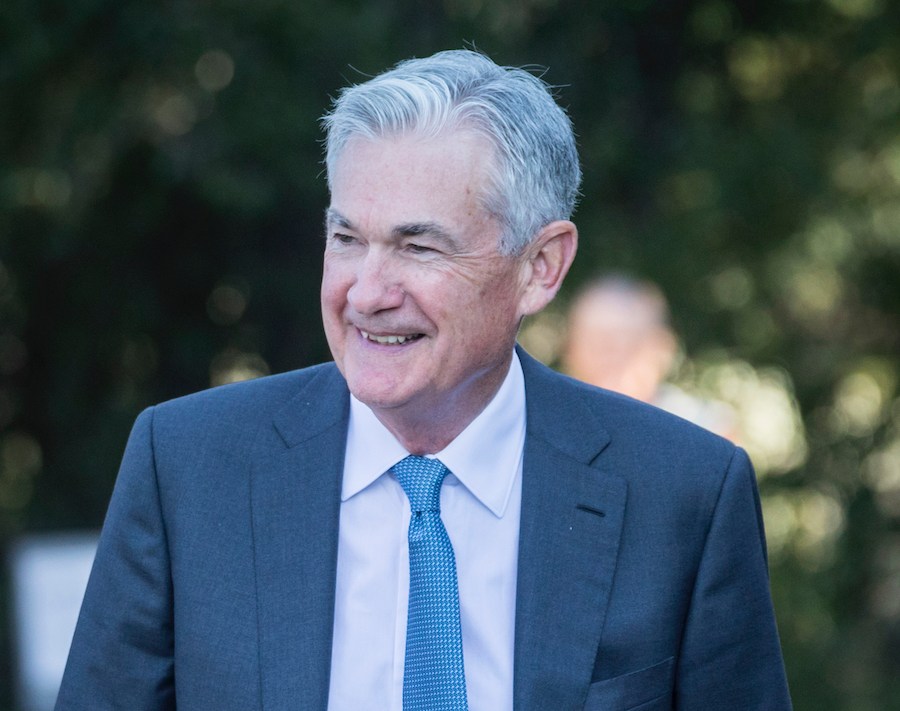
WASHINGTON (AP) — The last time the Federal Reserve faced inflation as high as it is now, in the early 1980s, it jacked up interest rates to double-digit levels — and in the process caused a deep recession and sharply higher unemployment.
On Thursday, Chair Jerome Powell suggested that this time, the Fed won’t have to go nearly as far.
“We think we can avoid the very high social costs that Paul Volcker and the Fed had to bring into play to get inflation back down,” Powell said in an interview at the Cato Institute, referring to the Fed chair in the early 1980s who sent short-term borrowing rates to roughly 19% to throttle punishingly high inflation.
Powell also reiterated that the Fed is determined to lower inflation, now near a four-decade high of 8.5%, by raising its short-term rate, which is in a range of 2.25% to 2.5%.
Even so, he did not comment on what the Fed may do at its next meeting in two weeks. Economists and Wall Street traders increasingly expect the central bank to raise its key short-term rate by a hefty three-quarters of a point for a third straight time. That would extend the most rapid series of rate hikes since Volcker’s time.