
(Editor’s note: Third in a series)
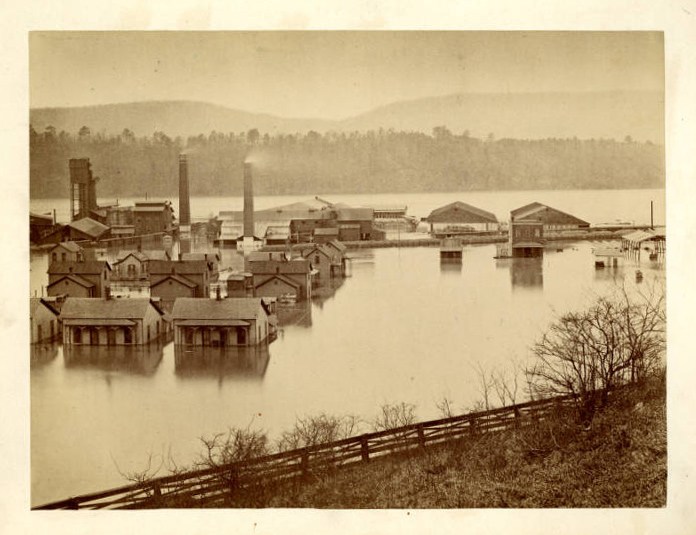
After the Tennessee River swamped Chattanooga and surrounding areas in the floods of 1867 and 1875, residents began watching new storms with a hint of dread. In early April 1886, fears became reality when floodwaters rose and eventually crested at 52.18 feet. More than 7,000 people were driven from their homes and sought shelter and comfort in area churches and friends’ homes. Decades later, stories were told about the “boats flying down Market, Chestnut, 8th and Broad streets,” and Chattanoogans refusing outside aid, as they insisted that their neighbors would perform the “noble work of relief.” The history of the 1886 flood provides a record of how one of the South’s most revitalized industrial centers reacted to its third natural calamity in 19 years.
On Saturday, March 27, a storm moved north from the Gulf Coast, unloading two inches of steady rain over the weekend. On Monday, a fury unfurled, and a “storm of extraordinary violence prevailed.” During the next two days, 5.95 inches fell, which seemed little threatening until compared with an annual rainfall in Chattanooga averaging less than 60 inches. The storms strengthened again Wednesday, March 31, and the waters rose, putting one-third of Chattanooga under water. The Signal Office announced that the rainfall on the 29th and 30th was the heaviest rainfall recorded in a 48-hour period since records were kept. Chattanoogans braced for the worst.
Nine days after the first rains began, the Chattanooga Daily Times carried the story of the flood, focusing on the quickly assembled relief corps: “The warm heart and generous impulse of the city permitted none to want for the necessaries of life or for shelter.” Chattanooga Mayor Alonzo G. Sharpe pointed with pride to the community’s record in stating, “Every application for aid was answered, the homeless were sheltered and the hungry were fed. No outside assistance was accepted, but on the contrary a large sum of money was sent to the suffering poor in Rome, Georgia, and Selma, Alabama.”
Sharpe also assured local citizens that the flood would “produce no permanent damage anywhere, nor will it retard the phenomenal growth of the city to any appreciable extent.” He explained that high waters were an occasional necessary evil for all river cities, but that, even at its highest, Chattanooga had not suffered the devastation of many other river towns in Tennessee, Georgia, Virginia, southern Ohio and Alabama. Like previous Chattanooga mayors, he bravely predicted that “a similar visitation may not occur here again in 100 years.”