
Hamilton County school board members urged Tennessee lawmakers not to expand the state’s education savings account program in any way as part of the legislative agenda it adopted Thursday.
The board’s legislative agenda, which passed 7-2, serves as the message members use when talking with lawmakers.
Board members Felice Hadden, R-Ooltewah, and Jodi Schaffer, R-East Brainerd, voted no, and Ben Daugherty, R-Signal Mountain, abstained. Board Chair Joe Smith, R-Hixson, was absent.
Tennessee’s education savings account program allows low-income students to use around $9,000 of state money for private school tuition and other education-related expenses. The pilot program currently exists in Hamilton, Davidson and Shelby counties.
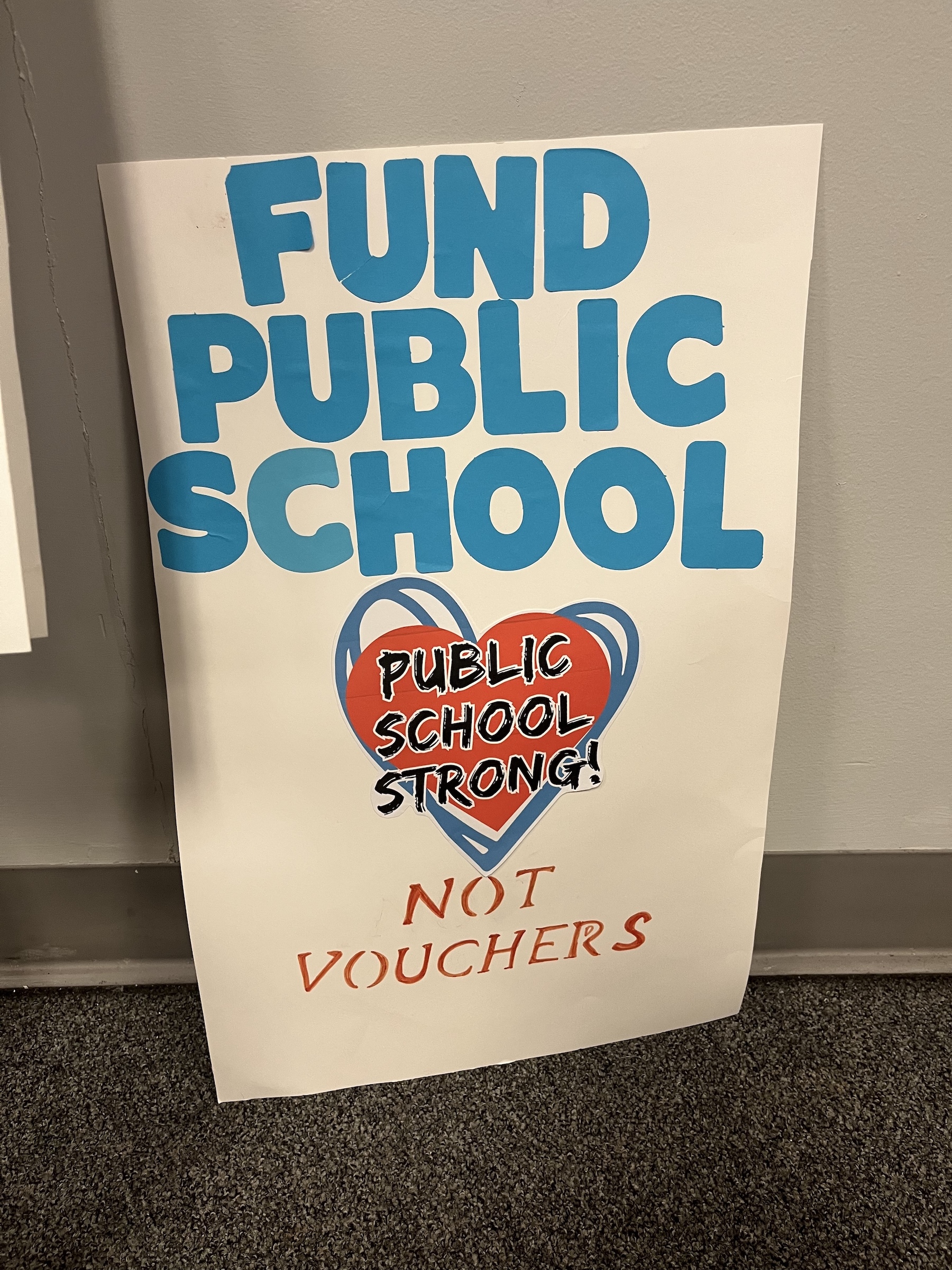
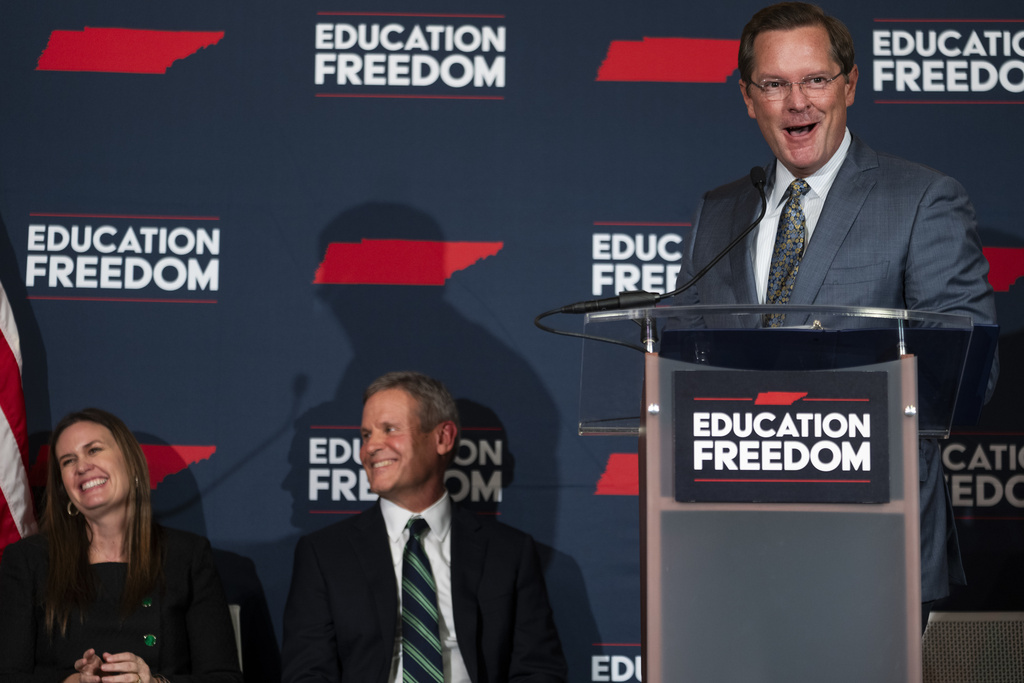
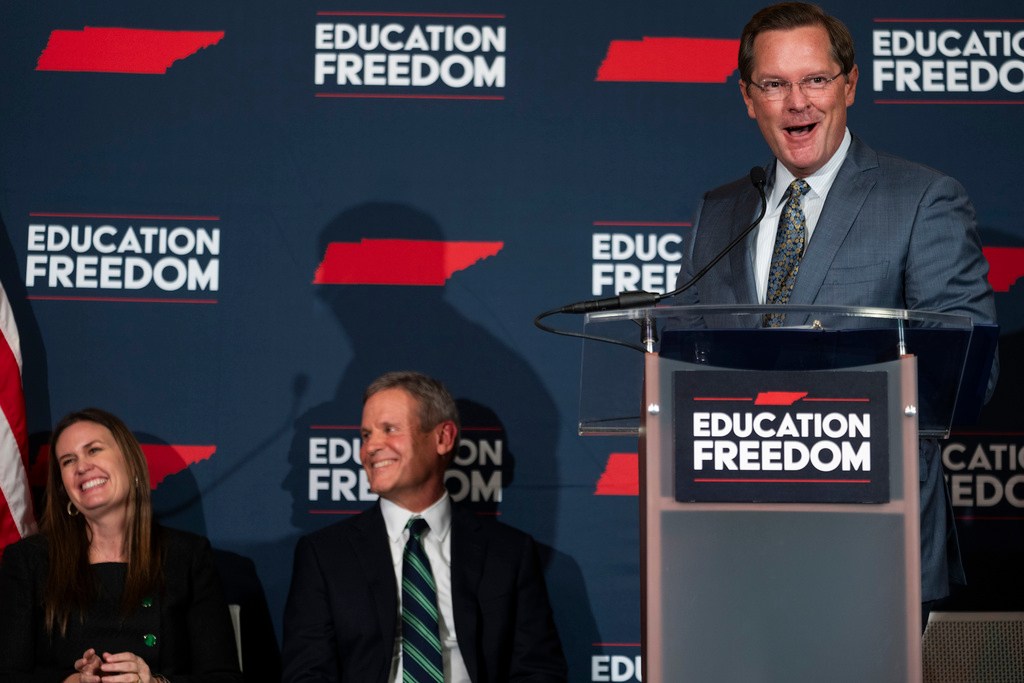
In November, Tennessee House and Senate Republican leaders introduced identical bills to give up to 20,000 students $7,075 each in public funding to enroll in private schools, starting next fall. Half of those scholarships would be reserved for students with disabilities, those eligible for the pilot program and families at or below 300% of the income limit to qualify for free or reduced-price lunches — roughly $175,000 for a family of four.
The proposed bill requires recipients to take either the state’s standardized test or a different nationally standardized test that aligns with the private schools’ curriculum. It also gives every public school teacher a one-time $2,000 bonus and redirects 80% of the taxes collected from Tennessee’s sports betting industry to public school facilities costs.
The board’s legislative agenda urged lawmakers to fully reevaluate the state’s pilot program for effectiveness.
It also recommended that the legislature retain the pilot program’s parameters, including prior public school attendance and its lower income requirement, as well as apply the same accountability requirements for public schools — state tests, school letter grades and growth scores — to private institutions accepting state-funded students.
Expanding the education savings account program is not something the community wants, school board member Ben Connor, D-Chattanooga, said.
Hadden expressed concerns with parts of the agenda’s position on teacher licensure and educator pipelines. The agenda asks the legislature to consider pathways outside the teacher certification exam for educators to get licensed in additional subjects without impacting teacher quality.
Hadden, a former math and exceptional education teacher, said she believes teachers seeking licensure in additional subjects should still need to take the exam.
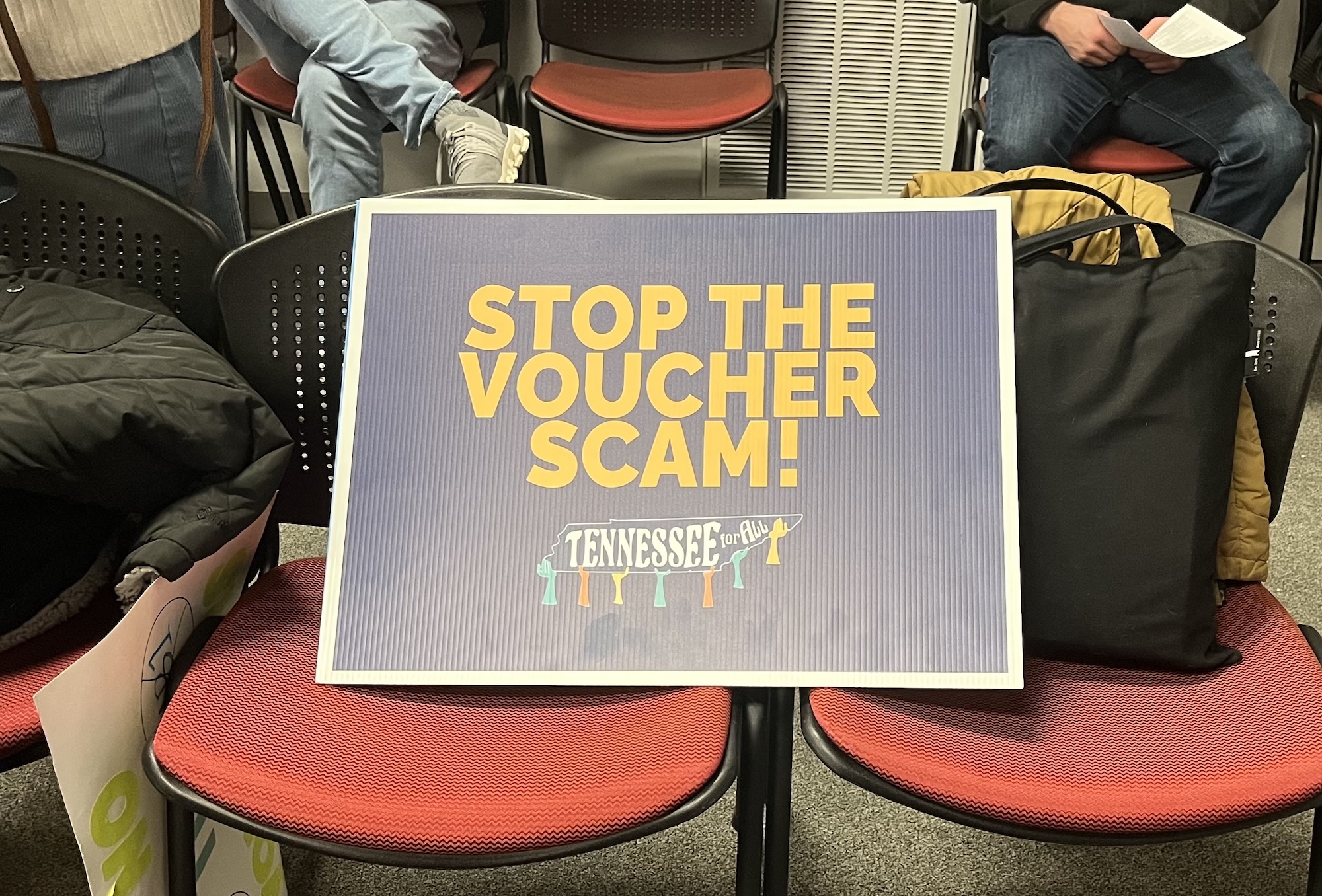
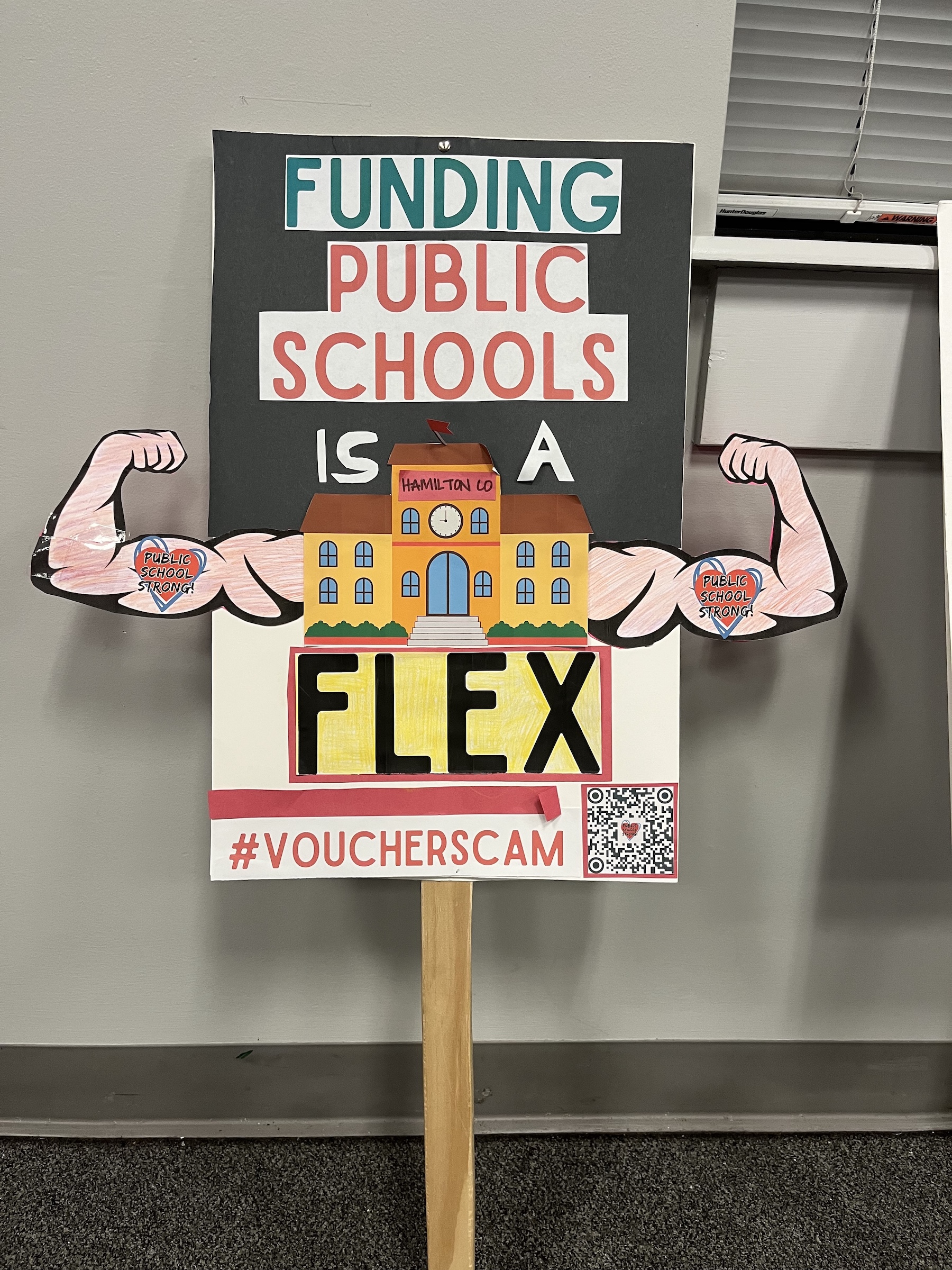
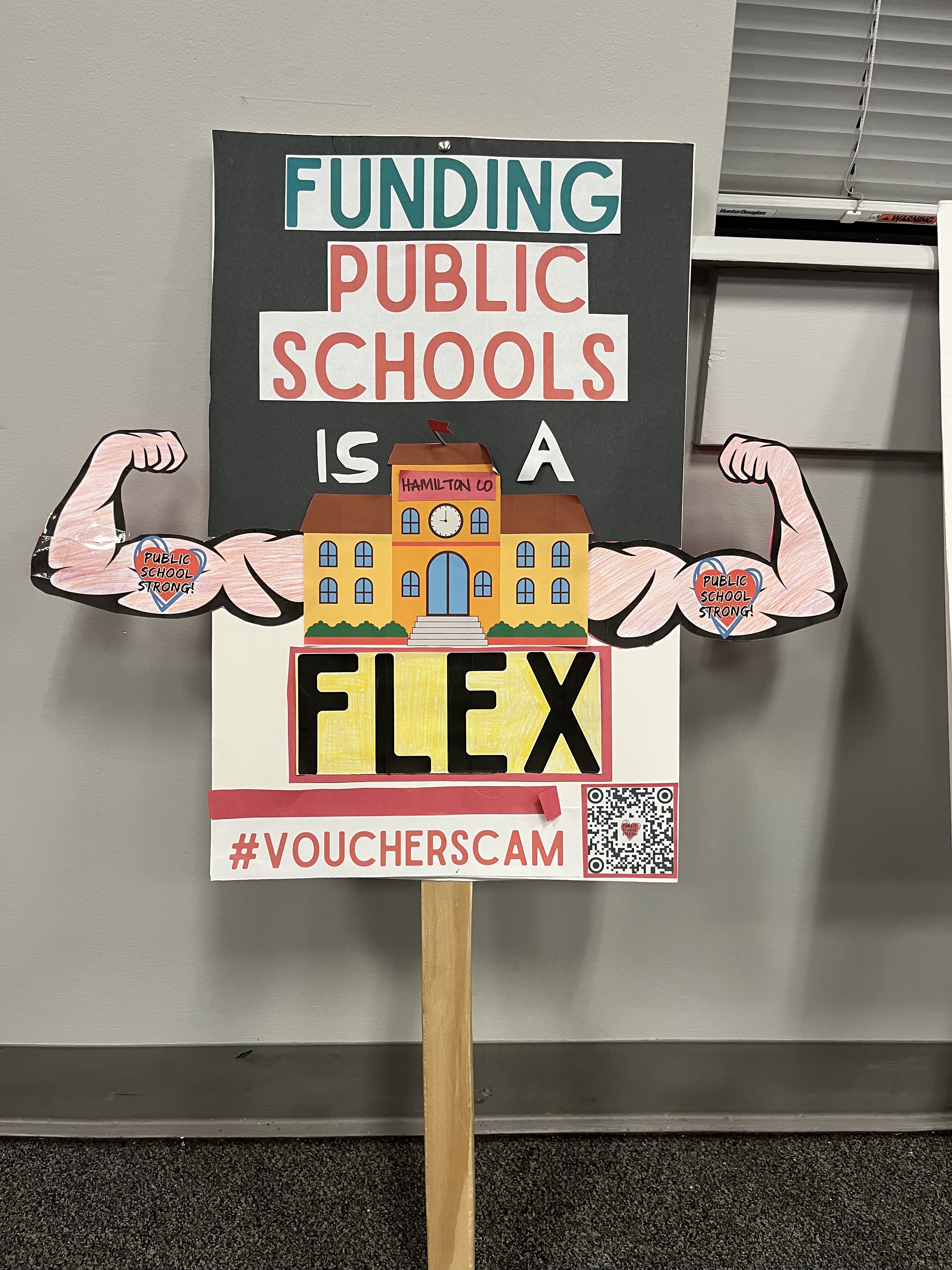 Staff photo by Shannon Coan / A sign opposing giving families state funding to pay for private school tuition is displayed at the Hamilton County school board meeting Thursday, Dec. 19, 2024.
Daugherty said he agreed with most of the agenda but had concerns with asking the legislature to include more support for certain groups of students and programs in the state’s school funding formula. He noted that the district received an extra $67 million in funding when it first came into effect.
He also had challenges with the agenda item urging lawmakers to support funding that prioritizes mental health supports for students, such as school counselors, licensed school social workers and behavioral health professionals.
Mental health is incredibly important, he said.
“Where I’ve got issues is we’ve got roofs with leaks in it,” he said. “We’ve got AC units that need massive updates. If we’re going to be asking for additional funding, I feel like we should be applying it to things that we really need from a maintenance perspective.”
There are a multitude of things schools need, Connor said, but when kids are fed and cared about, there tends to be better outcomes.
“While they can’t do any of that if the roof is falling in on them, I would have to argue that we do need both, so we’ve got to find the line between the two,” he said.
Other points on the legislative agenda include asking Tennessee lawmakers to prioritize local needs over statewide education policies whenever possible, as well as provide funding for districts to hire school security officers in cases where local law enforcement agencies can’t provide a school resource deputy.
Tennessee provides funding to law enforcement agencies to hire school resource deputies, but school districts don’t get reimbursed for school security officers, Superintendent Justin Robertson previously said.
School resource deputies are employed by a local law enforcement agency, while school security officers are employed by the school district and serve in a similar capacity but are not legally authorized to make arrests.
At the federal level, the agenda urges lawmakers to enhance Title 1 funding, which is used to improve academic outcomes for economically disadvantaged students, and fully fund the Individuals with Disabilities Education Act.
Contact Shannon Coan at scoan@timesfreepress.com or 423-757-6396.
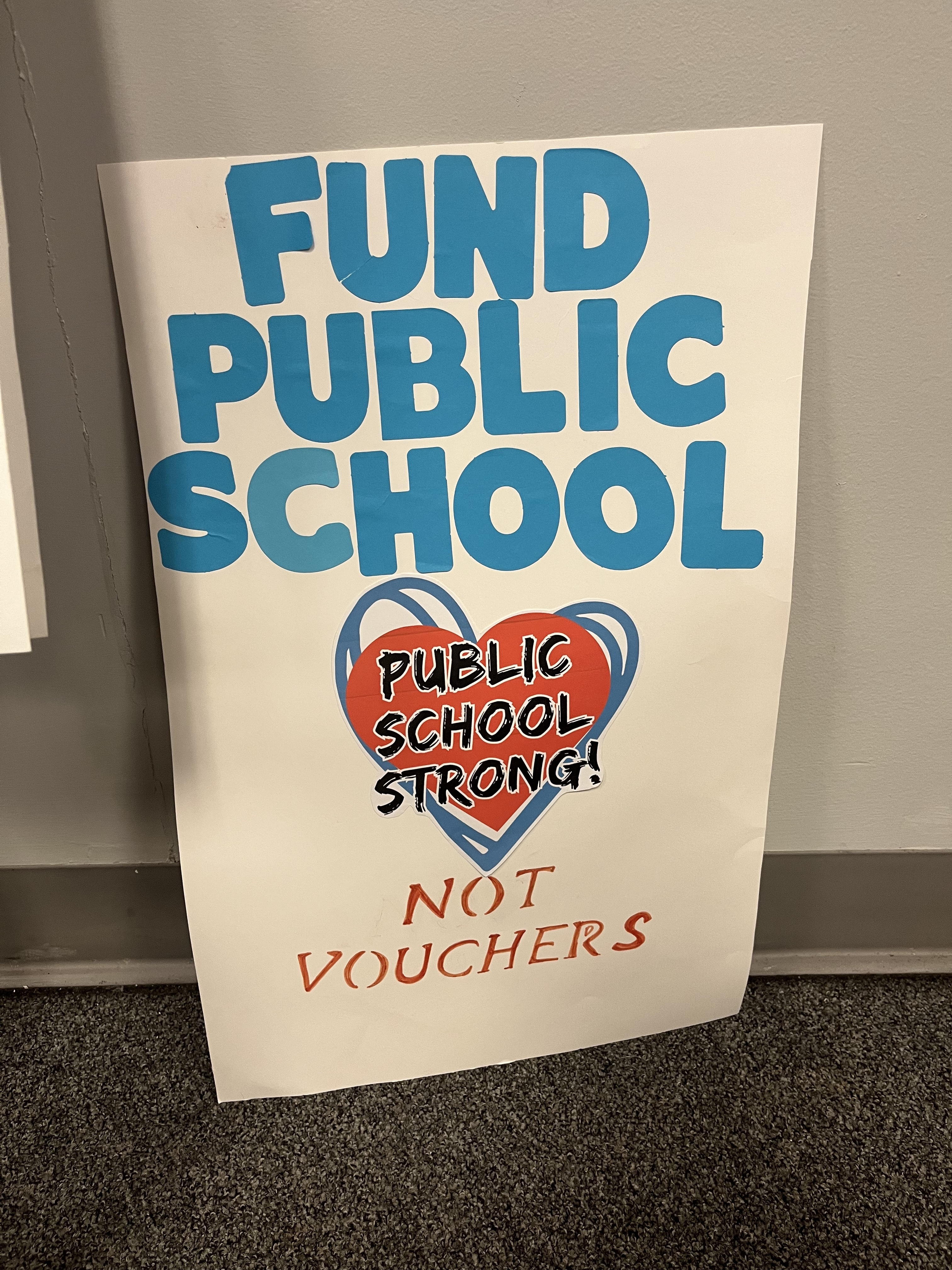 Staff photo by Shannon Coan / A sign opposing giving families state funding to pay for private school tuition is displayed at the Hamilton County school board meeting Thursday, Dec. 19, 2024.