
(Editor’s note: Fourth in a series)
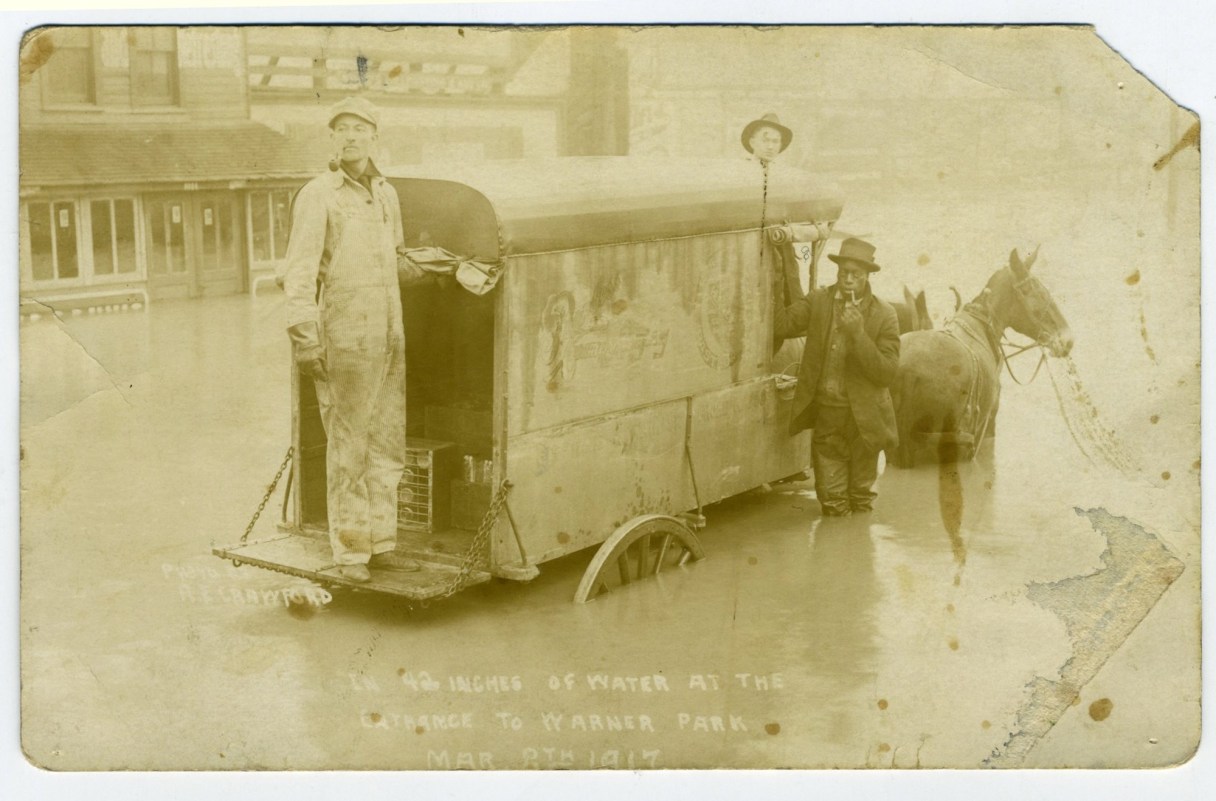
Chattanoogans learned in spring 1917 that major floods were not a thing of the past and that the high-water havoc of 1867, 1875 and 1886 would soon repeat itself. Amid speculation that the U.S. might soon join Allied forces in the struggle against Axis powers in the Great War, local residents were faced with battling storms that were moving across the South, only to stall in Southeast Tennessee.
“East Chattanooga is Hell’s Half Acre, Alton Park and Tannery Flats Partly Inundated,” announced the Chattanooga Daily Times headline on March 5, 1917, when it was reported what many already knew: “Chattanooga is almost an island today, and the waters are rising steadily.”
Thousands were forced to evacuate as the waters spread across the city. Hooker Road, Rossville Boulevard, St. Elmo Avenue and other major transportation arteries were impassable, while the area from Main Street south beyond Rossville Boulevard resembled an “artificial lake.” Only boats could reach homes in Ferger Place. Chattanooga and Citico Creeks merged to create a “sluiceway,” inflicting “great damage” on land at the foot of Missionary Ridge.
As the waters continued rising, temperatures fell overnight more than 20 degrees. Accompanied by a light snowfall, the freeze increased the sufferings of those forced from their homes.