
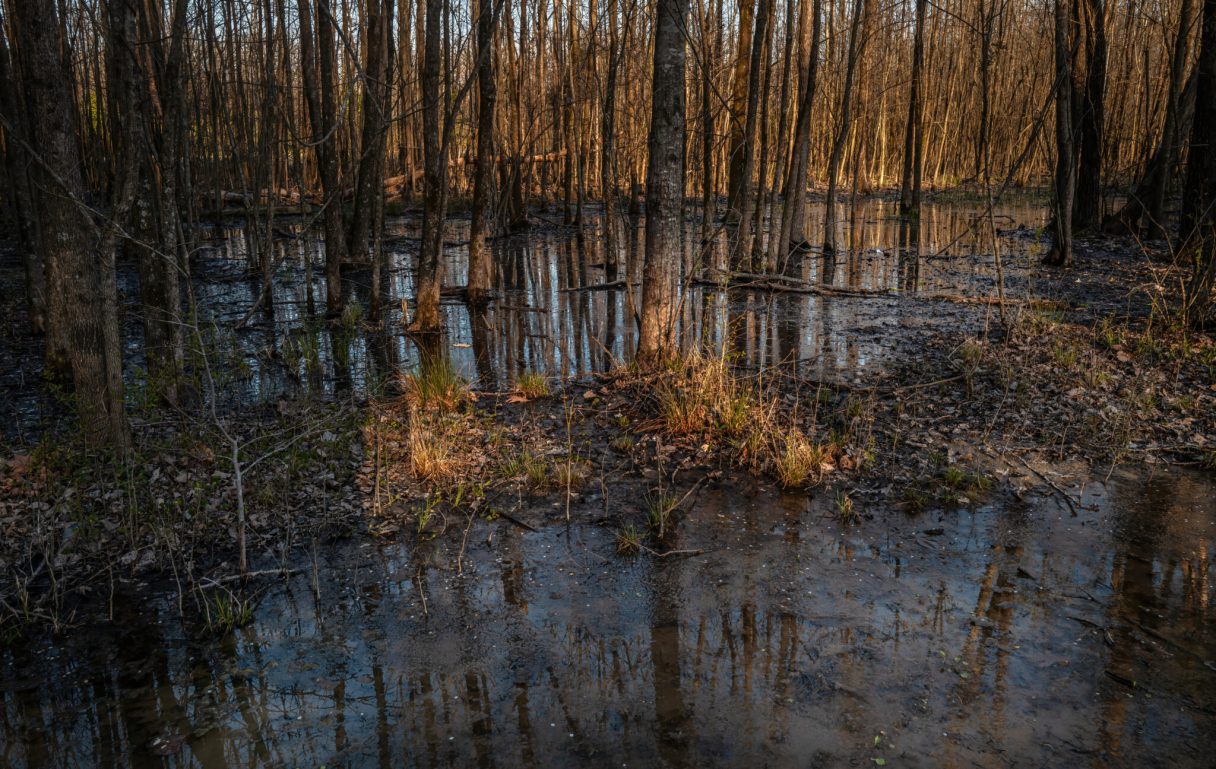
Lawmakers convene next week to consider changes in how the state protects wetlands — reviving an issue that sparked intense debate earlier this year when a bill was introduced to roll back environmental oversight over nearly half a million acres of the state’s fragile ecosystems.
The bill, sponsored by West Tennessee Republican Rep. Kevin Vaughn, pitted environmental groups seeking to preserve wetland habitats against developers seeking relief from regulation that slowed or stopped construction projects that required draining or filling in natural wetlands.
The upcoming summer study of the bill set for Oct. 3 renews debate over the future of Tennessee’s wetlands — waterlogged swaths of land that absorb flooding, filter pollutants from drinking water and provide habitat for a variety of species. Tennessee has about 780,000 acres of wetlands; Vaughn’s legislation focuses on so-called isolated wetlands with no obvious surface connection to a river or lake. Nearly half of the state’s wetlands — 430,000 acres — meet that definition.
(READ MORE: Bill to allow development on Tennessee wetlands advances in House)
In the months since Vaughn’s wetlands bill was shelved for further study, the Tennessee Department of Environment and Conservation has held meetings with builders, environmental groups, lawmakers and state agencies in an effort to achieve consensus on how to regulate wetlands.
Last week, the environmental agency released an 183-page report outlining 19 recommendations. Among them:
— Doubling the size of wetlands developers can build on without having to pay for environmental mitigation from the current quarter-acre to half an acre.
— Lowering the current 2:1 ratio that currently requires developers to fund two acres of wetland restoration for every acre of wetlands they disturb. TDEC is proposing a new 1:1 ratio.
— Streamlining the current process to obtain a permit to build on wetlands.
— Eliminating a requirement for paid newspaper ads detailing plans to develop on wetlands.
(READ MORE: Southern Environmental Law Centers)
Current law gives the Tennessee Department of Environment and Conservation the power to approve or deny plans to disturb a wetland — and to require that developers pay often-costly mitigation fees if a project is allowed to go forward. Mitigation fees pay for shoring up wetlands elsewhere to balance out the loss from a particular construction project.
George Nolan, director of the Southern Environmental Law Centers Tennessee office, said the recommendations were an improvement from the original wetlands bill but continued to favor developer interests.
“This proposal is a bonus for developers,” Nolan said. “It will significantly increase the amount of wetlands that builders can fill without any mitigation, and it cuts developers’ mitigation payments that help offset wetland losses.”
Vaughan’s original bill would have given developers and landowners a break from needing state permission to build on or fill in low-quality wetlands and up to four acres of “moderate” quality wetlands — distinctions based on the degree of biodiversity contained in a wetland and the extent to which a wetland was created by human activity.
Vaughan did not respond to a request for comment Friday.
Read more at TennesseeLookout.com.