
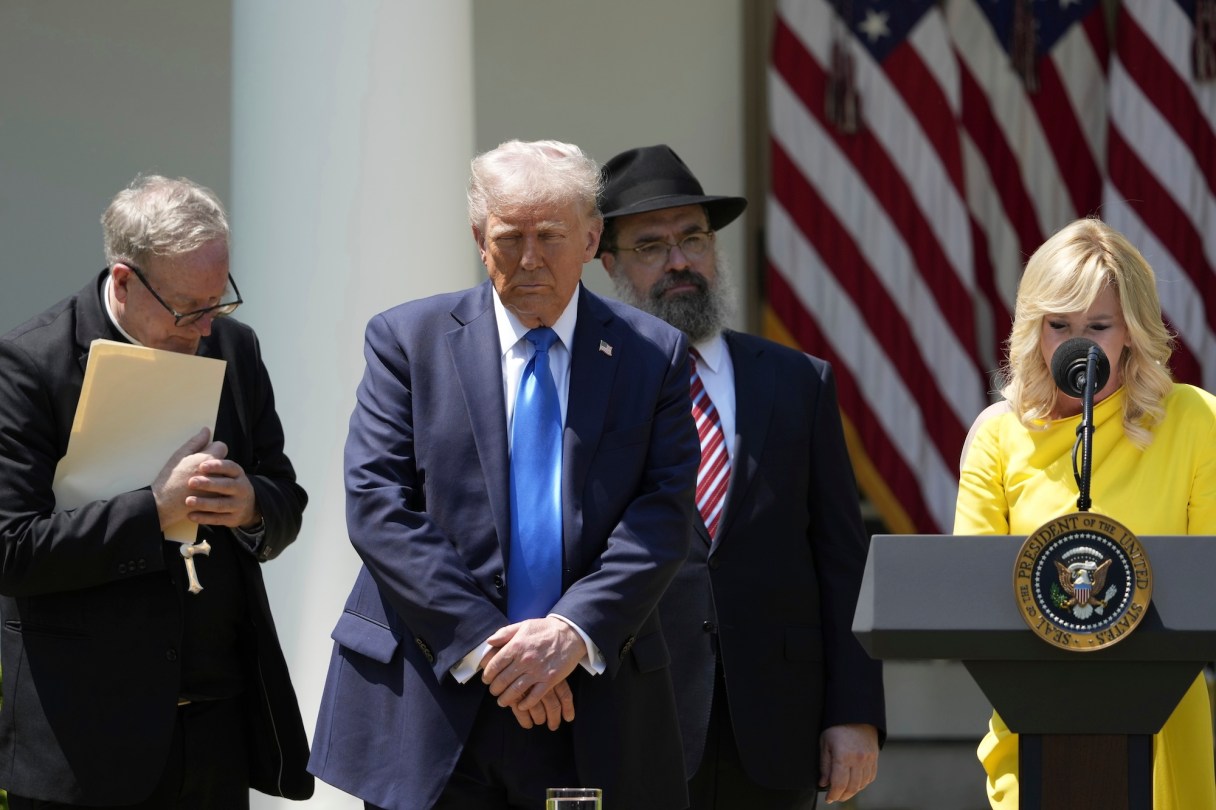
Last week, President Trump announced the establishment of a White House Faith Office. Its purpose, as described in a White House announcement, is to “… empower faith-based entities, community organizations, and houses of worship to better serve families and communities.” Don’t they already have access to a higher power?
There is no question that Christians, especially, but also Jews and Muslims, have been targets of discrimination and bias. Some have been violent, as we’ve seen at several universities that have tolerated, and in some cases encouraged, antisemitism. Civil rights and other laws can address those instances.
Persecution comes with faith. Scripture says so. Totalitarian governments recognize only the power of the state.
Politicians have sought for millennia the approval of religious people to sanctify their agendas.
The Emperor Constantine did something similar to what President Trump has done. He legitimized Christianity and claimed to be one, but as Jasmine Alnutt writes for Calvary Chapel.com, “… many historians consider this a mere political conversion, noting that Constantine knew nothing of religion without politics …” Does this sound familiar?