
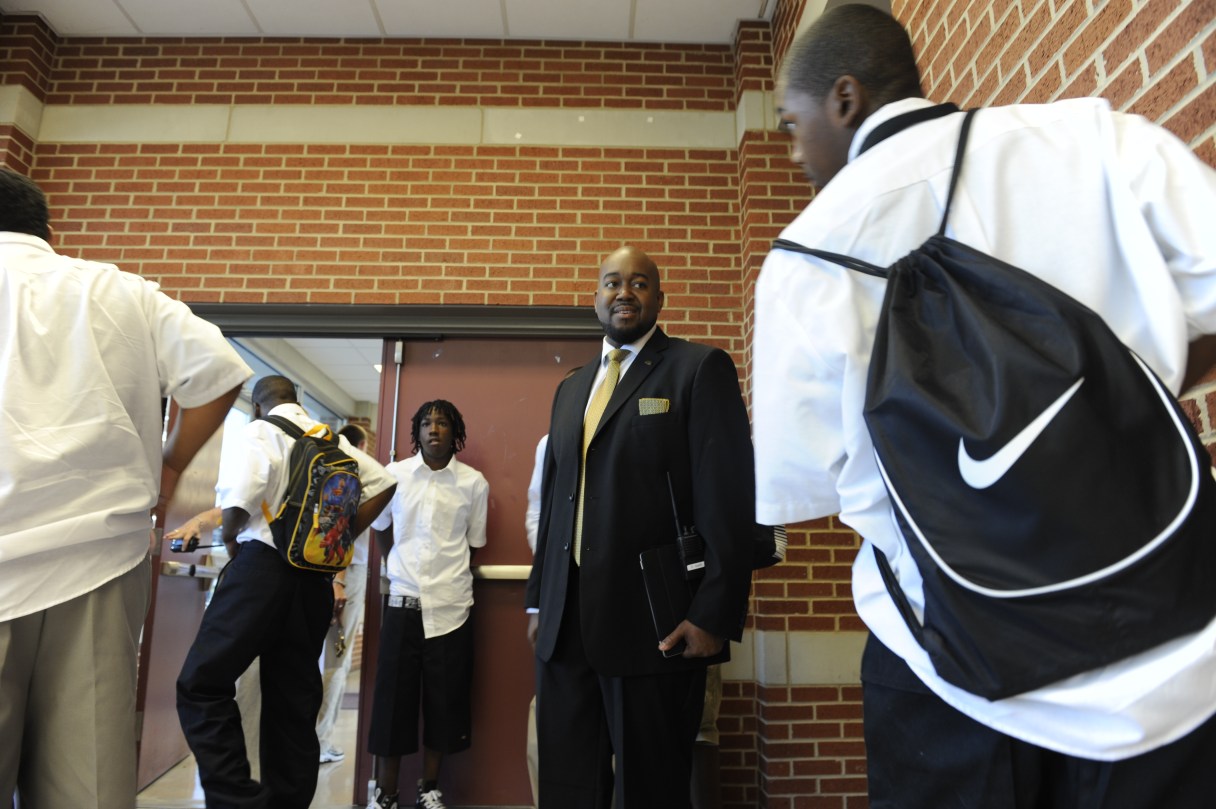
The Howard School of Chattanooga was established in 1865 to educate newly freed black children. In 1960, 30 Howard students “sat in” at a segregated lunch counter for the freedom to eat at any restaurant open to the public.
Fifteen students were arrested and jailed. James Mapp, president of the Chattanooga Chapter of the NAACP, came with bail. A plaque now stands at Market Street and M.L. King Boulevard to commemorate those students’ courage. Few know, however, of the bravery of 50 other Howard students who faced their own rejection by white restaurant owners 10 years later, even though Congress had by then banned racial discrimination in public accommodations through the Civil Rights Act of 1964.
In 1970, school Principal Clifford Hendrix requested that I, as assistant principal, chaperone the “spirit/cheering” bus for the football game against arch-rival Nashville Pearl. On an October Friday afternoon, we boarded our bus for Nashville. Fifteen minutes after crossing Monteagle Mountain, the bus blew a tire. The driver pulled off Interstate 24 beside a grassy area. Teacher/chaperone Joyce Gee took our students into the field to play games. The driver’s duty was to stay with the bus, so I hitchhiked with parents of Howard football players, luckily driving by, and asked to be dropped at a service station in Manchester. After four hours, the station owner located the right size tire in Murfreesboro.
By then, the game was half over. Our students had been well-behaved and patient. I hated to say there would be no football for them. Their response: “We’re not worried about the game; we’re hungry!” With Manchester so close, this was a simple problem to solve. I asked the driver to stop at the first mom-and-pop burger joint he saw. Our students heard the jukebox inside and approached hungry and excited. Without warning, the outside lights went off; the door lock clicked. From inside, a loud voice hollered, “We’re closed!” Seeing the owner, I looked at my watch, indicating 8:15 p.m., and called back, “What time do you close?” He looked at his watch, “8:15!”
Disappointed, but without grumbling, the students returned to the bus. The driver found a second restaurant. This owner “closed” at 8:30 p.m. This time the students’ reaction revealed frustration and anger. “What’s going on, Mr. McCallie?” My response was honest and brief: “You know, and I know, but you’re going to get your burgers!”