
On May 7, 1915, the Cunard ocean liner Lusitania was torpedoed by a German submarine U-20. The ship went down in 18 minutes, 11 miles from the coast of Ireland. The vessel’s demise was compared to that of the Titanic, sunk after hitting an iceberg just three years before.
Both ships were the largest in the world at the time they were launched (Lusitania in 1905, Titanic in 1912), both were considered luxury liners (at least for their first-class passengers), and both sank with enormous loss of life – 1,198 on the Lusitania, 2,223 on Titanic, in each case about 68 percent of the persons embarked.
On Feb. 10, 1909, 25-year-old Reginald Purse, former resident of London, sailed from Southampton, England. Purse’s occupation was listed as “artist,” and his final destination noted as Chicago. But in 1913, Purse appeared in Chattanooga. He worked as an “illustrator” at Purse Printing Company, and in 1914 as a “cartoonist” at the same business, where he was employed into 1915. It is unknown, but likely, that he had a family connection to the business’ manager, Robert P. Purse. Each of those three years, Reginald Purse was listed in the Chattanooga City Directory as living at a different address: 218 Cherry in 1913, 517 Mabel in 1914, and 502 Georgia Ave. in 1915.
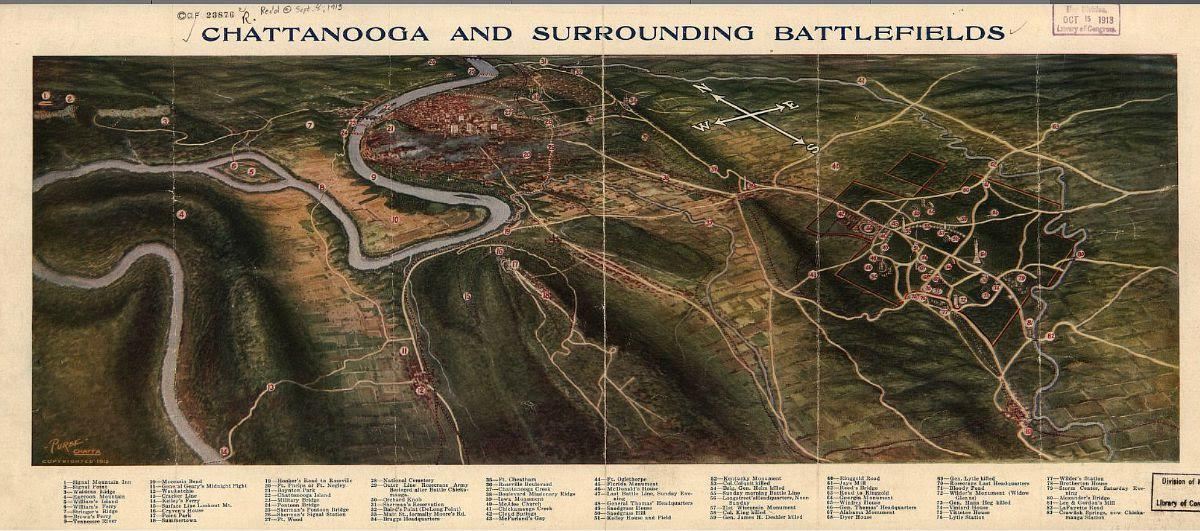
Purse’s most recognizable work was “Chattanooga and Surrounding Battlefields,” a relief map showing 1913 Chattanooga with the battlefields of 1863 marked with numbers and corresponding points of explanation.
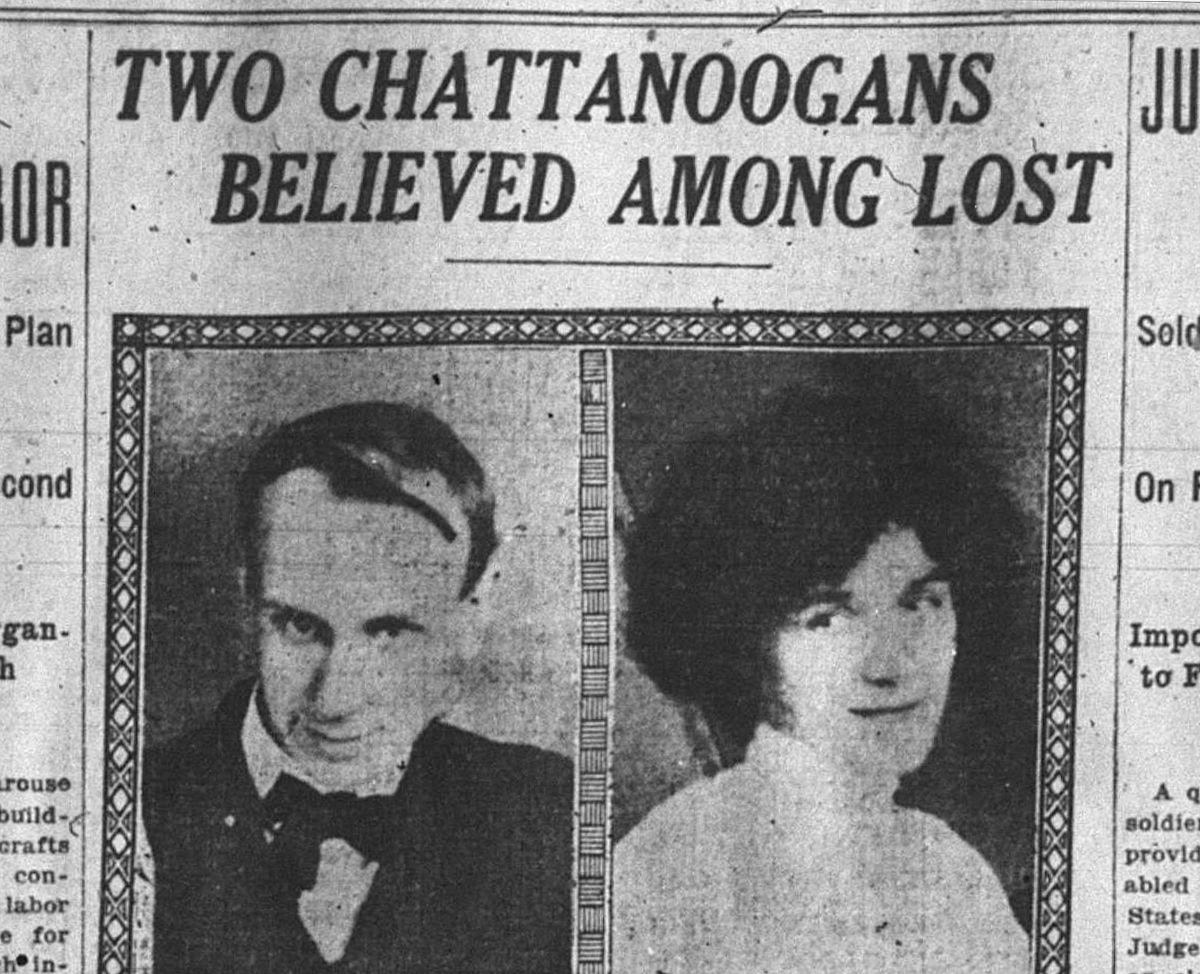
Purse’s wife, Gertrude Alice Hunt, (he called her “Gertie”), was also from England and lived with him in Chattanooga. She became homesick however, and the couple planned to return to England in the spring of 1915. At that point, World War I was still in its first year, and the German government in February had declared the waters around Great Britain a war zone.