
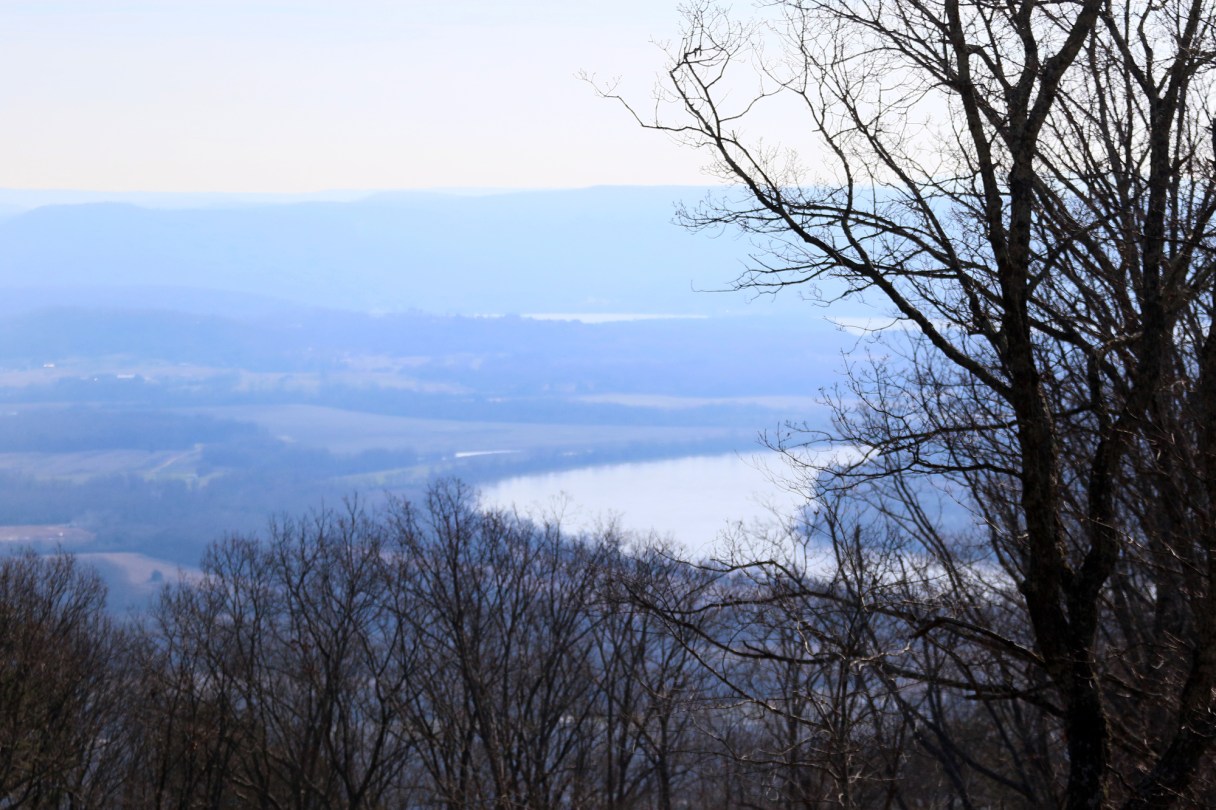
In his 1896 “Spring Notes From Tennessee,” Boston journalist and ornithologist, Bradford Torrey, wrote of “A Morning in the North Woods.”
“The electric car left me near the Tennessee (River) – at ‘Riverview’ – and thence I walked into the woods, meaning to make a circuit among the hills, and at my convenience board an inward-bound car somewhere between that point and the city. The weather was of the kind that birds love: warm and still, after heavy showers, with the sun now and then breaking through the clouds. The country was a suburb in its first estate: that is to say, a land company had laid out miles of streets, but as yet there were no houses, and the woods remained unharmed. That was a very comfortable stage of the business to a man on my errand. The roads gave the visitor convenience of access – a ready means of moving about with his eyes in the air – and at the same time, by making the place more open, they made it more birdy; for birds, even the greater part of wood birds, like the borders of a forest better than its darker recesses.
“One thing I soon perceived: the rain had left the roads in a condition of unspeakable adhesiveness. The red clay balled up my heels as if it had been moist snow, till I pitched forward as I walked. I fancied that I understood pretty well the sensations of a young lady in high-heeled shoes. One moment, too, my feet were weighted with lead; then the mass fell off in a sudden big lump, and my next few steps were on air. A graceful, steady, self-possessed gait was out of the question. As for abstaining from all appearance of evil – well, as another and more comfortable Scripture says, ‘There is a time for everything.’ However, I was not disposed to complain. We read much about the tribulations of Northern soldiers on the march in Virginia – of entire armies mud-bound and helpless. Henceforth I shall have some better idea of what such statements mean. In that part of the world, I am assured, rubber overshoes have to be tied on the feet with strings. Mother Earth does not believe in such effeminacies, and takes it upon herself to pull them off.
“The seventeen-year locusts made the air ring. Heard at the right distance, the sound has a curious resemblance, noticed again and again, to the far-away, barely audible buzz of an electric car. For a week the air of the valley woods had been full of it.
“All the hill woods, mostly oak, were dry and stony; but after a while I came unexpectedly to a valley, a place of another sort; not moist, to be sure, but looking as if it had been moist at some time or another; and with pleasant grassy openings and another set of trees – red maples, persimmons and sweet gums.