
On March 22, 1866, five men with faith in the Sewanee dream, led by Bishop Charles T. Quintard of the Episcopal Diocese of Tennessee and Maj. George R. Fairbanks, a former Confederate Commissary officer, met at a site on the Cumberland Plateau where the University of the South buildings stood before being destroyed during the Civil War. Quintard noted the group “asked the blessing of the great Head of the Church on our undertaking. We recited the Apostles’ Creed and made the grand old woods ring with the ‘Gloria in Excelsis.'” Aided by local workmen, the leaders planted a simple wooden cross 12 feet high at what is now St. Luke’s Hall and declared a refounding of the university.
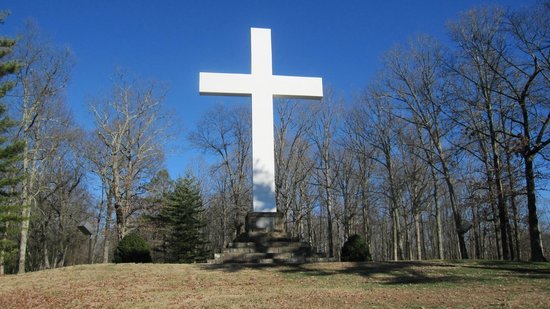
Today motorists driving during the evening from Cowan to Sewanee on Highway 41A see another cross, a 60-foot tall edifice illuminated by lights. This one rose almost six decades later in the fall of 1921, when local officials contemplated a giant crucifix on the bluff overlooking the fields of Franklin County.
In a morning chapel talk, Vice Chancellor Dr. Ben Finney described the community’s interest in honoring those who had recently fallen in the Great War, “The War to End All Wars.” Students went to a nearby site to gather stones for a rough foundation for the cross. Proceeds from selling the first edition of the Sewanee Cook Book started an endowment to pay for lighting the structure.
A memorial plaque at the base of that cross now honors those who have fallen in U.S. conflicts over the decades:
‘ World War I – “To the sons of Sewanee who answered their country’s call to service in the World War 1917-1918.”