
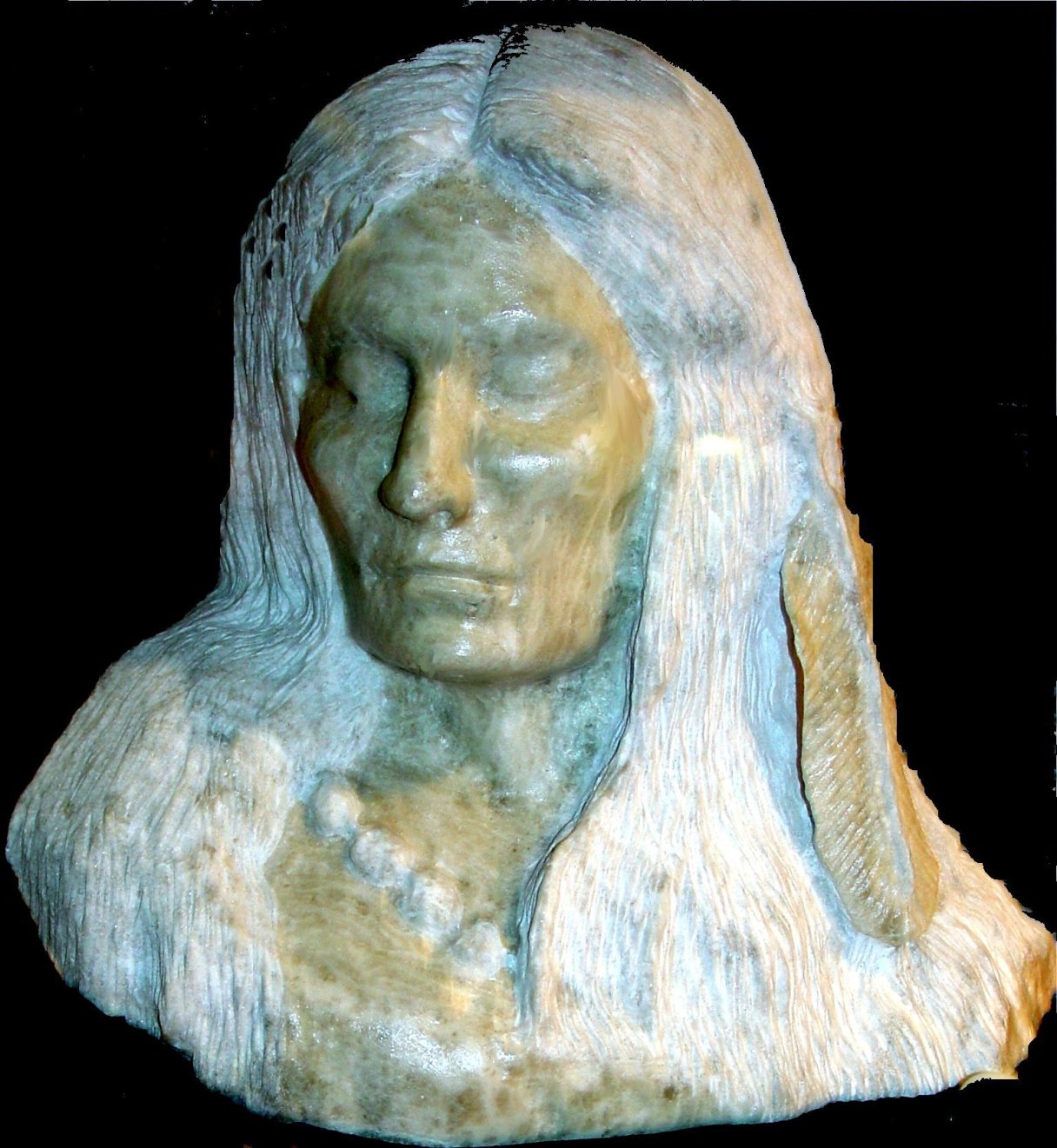
Nancy Ward, whose Cherokee name Nanye’hi means “one who goes about,” was born about 1738 at Chota, the Cherokee capital in today’s Monroe County, Tennessee. Her mother, a member of the Wolf Clan, was sister to the famed Attakullakulla, or Little Carpenter. She married Kingfisher and they had two children. In 1766 she accompanied her husband on a raid against the Creek Indians. When Kingfisher was killed, she took his rifle and rallied the warriors to victory. Her bravery earned her the title of Ghighau or Beloved Woman. In this role she headed the Council of Women, held a voting seat in the Council of Chiefs, and was given the responsibility of deciding the fate of prisoners. As Agi-ga-u-e or War Woman, she also prepared the warriors’ “black drink” made of yaupon holly leaves before battle.
In the late 1750s Nancy married a white trader named Bryant Ward. They had a daughter before he returned to South Carolina, effectively ending their marriage by 1760. Their daughter, Elizabeth Ward, married Joseph Martin, brigadier general and commissioner to the Cherokee.
In 1772 a visitor described Ward’s home at Chota as furnished in native splendor and her manner as “queenly and commanding.”
During the Revolution, Ward used her best efforts to promote peace between her people and the Americans, whom she sometimes warned about upcoming Indian raids. During the great invasion of the Watauga and Holston settlements in 1776, the Cherokees captured Lydia Bean, the wife of settler William Bean. Mrs. Bean had been condemned and bound to the stake when Ward intervened to save her life.
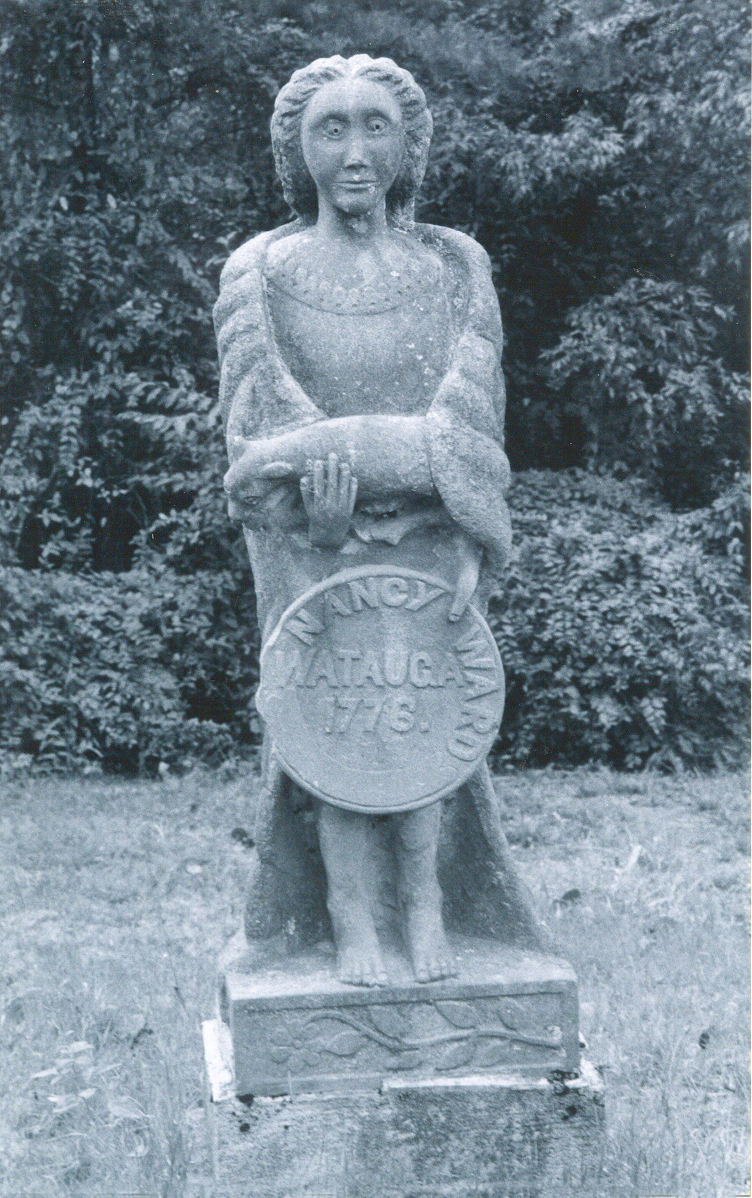 Photographs of the Nancy Ward Statue taken by Historian Ray Smith prior to its disappearance from a cemetery in northern Tennessee. (Photo by Ray Smith)
While staying at Ward’s home, Lydia Bean taught her a technique of weaving on a loom that Cherokee women rapidly adopted. Mrs. Bean also gave her two cows, teaching her how to care for them and make cheese and butter, leading to an improved Cherokee diet. As the Cherokee women adopted those practices, they spent less time working in the fields, which then became men’s work.