
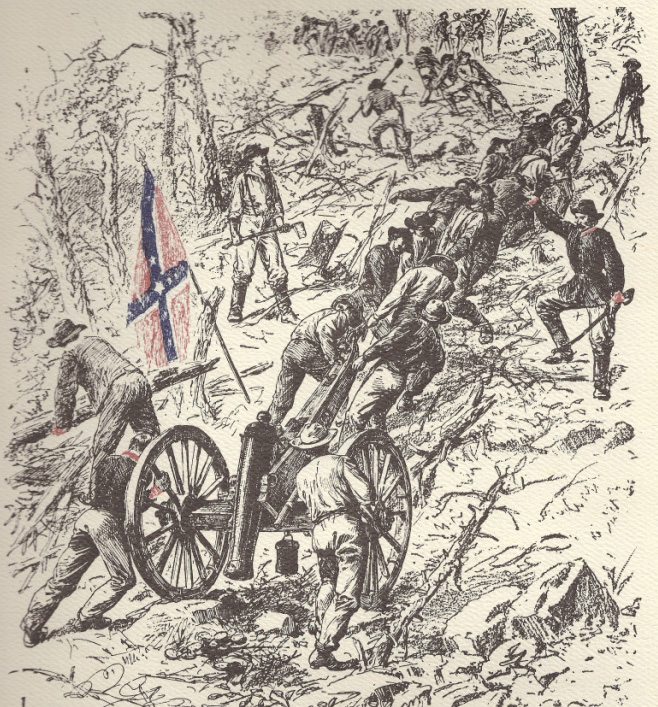
For 20 long minutes on the morning of June 27, 1864, the artillery of federal Maj. Gen. George H. Thomas’ Army of the Cumberland pounded Kennesaw Mountain, Ga. Thousands of men in ragged gray and brown, some two brigades of Confederate Maj. Gen. Benjamin F. Cheatham’s division, huddled behind their timber and dirt breastworks beneath the howling thunder of enemy shells. Cheatham’s men occupied a prominent ridge south of the Marietta-Dallas Road, only a few miles from Atlanta. Their position protruded about 1,000 feet into federal lines and gave the South a commanding defensive advantage. In front of the Confederates’ position were sharpened stakes and other obstacles designed to slow the enemy assault that Cheatham’s men knew would come any moment. Below that, the ground sloped down to a narrow valley and a small creek, where federal assault columns were preparing to attack.
Federal Brig. Gen. John Newton’s 4th Corps, composed of three brigades under Brig. Gen. Nathan Kimball, George Wagner, and Charles G. Harker, would be responsible for driving the Confederates from their entrenchments. If successful, the road to Atlanta would lay open, and with it, the federals hoped, came a chance to end a terrible conflict now in its fourth deadly summer. Failure meant many more deaths and a hateful war dragging on indefinitely.
Newton’s three brigades would go in together. They would attack the Confederates climbing a long slope and crossing a clear field of fire in dense, narrow columns. The orders had come from on high, and there was nothing subtle about them. The federals hoped to smash the Confederates off the hill with brute force and were prepared to pay a terrible price.
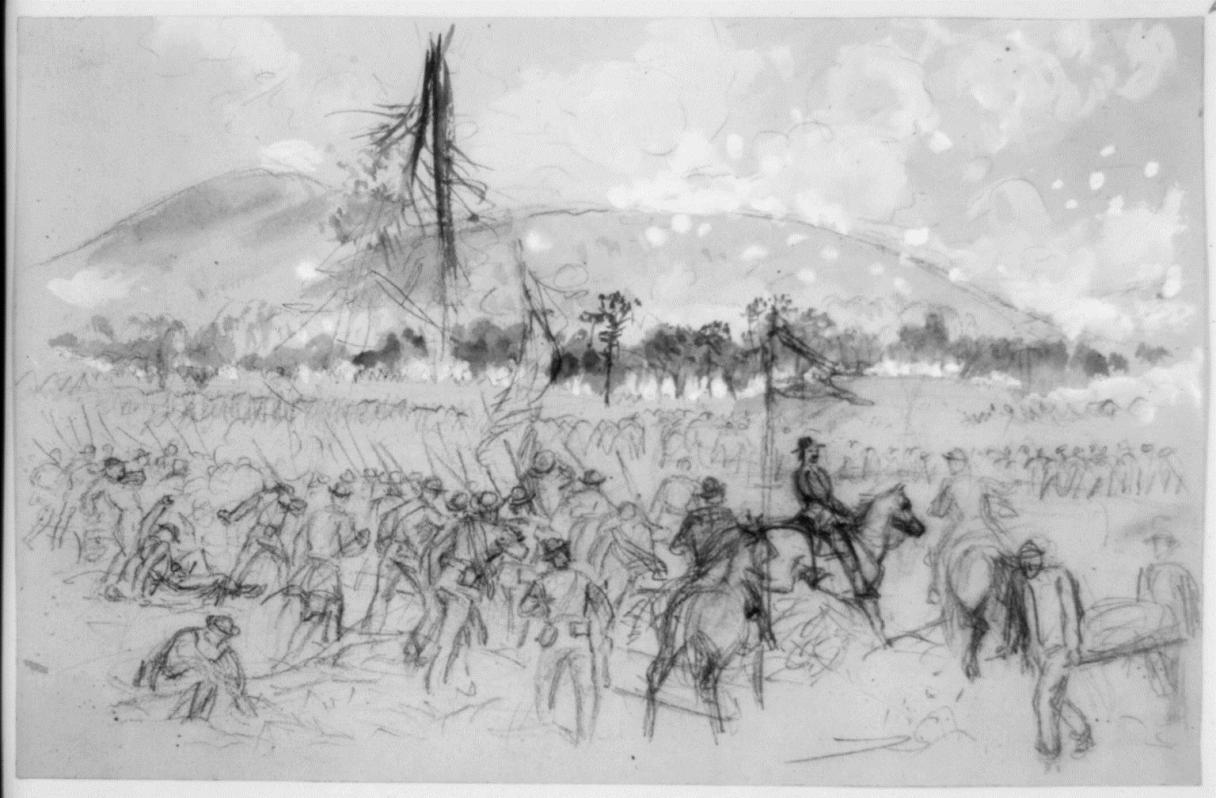
At 9 a.m. Newton’s federals advanced. Wagner’s men went in first, into the teeth of a terrible angling fire. “Unmindful of the terrific havoc in their ranks,” Wagner remembered, “the column moved forward.” His assault had to cross 500 yards of slope to reach the Confederate lines. As the blue column advanced, a battery of Mississippi artillery raked them with 12-pound Napoleons loaded with canister, sending hundreds of metal balls sweeping through their ranks. “[T]hey opened up a withering fire of grape and canister,” recalled a survivor. “The assaulting party [was] checked, and the men laid down.”
Kimball’s men followed Wagner’s into the storm; both brigades bogged down among the sharpened stakes. Elsewhere, Harker was down, shot while leading his men from horseback. Some of the federals made it up to the enemy line, and “crept up under the very muzzles of the guns” to avoid being shot. Soon everything “seemed now fast melting away” as officers and men began falling by the dozens. “The lead came so thick that no troops could live before it,” remembered a federal corporal. Even the Confederates were appalled at the destruction they were wreaking. “The slaughter was terrific,” remembered one Tennessee officer, as his men “literally mowed them down.” It was, in the words of another Confederate officer, simply “murderous.”