
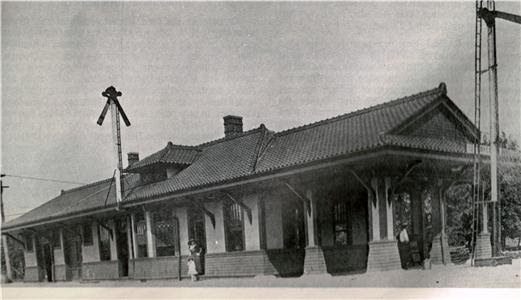
The town of Boyce, later the town of East Chattanooga, has a rich history. Ker Boyce, a wealthy merchant from Charleston, S.C., was among those who came here after the Cherokee Removal (Trail of Tears) to invest in its railroads. Ker’s son, Samuel J. Boyce, also came and settled on a farm, giving the family name to “Boyce Town.”
Boyce was an organized town west of Boyce Station on the Cincinnati & Southern Railroad and the Citico yards between Elmendorf and Cushman streets and Dodson Avenue. The town of Boyce began to spread from the railroad tracks east to Taylor Street and from Bachman to Sims streets.
The name of the adjoining neighborhood, Sherman Heights, came from the bloody Battle of Missionary Ridge in November 1863 in which Union Gen. William Tecumseh Sherman’s troops struggled against Confederate units commanded by the capable Gen. Patrick Cleburne.
Sherman Heights ran from north of Crutchfield Street and east of Dodson Avenue to the foot of Missionary Ridge. An article in an 1890 edition of The Chattanooga News noted that “adjoining Sherman Heights and embracing Boyce is an assured fact and will be a suburb of great manufacturing importance.” The merger of Sherman Heights and East Chattanooga occurred around 1910. The town of East Chattanooga was formally annexed into the city of Chattanooga on Jan. 8, 1925. Marr Field, between today’s Amnicola and Glass streets, served as Chattanooga’s major airfield during the 1920s until a series of plane accidents pointed out the danger of its vulnerability to Missionary Ridge’s air currents.
East Chattanooga at its peak included: two grocery stores, Red Food and Kidwell’s; three doctors, Ulin, Steve and McMilky; four clothing stores, Smith’s, Connor’s, Gene’s and Foster’s; two movie theaters, including the walk-up Rivoli and a drive-in; seven thriving churches including Baptist, Methodist, Wesleyan, Church of Christ and Church of God of Prophecy; two major banks, Hamilton and American National; and much more. Afterward, the area languished due in part to the decline of rail usage and the rise of the Eastgate shopping mall.