

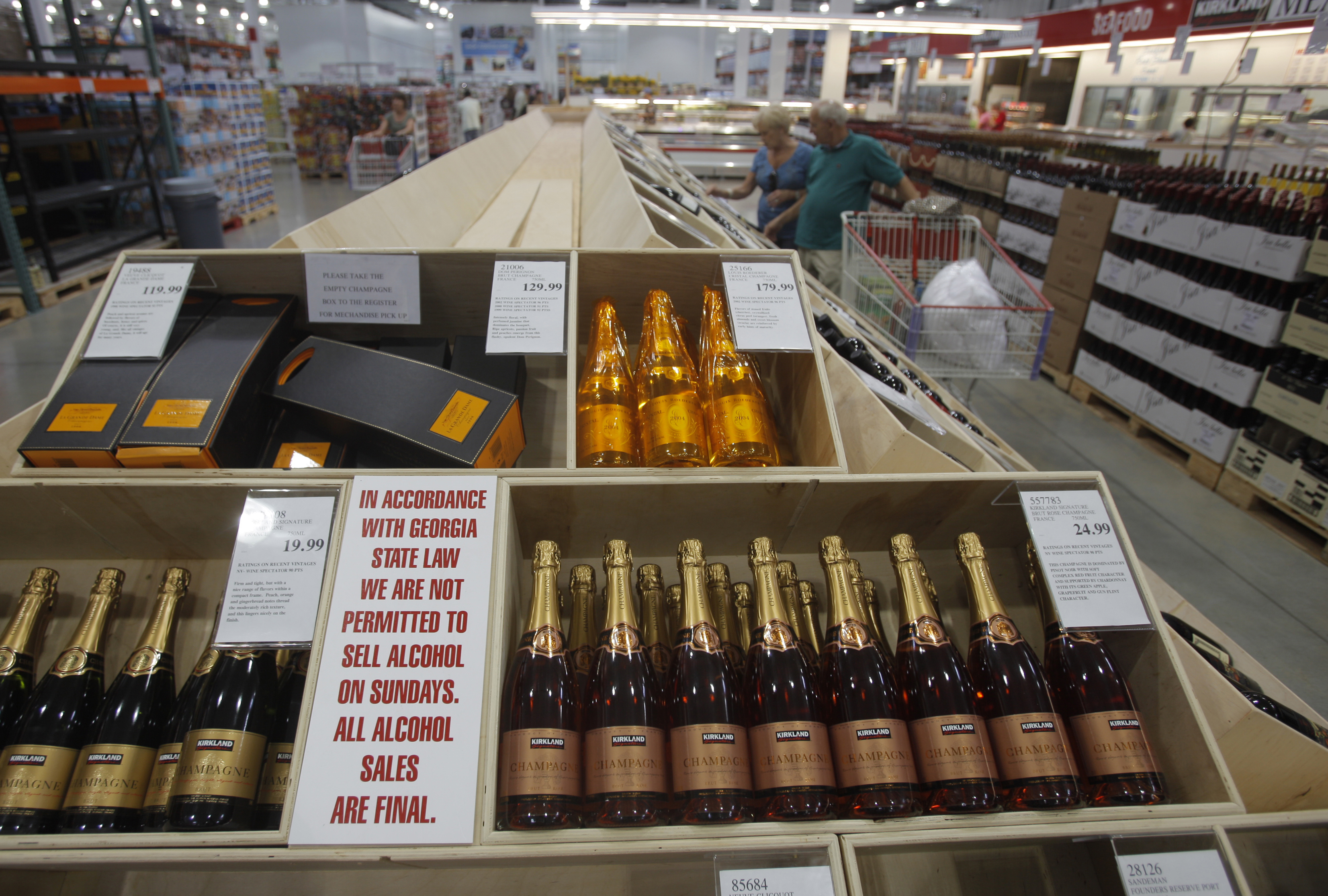
 Shoppers browse the selection of wines at Costco in Ringgold, Ga. Many Georgia communities will be holding votes whether to allow alcohol sales on Sunday.
One month before they go to the polls, Northwest Georgians remain divided over Sunday alcohol sales and few in the communities where it will be on the ballot feel sure of how the vote will turn out.
"You don't never know in Fort Oglethorpe," said Leon Biddy, a longtime resident. "Preachers are preaching against it on Sundays."
Earlier this year Georgia legislators passed a bill allowing cities and counties to hold votes on whether grocery and convenience stores can sell packaged beer and wine on Sundays.
Georgia is one of just three states that ban Sunday alcohol sales. In Tennessee, liquor stores that sell wine and distilled spirits are closed on Sundays, but beer can be bought in most counties.
So far 10 Georgia counties and more than 100 cities - including Fort Oglethorpe, Dalton and Lookout Mountain - have referendums on their November ballots.
But just because city officials have decided to put it on the ballot doesn't mean residents are going to vote for it.
"This is the Bible Belt - you shouldn't sell it out of the respect for the church," said Lamar Thomas, a 58-year-old Whitfield County resident.
Others in Fort Oglethorpe echoed his sentiment.
"They sell it all week," said longtime resident Jerry Oliver, as he walked one of the city's trails Friday morning. "Why do they have to take God's day?"
Lori Younce, 45, agreed.
"I don't think they should do it on Sunday," said Younce. "It's the Lord's Day."
Follow @CurrentChattSunday Sales ReferendumsIn all, 103 cities and 10 counties in Georgia will hold Sunday sales referendums on Nov. 8. Among them are:• Cohutta• Dalton• Eton• Fort Oglethorpe• Lookout Mountain• Tunnel Hill• Varnell• Whitfield CountySource: Georgia Secretary of State's Office
James Grayson, who was also walking on the trails, said he would support Sunday sales, even if the churchgoing crowd didn't.
"They sell it in Tennessee, I don't see why they don't in Georgia," he said.
Ken Cleaver, a Chickamauga resident, said he hopes it passes in Fort Oglethorpe and that other cities consider a vote.
"To me, if I want to drink, that's my business," he said. "Look at the revenue [local governments] lose. [People] cross the state line to go get it and bring it right back here to drink."
Oliver said the small amount of additional money businesses would be able to bring in would be offset by costs to law enforcement responding to alcohol-related accidents.
But many city officials and merchants in towns near the state line see things differently.
"They can just drive a little farther up the road [to Tennessee] and buy it," said Bob Patel, owner of the Chevron gas station just off Interstate 75 in northern Whitfield County. "I think we will probably see more people on Sunday afternoons."
Dalton and Whitfield officials said they are not aware of any organized opposition to the referendums. Several pastors previously active in anti-alcohol groups did not return phone messages.
"The city voters have had a history of passing these alcohol referendums," Dalton Mayor David Pennington said. "We are hoping the alcohol sales will be another jolt to the local retail economy. It doesn't make sense that you can go to Applebee's or Chili's and drink six margaritas, but you can't go to Kroger and buy a six-pack."
Whitfield County Commission Chairman Mike Babb sees an economic benefit.
"The moral question is up to individual voters to decide," said Babb. "From our standpoint, you should be able to sell what you are selling every other day of the week."
But like voters, there are business owners and politicians on both sides.
Murray County Sole Commissioner Greg Hogan said he does not plan to put it on the ballot either this year or next year.
"I don't see it as a good thing," Hogan said. "If they can't get enough six days a week - if they want it that bad they can buy it on Saturday."
When Dalton polled its eight liquor store owners, four said they did not want to be open on Sunday.
Anil Patel, the owner of Holmes Spirits on Chattanooga Road, said if the measure passes in Dalton, he will lose money.
People will not buy more alcohol, they will just spread out their buying over seven days instead of six, he said.
If he decides to open his store on Sunday, he does not think he will sell enough to cover the cost of an employee and the utilities. If he decides to remain closed, people will go to a grocery store or gas station to buy alcohol, he said.
"Either way it's going to be a loss," Anil Patel said. "I'm telling my customers to vote against it."