published Wednesday, August 15th, 2012

Congress could be least productive since post WWII

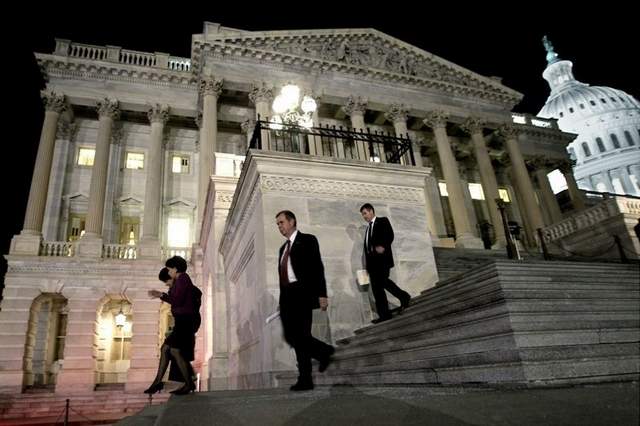
Congressmen walk down the steps of the House of Representatives as they work throughout the night on a spending bill, on Capitol Hill in Washington, on Feb. 18, 2011.
Photo by Associated Press /Chattanooga Times Free Press.
Follow us on Twitter for the latest breaking news

Congress is on pace to make history with the least productive legislative year in the post-World War II era.

Just 61 bills have become law to date in 2012 out of 3,914 bills that have been introduced by lawmakers, or less than 2 percent of all proposed laws, according to a USA TODAY analysis of records since 1947 kept by the U.S. House Clerk's office.

In 2011, after Republicans took control of the U.S. House, Congress passed just 90 bills into law. The only other year in which Congress failed to pass at least 125 laws was 1995.

Read more at The Tennessean.

related articles »

Dec. 26th, 2012

Your daily look at late-breaking news, upcoming events and stories that will be talked about today.

Dec. 16th, 2012

Americans used to expect Congress to find enough bipartisan agreement to solve the nation’s problems, big or small. Abuse of ...

June 6th, 2012

President Obama's chief mouthpiece, Jay Carney, the White House press secretary, recently issued a challenge that is rooted in re-election ...

Sept. 20th, 2011

Mankind was fascinated by flight for centuries before man learned to build machines to help us fly. And judging from ...

videos »         

photos »         

e-edition »

advertisement
advertisement

Find a Business

400 East 11th St., Chattanooga, TN 37403
General Information (423) 756-6900
Copyright, permissions and privacy policy, Ethics policy - Copyright ©2013, Chattanooga Publishing Company, Inc. All rights reserved.
This document may not be reprinted without the express written permission of Chattanooga Publishing Company, Inc.