
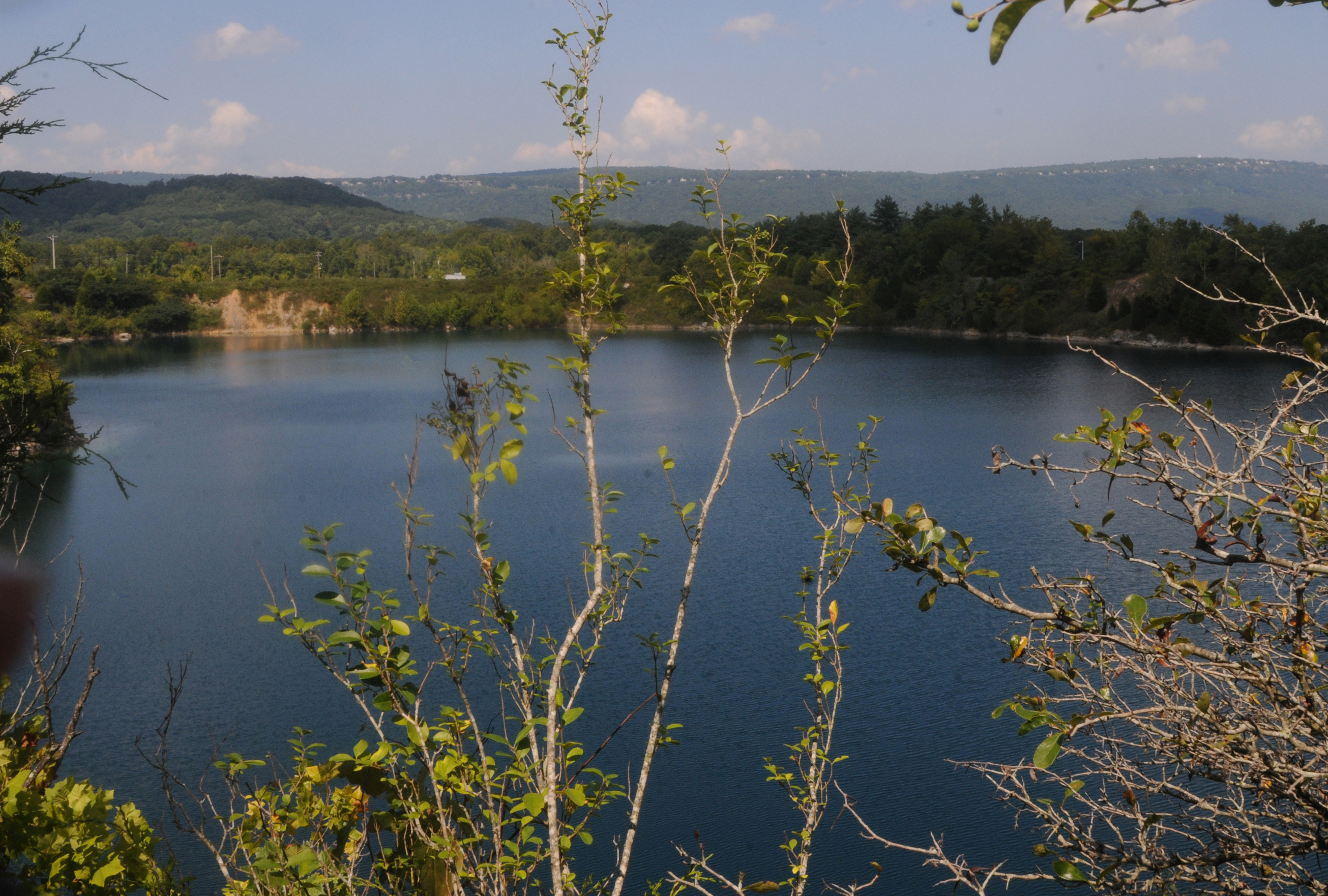
 A former Rossville limestone quarry, owned by Leonard Nixon, holds more than 3 billion gallons of water. Developing the unused quarry to hold Tennessee River water for piping to Atlanta might be the kind of project eyed for funding under a new program in Georgia, officials say.
COOSA-NORTH GEORGIA REGION5,500 square miles18 counties, 52 municipalities2010 estimated population 755,2552050 projected population 1,551,894WATER USAGE NOW AND 2050Demand for water for energy generation, municipal and industrial use is projected to grow between now and 2050 in the 18-county Coosa-North Georgia Region. (Most water used in energy creation is released again into the environment rather than consumed.) Where a gallon of water goes:Use 2010 2050 (projected)Energy: 78 percent 84 percentMunicipal 12 percent 21 percentIndustrial 8 percent 13 percentAgriculture 2 percent 2 percentTotal usage 888 mgd* 982 mgdMillions of gallons per daySource: Coosa-North Georgia Region water management planWATER MANAGEMENT GOALSWater conservation: Implement education and public awareness programs; develop water conservation goals.Water supply: Encourage development of water master plans; consider expansion of existing reservoirs.Wastewater: Consider development of local wastewater master plans to evaluate wastewater treatment and disposal options to meet future demands; consider development and implementation of a local wastewater education and public awareness program.Water quality: Encourage implementation of nutrient management programs; Promote use of forestry best management practices.Source: Coosa-North Georgia Region water management plan
With Gov. Nathan Deal's OK last week, Georgia towns and counties now have a pool of money they can dip into for projects to expand their water supplies.
State and local officials say the sum -- $300 million over four years -- isn't a funding tsunami. But they say a targeted trickle of cash could make the difference for projects from drilling new wells or installing local water lines to building new reservoirs.
The Governor's Water Supply Program that Deal approved last week will provide funding from bond sales for low-interest loans to local governments and private partners.
If the locals can make a business case for a reservoir, a pumping system or a wastewater treatment plant, they could tap that money, said Kevin Clark, executive director of the Georgia Environmental Finance Authority, which will administer the program.
"We assess if a program is financially viable. If demand and repayment appears likely, we'd make the loan and try and buy into it," Clark said.
"What we're trying to do is, for those communities that have plans ... maybe the state would come in and buy an interest in that project just to get it to the finish line," he said. "It's an investment for the citizens of the state, that hopefully meets the need and pays for itself."
A devastating drought in 2007 and legal battles with Alabama and Florida convinced state officials to set a goal of expanding Georgia's water supplies statewide.
While lawmakers worked on the funding piece, 11 regional task forces analyzed water needs and solutions.
The plan for the 18-county Coosa-North Georgia region, which includes local counties, was approved in November.
Projecting population and industrial growth to 2050, the plan noted shortages of surface water in Catoosa, Chattooga, Dade and Walker counties; a need for better municipal water supplies in nearly all North Georgia counties; additional wastewater treatment capacity in Catoosa and Whitfield counties; and more water for agriculture in Dade County.
"Based on where we are today, there's not enough water in the state to meet the needs of the potential population and growth at the same time," said Walker County coordinator David Ashburn, a member of the water planning council.
"It's great that the money's there to help with projects," he said, though he added that the money's not free.
Through GEFA, locals could borrow for up to 50 years. The state would have an ownership interest in the project. At the end of the loan, the locals would have the option of buying out the state's interest, Clark said.
He said the finance authority wants to help local officials with planning and permitting, as well as assist in setting up public-private partnerships to move projects forward.
"The private entities are very sophisticated and very well funded. We'll do our best to make sure everybody's playing fair," Clark said.
 Georgia Sen. Charlie Bethel, R-Dalton
north georgia
Ashburn and state Sen. Charlie Bethel, R-Dalton, agreed that North Georgia's water supply is in better shape than much of the state. Both men said the best way to expand water supplies is to use what's there more wisely.
"There's no doubt that efficient water use and the related concept of conservation is good business sense, good common sense and good stewardship," said Bethel, also a water council member. "As population grows and business grows, the demand for water isn't likely to go down, and we're not likely to get any more rainfall."
In addition to the regional water plans, lawmakers passed a bill in 2010 with conservation mandates, including water-saving devices in new construction, beginning this year.
"Unfortunately the cost of upgrading to meet certain requirements is going to be very expensive," Ashburn said. "If we water our yards less, wash our vehicles less, the potential of cutting use by 30 percent or more than today exists."
The Coosa-North Georgia water plan specifically calls for looking at the Tennessee River basin as a water source, though Tennessee officials have vowed to fight any attempted water raids.
Ashburn and Bethel said developing an unused Rossville quarry to hold Tennessee River water for piping to Atlanta might be the kind of project GEFA would help fund.
"Those are legitimate things that can be looked at," Ashburn said, adding that such a project would be extremely costly.
"There's only so much water in the world, and it's going to be one of the greatest commodities in the future, greater than oil," Ashburn said.
Both men said they didn't know of any specific plans for projects in the region that might be ready for GEFA funding, though Bethel expects a line to start forming soon.
"The next step is people are clearly going to start trying to compete for the funds. You've got to make an assessment on what your local and regional water needs are and whether it's worth pursuing those dollars," he said.