
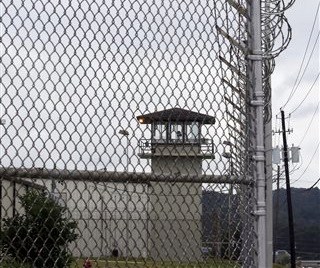
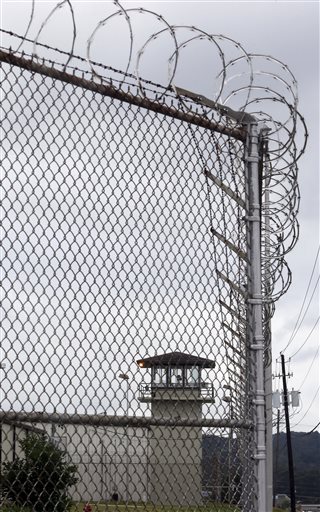
 Razor wire and towers surrounds the Julia Tutwiler Prison for Women, in Wetumpka, Ala., 2013 file photo.
MONTGOMERY, Ala. – Like most preschoolers, the 3-year-old girl who lives in Montgomery is a whirl of energy. She sings and dances through the house and loves the cartoons “Sofia the First” and “Doc McStuffins.” She parrots back letters as her caretaker spells her name.
About once a month a relative takes her to visit at Alabama’s Julia Tutwiler Prison for Women where her mother, Monica Washington, is serving a 20-year sentence for robbery. Her father was an officer at the prison and pleaded guilty in 2011 to custodial sexual misconduct after a DNA test showed he had gotten Washington pregnant, said Charlotte Morrison, a senior attorney with the nonprofit Equal Justice Initiative.
Built in 1942 in the sleepy town of Wetumpka, Alabama’s lone prison for women has a “history of unabated staff-on-prisoner sexual abuse and harassment,” the U.S. Department of Justice wrote in a scathing report in January. DOJ accused Alabama of violating inmates’ constitutional rights to be protected from harm, alleging that corrections officers had assaulted inmates, coerced inmates into sex, inappropriately watched inmates in the showers and bathrooms and once even helped in a New Year’s Eve strip show.
“The problems at Tutwiler are so much more severe than what I have seen at other prisons,” said Brenda V. Smith, a law professor at American University and member of the National Prison Rape Elimination Commission.
“The way to think about Tutwiler is that it is an amalgam and very intense concentration of the problems that exist in women’s correctional institutions,” Smith said.