
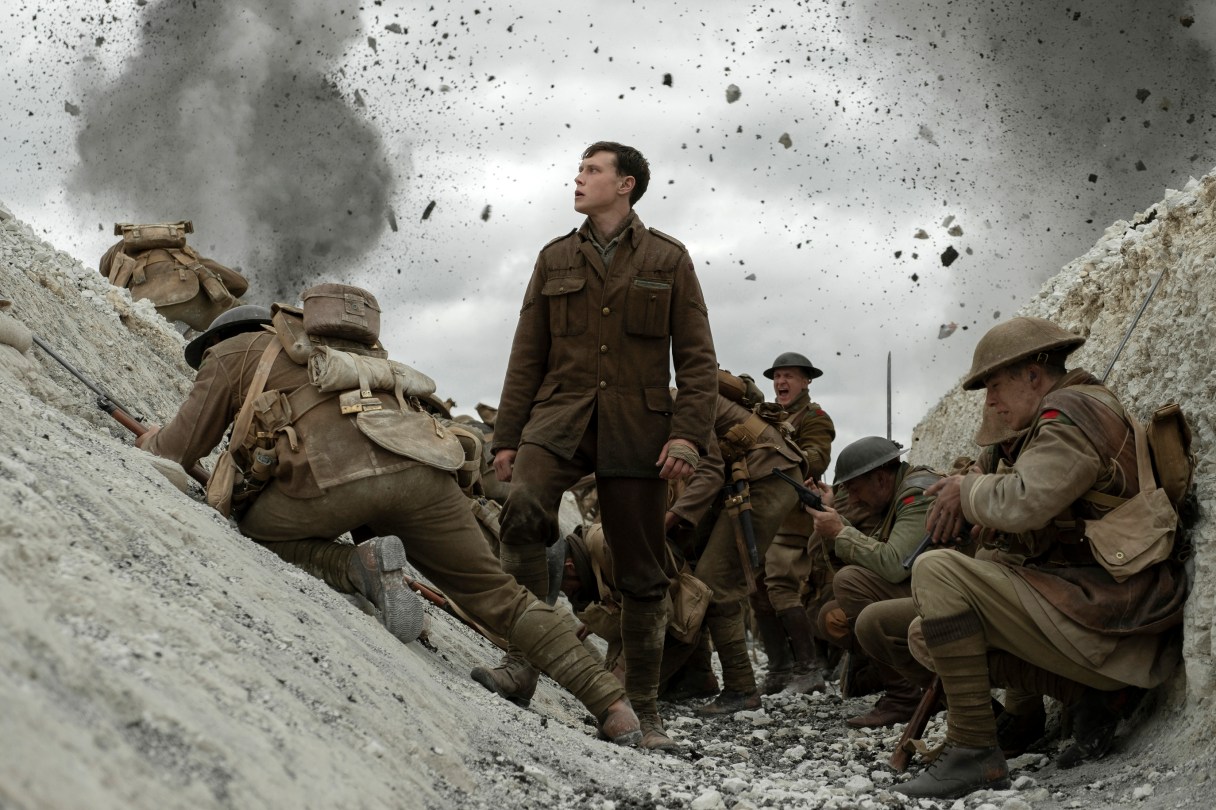
It’s been a good time for World War I buffs – especially if they’re also movie buffs. A year ago director Peter Jackson applied state-of-the-art technology to century-old war footage to bring the Great War alive with sudden, stunning immediacy in his documentary “They Shall Not Grow Old.”
And now, in the feature film “1917,” another of our most talented directors, Sam Mendes, has similarly taken top technology – and the best cinematography, courtesy of Roger Deakins – to give us a different, equally compelling look at that cruel war, through the eyes of two ordinary soldiers asked to perform an extraordinary task.
The special sauce here, which you may have heard about: “1917” appears as if it were shot in one seamless take – or two, if you include one spot where it seems clear a break probably occurred. Actually, there are dozens of cuts, but they’re ingeniously hidden by editor Lee Smith, and the longest continuous shot is only about eight minutes.
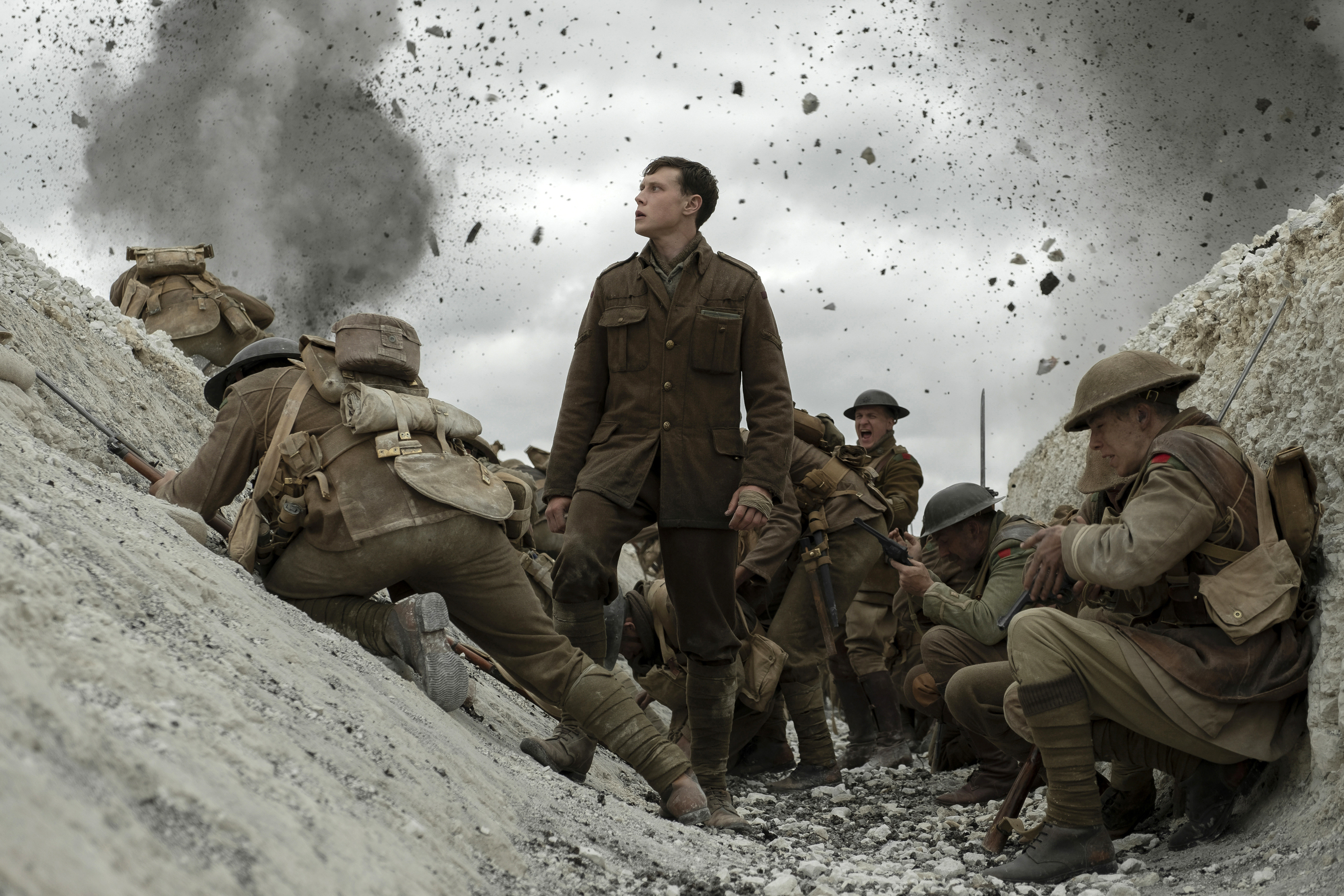 This image released by Universal Pictures shows George MacKay, center, in a scene from “1917,” directed by Sam Mendes. (Francois Duhamel/Universal Pictures via AP)
Yes, it’s a dazzling technical feat. One could also consider it a gimmick, or at least a method that threatens to distract the viewer’s attention. But that ignores the fact that this very filmmaking style is also hugely effective at delivering this particular story, in the most visceral way possible.
It’s a tale – inspired by stories Mendes heard from his own grandfather, who fought as a teenager – of two frightened young men, utterly unprepared for what they’re asked to do. And really, who WAS prepared? These were boys. If in Jackson’s documentary the most sobering sight of all was those frightened faces, many belonging to teens who’d lied about their youth in order to enlist, these shellshocked faces come alive here in the form of lance corporals Schofield and Blake – George MacKay and Dean-Charles Chapman, relative newcomers chosen to enforce the idea that these were unremarkable, ordinary men.