
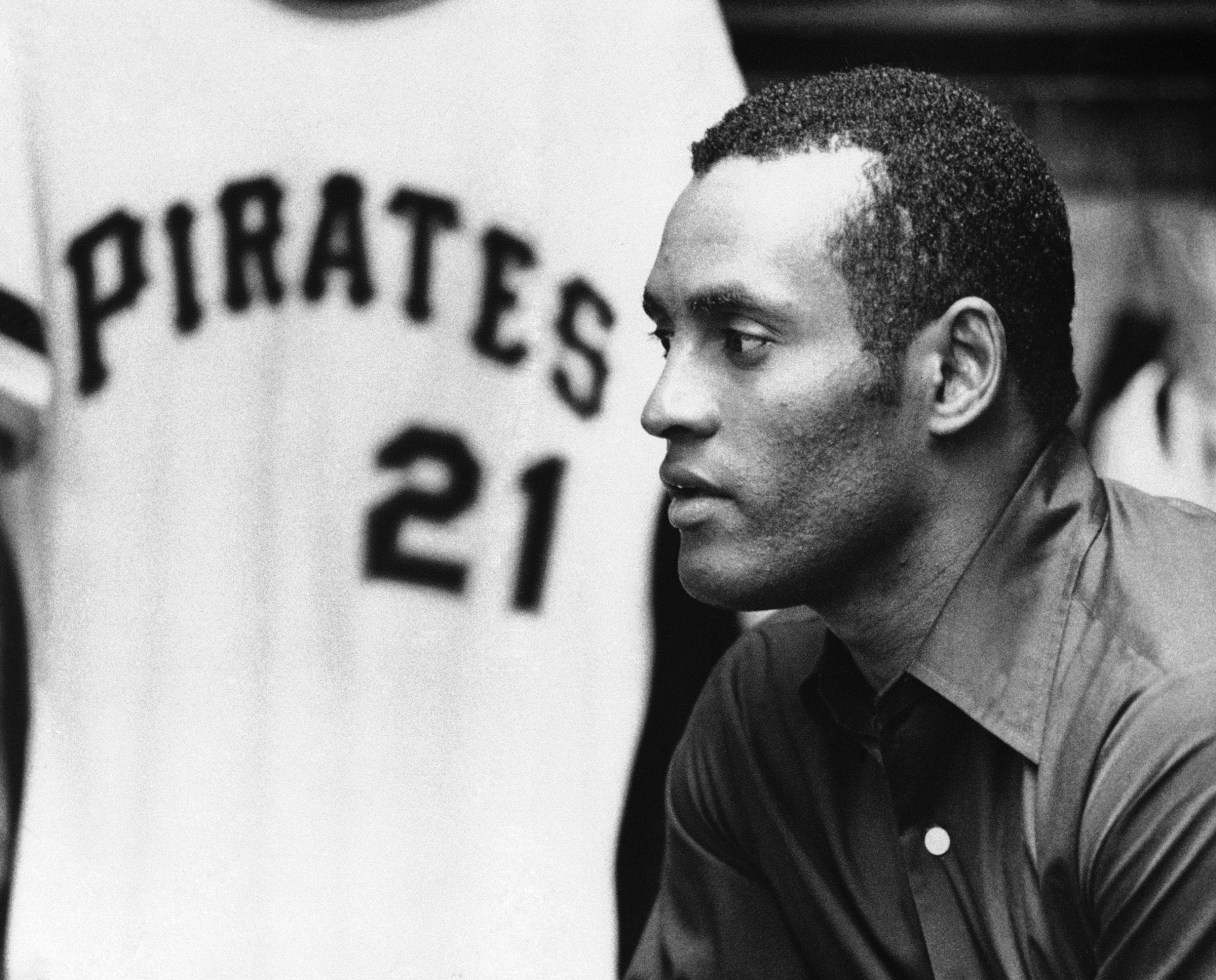
When Puerto Ricans belt the name Roberto Clemente in song, they want the world to understand their pride, unity and culture. Clemente, for them, is the pinnacle of what it means to be a true Puerto Rican.
The baseball legend’s name is in their songs. Children read about his story in school. His picture hangs in the houses of many Latino ballplayers.
“When we’re being challenged and they’re trying to figure out who we are, the answer is we all wear No. 21,” said Luis Clemente, Roberto’s middle son. “We are Roberto Clemente, so you know who we are. This is the face of what makes a Puerto Rican.”
Fifty years after his death, Roberto Clemente, the skillful outfielder who played all 18 of his MLB seasons with the Pittsburgh Pirates, remains one of the most revered figures in Puerto Rico and Latin America. His graceful flair and powerful arm were unrivaled in his era, but his humanitarian efforts are perhaps his greatest legacy. Half a century after he played, many of today’s Latino baseball players credit him for paving the way.
“The name Roberto Clemente is something that fills us with passion and admiration,” said Miami Marlins pitcher Sandy Alcantara, who was born in the Dominican Republic. “… He was one of the Latin players that did so much for us here in America — not only here, but in all of Latin America.”