
Tuesday, November 10, 2026Nov 10

Alabama asks Supreme Court to let execution proceed

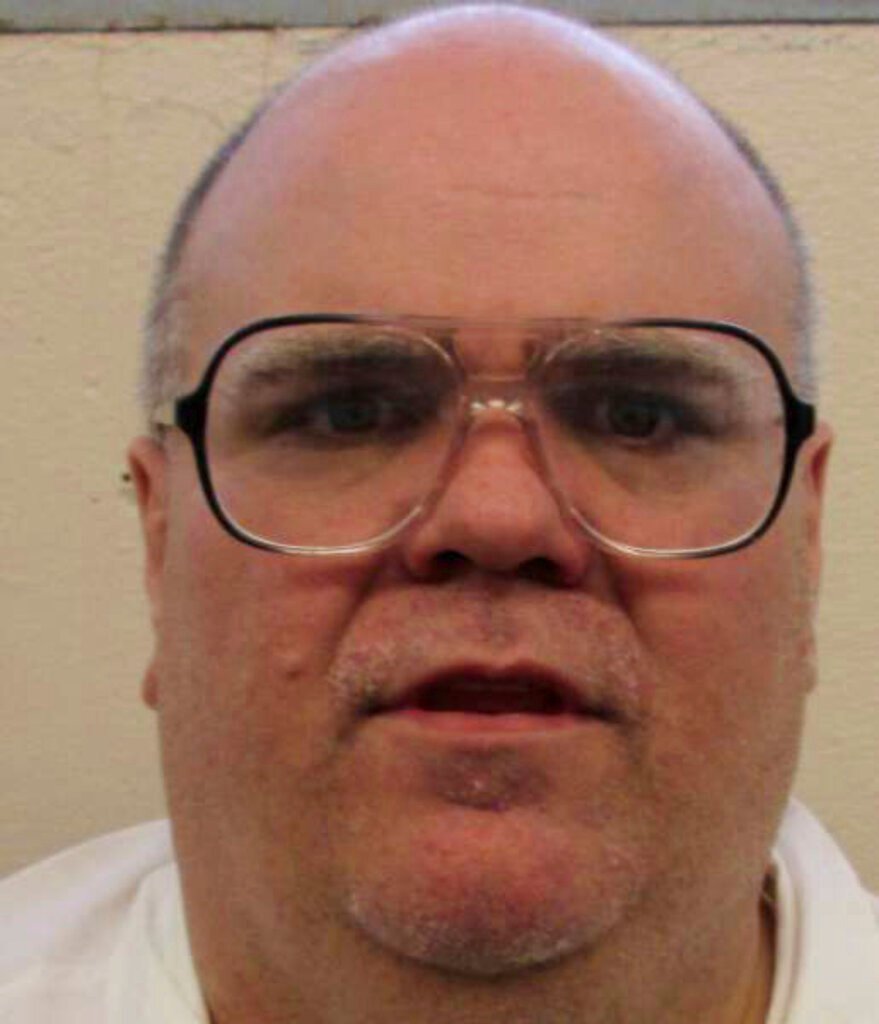
FILE - This undated photograph provided by the Alabama Department of Corrections shows inmate Alan Eugene Miller, who was convicted of capital murder in a workplace shooting rampage that killed three men in 1999. Miller, scheduled to be put to death by lethal injection on Sept. 22, 2022, says the state lost the paperwork he turned in selecting an alternate execution method. (Alabama Department of Corrections via AP, File)
FILE - This undated photograph provided by the Alabama Department of Corrections shows inmate Alan Eugene Miller, who was convicted of capital murder in a workplace shooting rampage that killed three men in 1999. Miller, scheduled to be put to death by lethal injection on Sept. 22, 2022, says the state lost the paperwork he turned in selecting an alternate execution method. (Alabama Department of Corrections via AP, File) FILE - This undated photograph provided by the Alabama Department of Corrections shows inmate Alan Eugene Miller, who was convicted of capital murder in a workplace shooting rampage that killed three men in 1999. Miller, scheduled to be put to death by lethal injection on Sept. 22, 2022, says the state lost the paperwork he turned in selecting an alternate execution method. (Alabama Department of Corrections via AP, File)

ATMORE, Ala. (AP) — A federal appeals court on Thursday rejected Alabama’s attempt to proceed with the execution of an inmate who claims the state lost his paperwork selecting an alternative to lethal injection.

In a 2-1 decision, the 11th U.S. Circuit Court of Appeals denied the state’s request to lift a recent injunction preventing the state from carrying out Thursday night’s scheduled execution of Alan Miller. The state appealed the ruling to the U.S. Supreme Court in a effort to carry out the lethal injection Thursday night.

Miller, 57, was convicted of killing three people in a 1999 workplace rampage and was scheduled to die by lethal injection until the execution was blocked by a judge earlier this week.

Miller testified that he turned in paperwork four years ago selecting nitrogen hypoxia as his execution method, putting it in a slot in his cell door for a prison worker to collect. On Tuesday, U.S. District Judge R. Austin Huffaker Jr. issued a preliminary injunction blocking the state from killing Miller by any means other than nitrogen hypoxia.

In refusing to lift Huffaker’s injunction, the appeals court on Thursday said it is “substantially likely” that Miller “submitted a timely election form even though the State says that it does not have any physical record of a form.”