
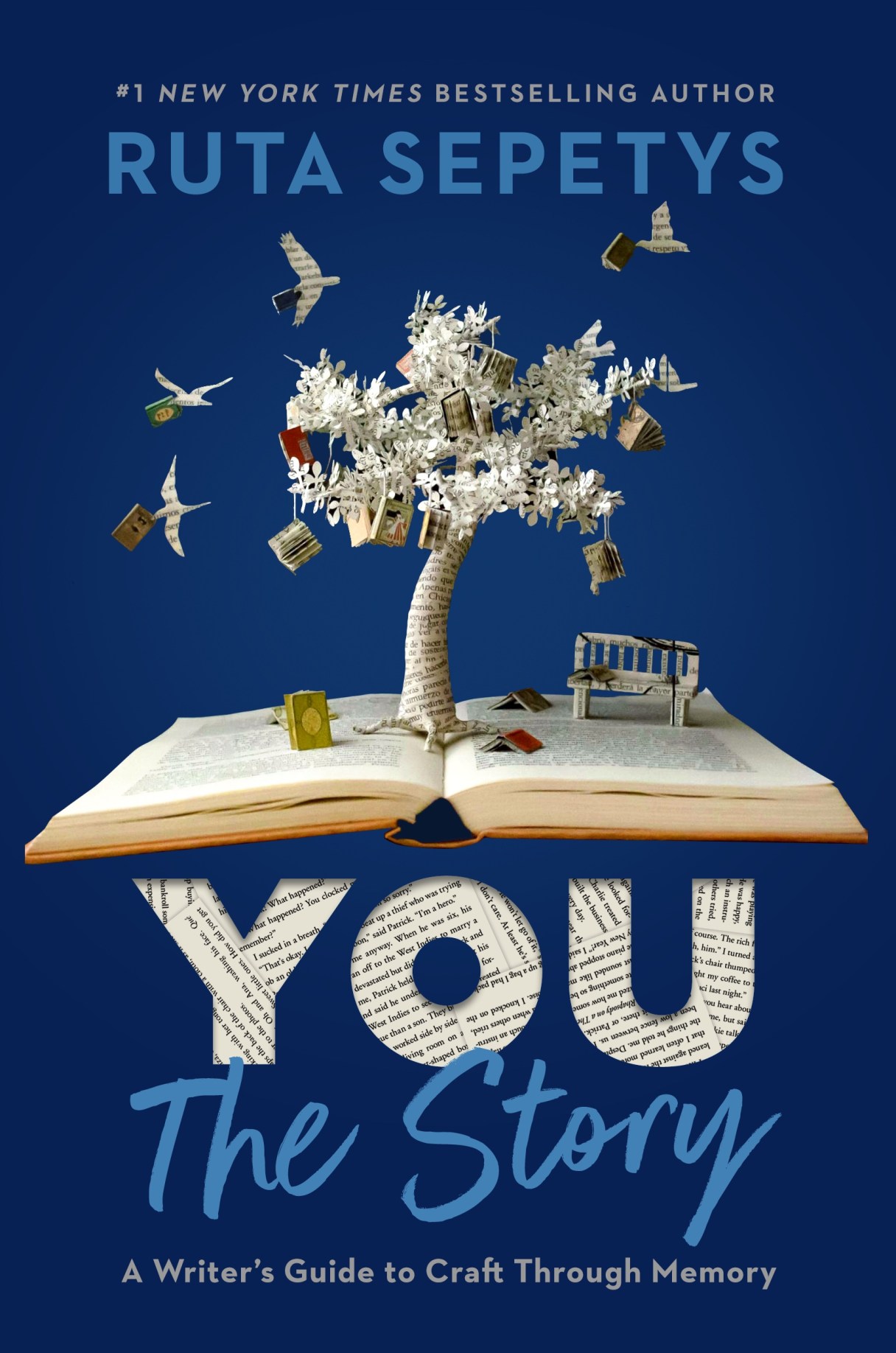
“YOU: THE STORY: A WRITER’S GUIDE TO CRAFT THROUGH MEMORY” by Ruta Sepetys (Viking Books, 224 pages, $20).
Ruta Sepetys’ latest book, “You: The Story,” is a writer’s guide to mining one’s life for material. Sepetys is, of course, the award-winning, best-selling author of five works of historical fiction for young-adult readers, and her approach to craft is form-bending, cogent, saturated with glimmering personal vignettes and unfailingly encouraging. Neither hatchet woman nor bleeding-heart sentimentalist, Nashville-based Sepetys offers exacting technical prompts for novice as well as experienced writers, while maintaining both levity and a sense of moral stakes.
“Whether you’re writing fiction or nonfiction,” Sepetys writes, “the secret to strong writing is embedded within your own experience.” She points to heartbreak, hope, hilarity and humiliation as essential instruments in a writer’s toolkit and advises, “If you infuse those elements into your writing, it will feel authentic.”
Sepetys gives advice on all the major aspects of storytelling: plot, character, voice and dialogue, perspective, setting, research and revision. Each of these sections utilizes mini-chapters, comprised of short paragraphs covering both the importance of the particular element and suggestions for application. Sepetys makes frequent use of repetition; for example, she recurrently avers, “Specificity is authenticity.” Her repetition drives home her messages and underscores the consistency of her insights and approach.
Each topic closes with a one-page recap of what’s been covered, as well as a detailed list of related writing prompts and a handful of book recommendations. Here again, repetition plays a major role, in part because some of the suggested exercises build on earlier ones. In the writing prompts related to plot, for example, Sepetys writes, “Think of someone you’d like to meet or work with. Draft a list of creative, engaging questions for that person.” More than 100 pages later, one of the writing prompts at the end of the section on research reads, “You have the opportunity to interview anyone of your choice, living or dead. Draft five interview questions for that person.”