
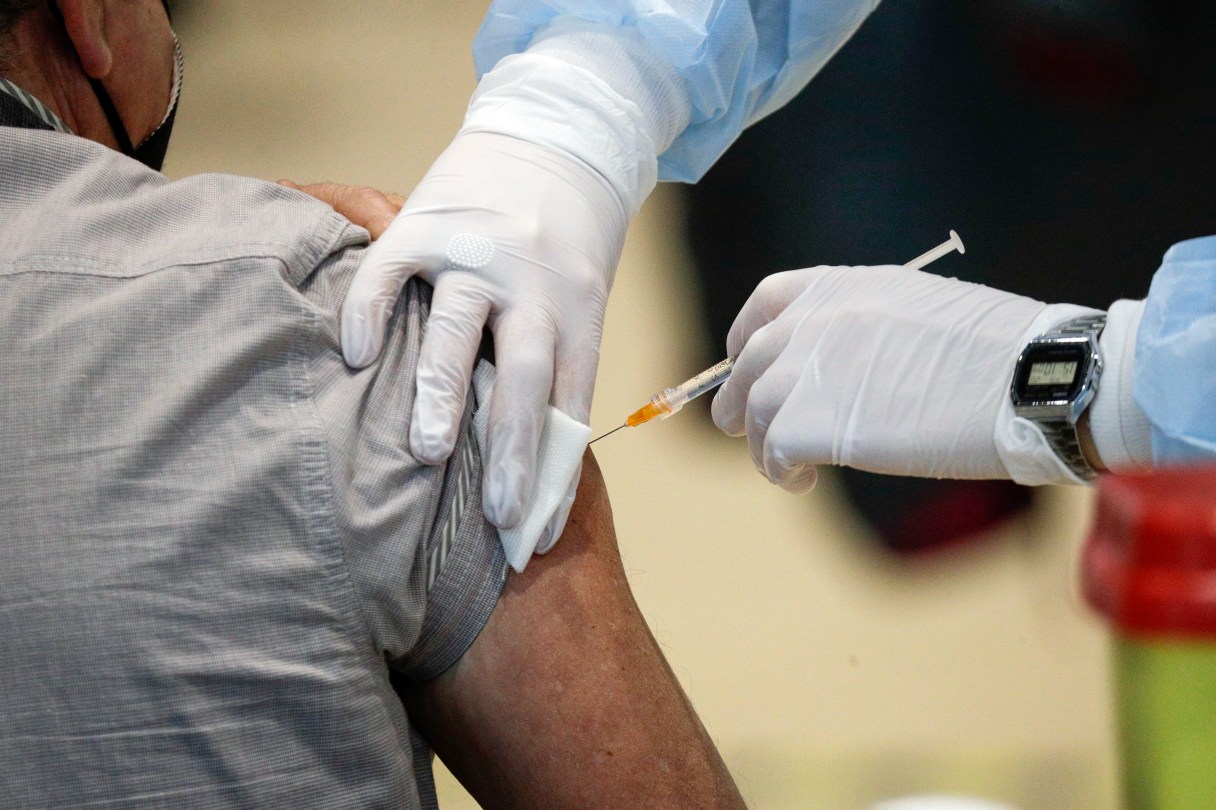
Tennessee’s low COVID-19 vaccination rate threatens more than just those who choose not to get vaccinated, which is why the health care and scientific communities are pushing for more education and efforts to combat vaccine hesitancy in order to get more shots into arms.
“My grave concern is that if people don’t appreciate the continued toll that this pandemic is taking on our country, and they don’t recognize the benefits of vaccination, our ability to get to that state of so-called ‘herd immunity’ is uncertain,” infectious disease specialist Dr. Jay Sizemore said during an Erlanger Health System Board of Trustees meeting Thursday.
“Herd immunity” occurs when a large enough portion of the population is immune to an infectious disease that it provides indirect protection to others who aren’t immune. That’s because circulation of the disease grinds to a halt when there aren’t enough susceptible people left to infect.
Immunity can be achieved through vaccination or prior infection. However, vaccination is always preferred. Vaccines prevent more death, illness and opportunity for the disease to spread, and herd immunity for a disease has never been achieved without a vaccine.
The threshold for herd immunity differs by disease and depends on how infectious it is. Measles, one of the most contagious diseases in the world, requires about 95% of a population to be vaccinated, while the threshold for polio is about 80%, according to the World Health Organization.